
Tashi Delek! Welcome to Tibet - The Roof of the World. We invite you to discover the Tibet Autonomous Region of China. , a land of breathtaking high-altitude landscapes, a deeply rooted spiritual heritage, and a vibrant culture. Whether you are looking for a short cultural escape to the Potala Palace or an epic trekking pilgrimage to Mount Kailash, we provide seamless, expert-led journeys. Step into a world of ancient monasteries and serene lakes, where every horizon tells a story of peace and wonder.

Tibetan Culture and Religion: Before the 8th century, Tibet practiced the Bon religion. Vajrayana Tibetan Buddhism was introduced in the 7th century by Guru Padmasambhava. Today, four major schools of Tibetan Buddhism thrive in Tibet and can be visited in the Lhasa region.
Nyingma – The Ancient School is the oldest school, founded in the 8th century by Guru Rinpoche. Samye Monastery is the first Nyingma monastery. Several renowned Rinpoches have passed away, and reincarnations now reside in Nepal.
Kagyu – The Oral Lineage is known for meditation practices.The head is H.H. the 17th Karmapa, who currently resides mainly in the USA and Europe.
Sakya – The Grey Earth School is known for its meditation path and results. The head is H.H. Sakya Trizin, and Sakya families currently live in Dehradun, India.
Gelug – The Yellow Hat School is the youngest and largest school, founded by Je Tsongkhapa. The head is H.H. the Dalai Lama, residing in Dharamsala, India, since 1959.
A Global Heritage: While their heart remains in the Himalayas at Tibet. Tibetans today live across the world—from the high plateaus of Tibet (China) to vibrant communities in India, Nepal, Bhutan, North America, Canada, Australia and Europe. Despite the distance, they remain deeply connected, preserving a unique culture and spiritual tradition that continues to inspire the world with its message of peace, resilience, and compassion.
Daily Life and Spiritual Practices: Tibetans practice devotion by chanting Om Mani Padme Hung, spinning prayer wheels, and performing Kora, walking clockwise around sacred sites at monasteries and stupas.
Every Tibetan New Year, families replace five-colored prayer flags on rooftops, mountains, monasteries, stupas, and bridges to offer prayers for health, compassion, and prosperity.

Lhasa and Potala Palace: Lhasa, the capital, is located at 3,650 meters above sea level. Potala Palace, at 3,700 meters, is the highest palace in the world. Built in the 7th century by King Songtsen Gampo and later rebuilt by the 5th Dalai Lama, the palace has 13 floors, over 1,000 rooms, and 3-meter-thick stone walls. It is now a UNESCO World Heritage Site and a state museum. Visitors can explore the palace during official hours, except on Sundays and public holidays. The palace features red walls for religious purposes and white walls for administration.
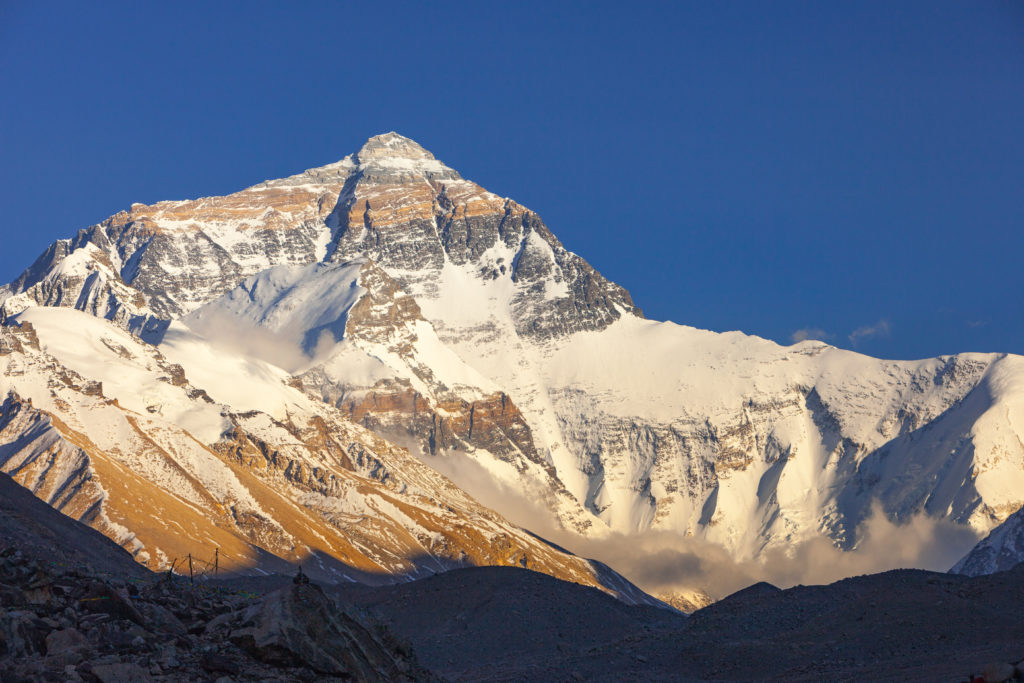
Geography of Tibet: Tibet is a high-altitude plateau and cold desert dominated by the Himalayas, including Mt. Everest, Cho Oyu, Shishapangma, and other Himalayan peaks below 8,000 meters.
Tibet is the source of Asia’s major rivers, including the Yangtze, Indus, Mekong, Ganges, and Brahmaputra.
Famous pilgrimage sites include Mount Kailash (Khang Rinpoche) and Lake Mansarovar, located in western Tibet’s Ngari Province.
Borders and History: Tibet borders Myanmar, India, Bhutan, Nepal, and Pakistan (Kashmir). It became part of the People’s Republic of China after the Tibetan government was abolished in 1959.
Local Time in Tibet: Tibet follows China Standard Time (UTC +8), also known as Beijing Time. There is no daylight saving. Tibet time is 2 hours 15 minutes ahead of Nepal.
How to Reach Tibet: There are several ways to enter the Tibet Autonomous Region. Whether you prefer a scenic overland adventure or a quick flight over the Himalayas, we handle all the logistics and permits for a smooth journey.
 1. Flight from Kathmandu to Lhasa: The "Trans-Himalayan Flight" from Kathmandu to Lhasa Gonggar Airport is one of the most beautiful flights in the world.
My Experience: On a clear day, you can see Mt. Everest and the high Himalayan peaks right from your window.
2. Overland from Nepal (Kerung Border): For the true adventurer, the overland route is a favorite. Drive from Kathmandu through the lush hills of Nepal to the Kerung Border.
My Experience the Journey: After crossing into Tibet, the landscape transforms into the vast, high-altitude Tibetan Plateau. This route is perfect for those visiting Mt. Everest North Base Camp, Mount Kailash and Manasarowat lake.
3. Flight from Mainland China to Lhasa: If you are already in China, reaching Lhasa is very convenient. Daily direct flights depart from major cities including Chengdu, Beijing, Shanghai, Xining, and Chongqing.
4. From Mainland China by Train (The Sky Railway): The Qinghai-Tibet Railway is the highest railway in the world and an engineering marvel.
My Experience: Travel across the Permafrost and the Tanggula Pass (over 5,000m). The train features oxygen-enriched cabins for your comfort.Trains depart daily or every other day from Xining, Beijing, Shanghai, and Guangzhou.
Note: Please be aware that a standard Chinese Visa is not enough to enter the Tibet Autonomous Region. All foreign travelers must also hold an official Tibet Travel Permit, which you have to show at airport or train station before boarding.
Tibet Visa and Travel Permit: Foreign travelers require a Chinese visa, enter in mainland China. For Tibet, A group visa requires a minimum of four people. Special permits are needed for Everest Base Camp, Mount Kailash, Kharta Valley, and remote regions.
For Tibet Travel permit: Documents required include a valid passport copy and passport-size photo. Permits should be arranged at least one month in advance. Our local Tibet travel agents handle all visas, permits, tickets, and official documents.
Entry from Nepal to Tibet: If you enter from Kathmandu, you do not need a visa from your home country. Instead, we will help you obtain a Chinese Group Visa in Kathmandu along with your Tibet permit.
High Altitude sickness occurs when your body cannot get enough oxygen due to the lower air pressure at elevations above 3,000m, especially if you ascend too quickly. It is a common condition that can affect anyone at any time, regardless of fitness level. While there is no need to be nervous, it is vital to stay attentive to your body.
 Recognizing the Major Symptoms: If you experience any of the following symptoms, stop your ascent immediately:
1. Persistent headache or dizziness. 2. Nausea or vomiting. 3. Loss of appetite.
4. Difficulty sleeping.
What to Do? If symptoms appear, do not climb higher. The best remedy is to descend to a lower altitude as soon as possible.
In the meantime - Hydrate: Drink plenty of hot fluids.
Nutrition: Eat garlic soup (a local remedy believed to help with circulation).
Rest: Give your body time to acclimatized and rest.
Our Safety Guarantee: Most trekkers feel better after a day of rest or a slight descent. However, if your condition does not improve, your guide will take immediate action. In serious cases, your guide will be arrange an emergency helicopter evacuation from Lhasa or drive to nearest hospital to ensure your absolute safety.
Travel Insurance & Rescue: Unfortunate illness or injury can happen to anyone, anywhere. In the remote mountain regions where we trek, your safety is paramount. Because ground transport to the nearest clinic can be slow, we rely on rapid aerial response.
• Helicopter Rescue from 'nearest place' Kathmandu, Lukla or Pokhara offers the fastest rescue service but is extremely expensive.
• Action Required: We strongly advise you to issue a comprehensive travel insurance policy from your home country or in Kathmandu. Your policy must specifically cover emergency helicopter evacuation and medical expenses at high altitudes (up to 6,000m. depending on your route).
Pro Tip: Please Always carry a digital and printed copy of your insurance certificate and the 24-hour emergency contact number for your provider.
Banking and Currency: The local currency is Chinese Yuan (Renminbi).
Banks and ATMs are available in major cities. Cash is essential in remote mountain regions.
 Spring Season (March - May) In this months offer the clearest skies and best visibility of Himalayan peaks. Oxygen levels are higher, weather is mild and entire plateau is accessible.
Summer Season (June - August) Tibet is a dry area no problem with rainfall. Best time trekking at Kailash, Kharta valley and other parts of Tibet. Sometime the mountains are often shrouded in clouds due to rain and high levels.
Autumn Season (September - November) One of the spectacular, uninterrupted views of the mountains and high Himalaya. Perfect temperatures for trekkers and travellers at Tibet region. Oxygen levels are higher, weather is mild and entire plateau is accessible.
Winter Season (December to February) Clear skies at low elevations, the air is clean and visibility is excellent. Temperatures drop significantly in the morning and night, requiring warmer gears. Perfect for low elevation trekkers and travellers in Tibet. During this season, High passes motor road, Everest base camp, Mt.Kailash, Manasarovar lake and Kharta valley trek is not possible during the winter season in Tibet.
Professional Guides & Safety: To ensure a safe and legal journey, all travel, trekking, or expeditions in any part of the Tibet Autonomous Region must be accompanied by an officially licensed guide from a registered company.
We provide experienced, government-registered Tibetan and Chinese guides who are experts in high-altitude safety, local history, and spiritual traditions. Independent travel for foreign nationals is strictly prohibited in Tibet; our guides manage all necessary permits and logistics so you can focus on the experience.
Hotel accommodation at Tibet: We offer a range of accommodation options designed to balance comfort with an authentic experience of the Tibetan Plateau.
City Comfort: Lhasa, Shigatse, Gyantse, and Tsedang, In these major cultural hubs, We offer standard three-star to five-star luxury hotels. Most city hotels provide comfortable rooms with modern amenities, including high-speed Wi-Fi, 24-hour running hot/cold water. Stays are typically booked on a Bed and Breakfast (B&B) basis.
Oxygen Support: In 2026, many of our partner hotels in Lhasa and Shigatse are equipped with diffuse oxygen systems in the rooms to help you acclimatize and sleep better.
 Restaurant and Daily meals: At the major cities and different parts of Tibet, tourist areas, there are several restaurants where you can get Tibetan, Chinese, Nepalese and Continental dishes, veg, or non veg. Even there are several street foods markets at the main cities, where you can get fresh and delicious meals. Also, you can get different kinds of sweet dishes, hot or cold drinks, beers, wine and different kinds of alcohol at Tibet.
Important health Note: We strongly advise avoiding or strictly limiting alcohol consumption during your first 48 hours in Tibet. Alcohol can worsen altitude sickness symptoms and slow down your body's natural acclimatization process. Stay hydrated with plenty of water and tea instead.
Transportation in Tibet: Small Groups (Min. 4 Persons): We provide high-performance 4WD Jeeps (such as Toyota Land Cruisers), which are ideal for the rugged terrain of the Everest and Kailash regions.
Middle-Sized Groups: We use modern, comfortable Vans (typically 7–15 seats) with ample space for luggage.
Large Groups: We provide spacious Tourist Buses equipped with oxygen and experienced drivers for a smooth journey across the plateau.
Note for 2026: All vehicles used for foreign tourists are officially licensed for tourism and are equipped with emergency oxygen supplies.
Our Tibet overland tours and Trekkings are designed for anyone who is physically fit, healthy, and passionate about exploring the high Himalayas. We welcome men and women between the ages of 12 and 70 to join us with confidence.
Whether you are traveling with family, friends, or small or big group, this experience is perfect for those who want to maximize their holiday time in nature. Being immersed in such a pristine, organic environment is a proven way to reduce stress and find happiness. You will return home with "once-in-a-lifetime" memories.
 Preparation and Support: You are never alone in your preparation. We provide comprehensive information and a full briefing in Kathmandu before you set off. Once on the trail, your guide will provide a clear, day-by-day explanation of the plan to ensure you are always informed and comfortable.
Get in Touch: The trekking and tours regions mentioned here are just the beginning. For more information regarding the seasons, exact durations, and a competitive, reasonable cost for your group (large or small), please contact us directly.
We pride ourselves on providing a service that is faster, more personal, and more reliable than the rest.
Contact us via:
Email: hellokirken@gmail.com
WhatsApp / Messenger: Kirken Sherpa +43 664 55155 46
Direct Call: +43 664 55155 46
"Thank you for choosing our 'Tibet overland tours / Trekking' and for being a part of our team. We look forward to trekking with you!"

Himalayan Experience Trek welcomes you to Nepal, the land of Himalaya, where we can offer a variety of experiences to make your holidays a truly memorable one in Nepal, India and Tibet, especially adventure trip, remote mountains region of Nepal.


