img

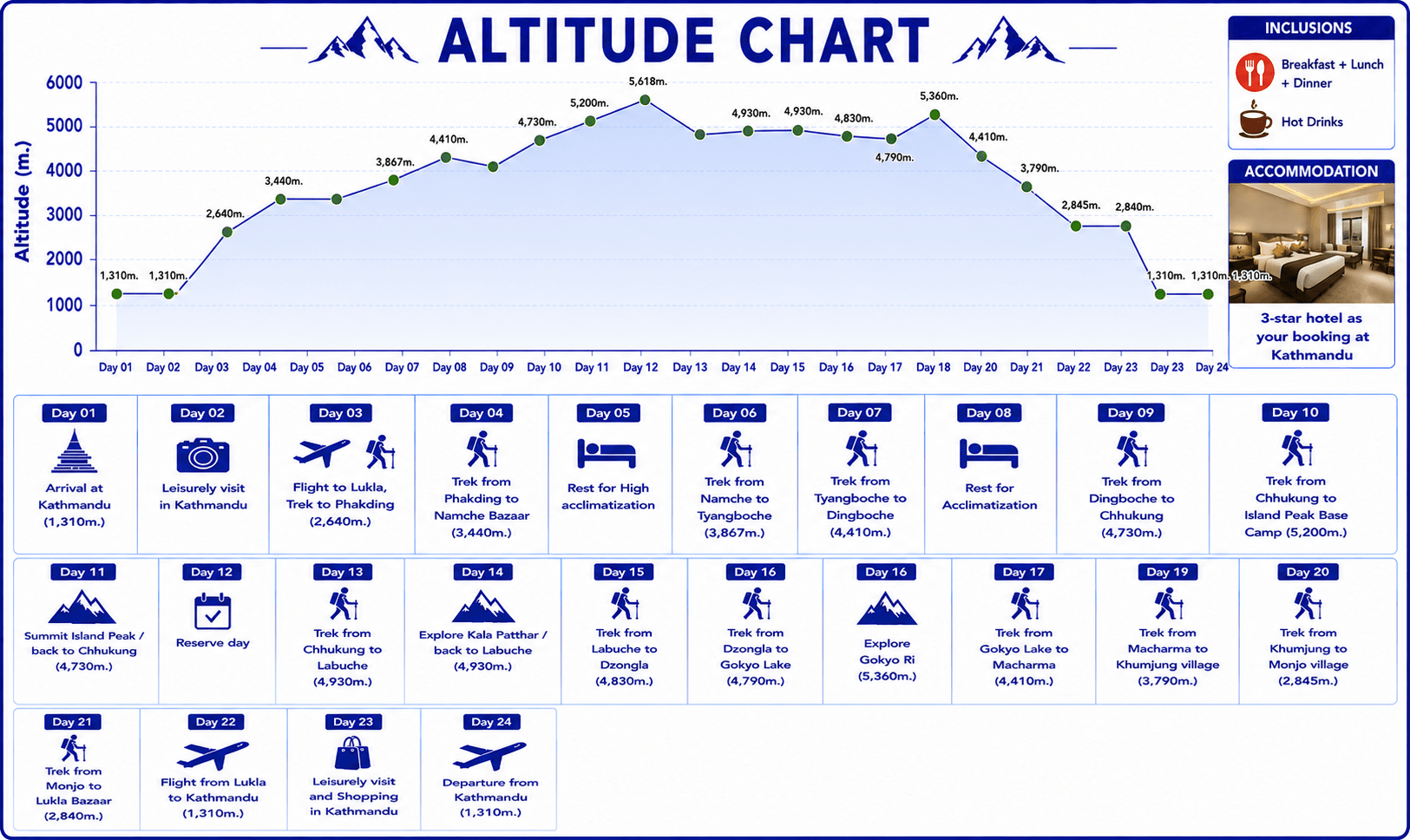
24 days Island peak climbing / Trekking:

Price: EUR 2950

24 days Island peak climbing / Trekking:

Dear all trekkers and climbers,

Namaste! A warm welcome to trekkers and climbers from all over the world. We invite you to trekking at Mt. Everest base camp, Kalapatthar region and Island peak climbing. Which is a true paradise for those who love high-altitude adventure, untouched nature, and the serene mountain environment.

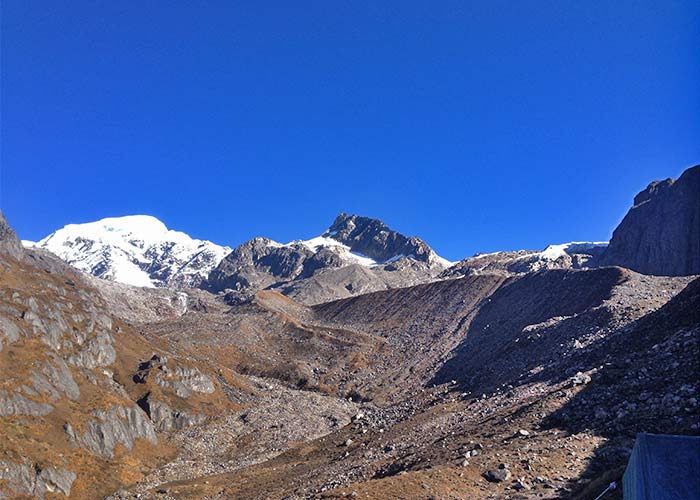
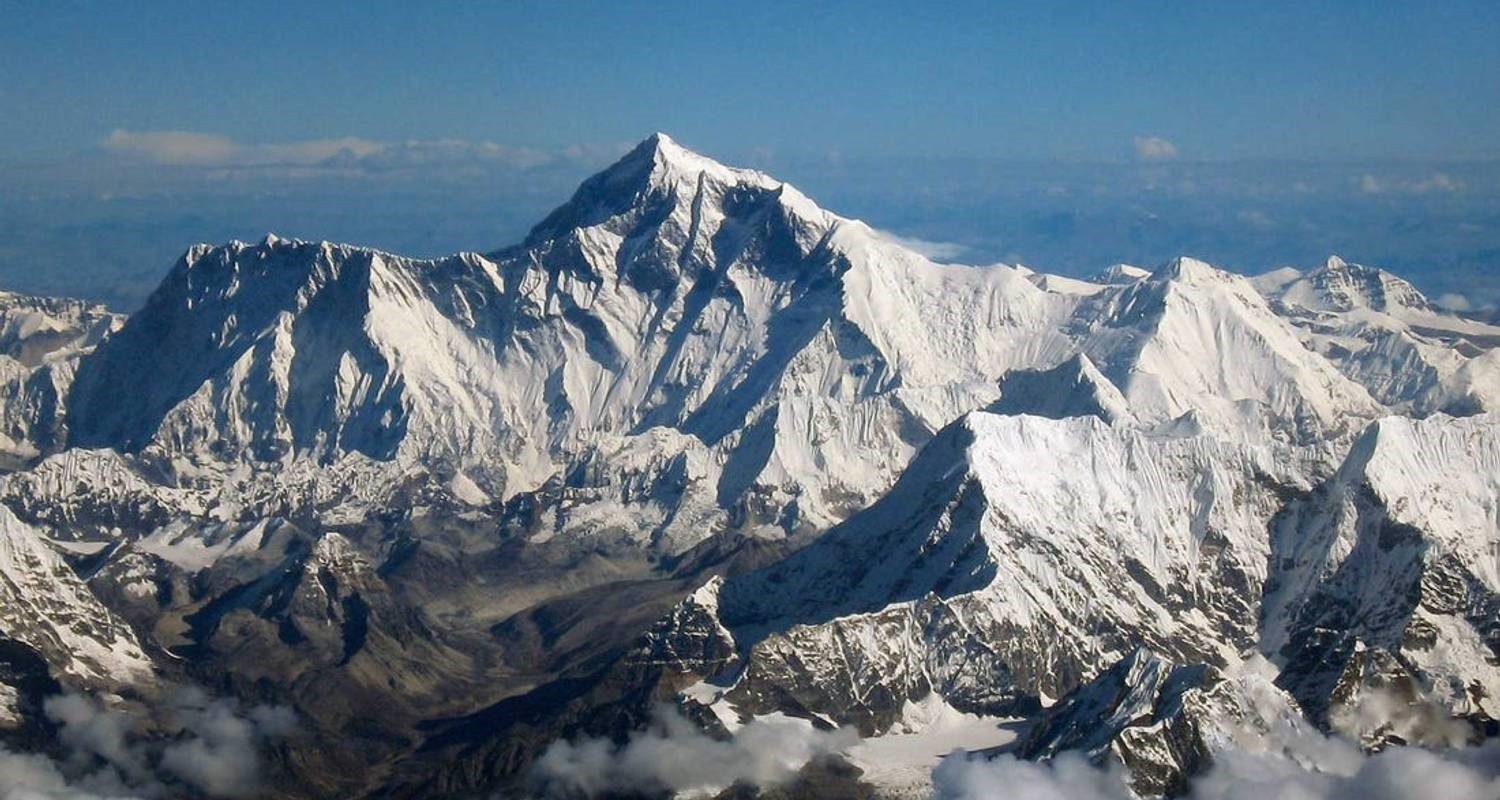
About the Peak: Island Peak, also known as Imja Tse, is one of the most popular and stunning trekking peaks in the world. Rising to an elevation of 6,189 meters, it is nestled deep in the heart of the Khumbu Valley, standing in the shadow of giants like Mt. Everest and Lhotse.

A Himalayan Icon Island Peak is one of the most frequented climbing peaks in Nepal, with thousand of mountaineers attempting the summit each year. Its popularity stems from its breath-taking views and the perfect balance of challenge it offers to aspiring high-altitude climbers.

Many climbers choose to summit Island Peak as the grand finale, at same time after the summit trek through the Everest base camp, Kala Patthar and Gokyo region for a scenic journey over the Cho La Pass. 

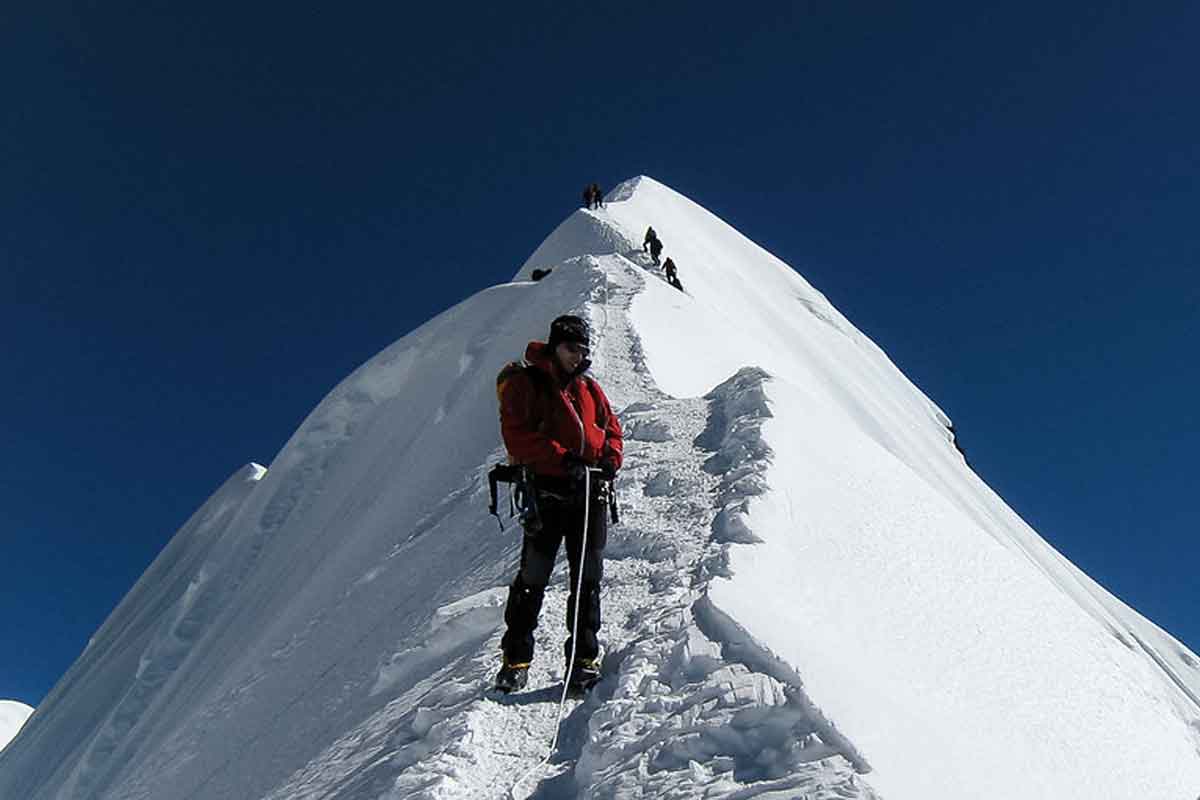
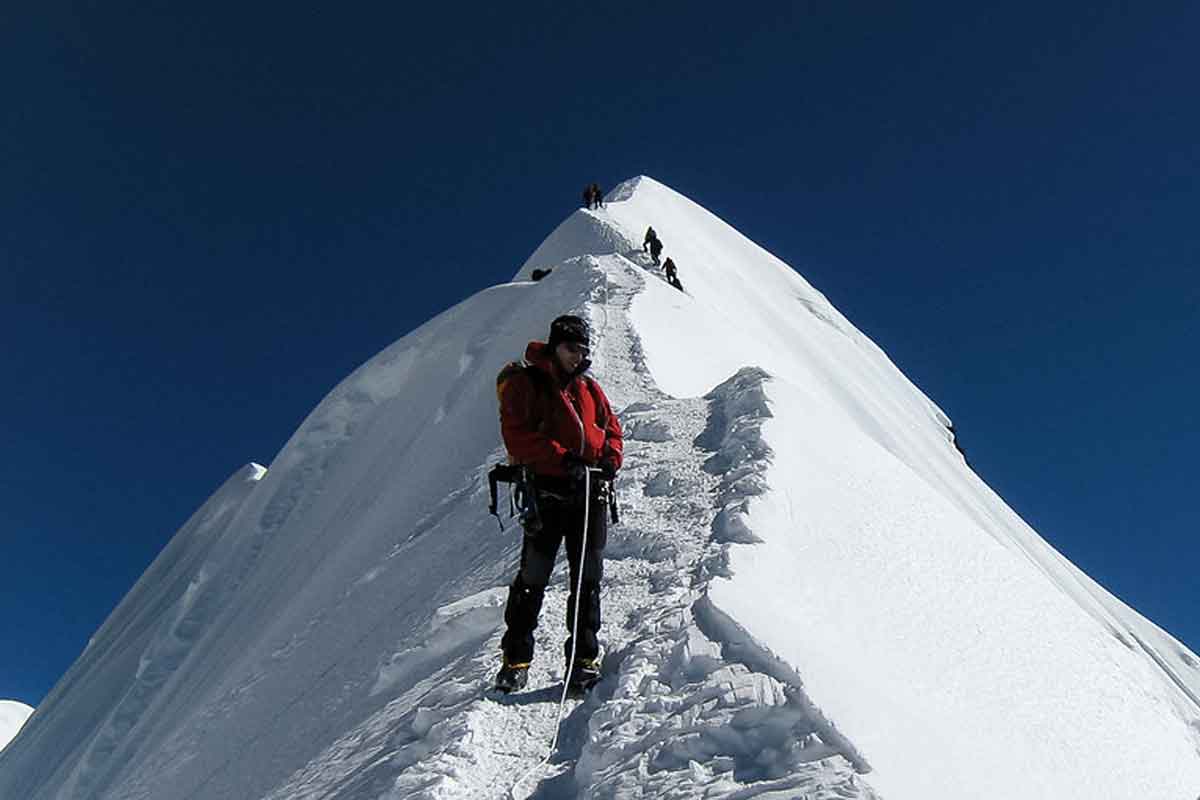
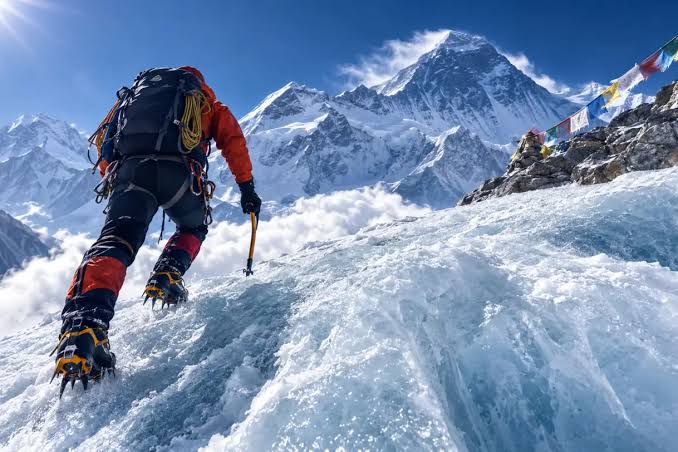
Difficulty and Grade: The peak climbing skills, it is a significant physical and technical step, slightly it is to climb difficult. The initial ascent from High Camp in the dark, involves navigating steep, rocky scree and slabs. Once you hit the "crampon point," you’ll be roped up to navigate a crevassed glacier. You’ll face a 100m-150m ice/snow wall at a 40° to 50° angle. 

At an elevation of 6,000m, the air is thin and every ounce of energy is precious. At this altitude, every single move up the vertical headwall feels like a marathon, testing both your physical endurance and mental grit.
 

Achieving Success on Island Peak: To reach the summit of Island Peak, you don’t need to be a professional mountaineer, but you must respect the mountain's demands. A successful expedition is built upon three essential pillars:

1. Physical Fitness     2. Thorough Acclimatization     3. Mental Confidence

The Golden Rule: While the early morning push to the summit is exhilarating, the descent back to Base Camp is often the most dangerous phase of the expedition. Move slowly and maintain absolute concentration during the rappel and the long trek back to Base Camp. Every step counts until you are off the ice.

Panorama from Summit: If the weather permits, you will be rewarded with one of the most intimate and iconic panoramic views on Earth. I can promise you this: you won’t just be looking at the mountains, you will feel as though you are standing among them.

From the (6,189 m. summit) you will be surrounded by a 360- degree theatre of giant's Himalayan peaks including, Lhotse south face wall, Top of Mt. Everest, Chamlang, Ama Dablam, Thamserku, Khang Tega, Tawuche, Khumbi Yulha and Dingboche valley.

Technical Training & Gear Demonstration: 

For first-time climbers, preparation at Base Camp is key to a successful summit. Your climbing guide will lead a mandatory practical training session to ensure you are comfortable with your equipment before leaving the tent.

1. Mastering the Gear:
Harness & Crampons: We will ensure your harness is fitted correctly over your down layers and that your crampons are perfectly adjusted to your mountaineering boots.

The Ice Axe: You will practice the correct way to hold and carry your ice axe, including how to use it for balance and as an "anchor" if needed.

2. Fixed-Line Techniques: 

The Ascender (Jumar): You will practice sliding the Jumar up the rope and, most importantly, how to switch carabiners at anchor points (the "re-belay") without ever being unclipped from the safety line.

The Descender (Figure-8): We will practice rappelling (abseiling). You’ll learn how to thread the rope through your Figure-8 or ATC and how to control your speed with your "brake hand."

3. Mountain Safety Protocols:
Maintaining Distance: You will practice keeping a safe distance from the climber in front of you to avoid rope tension issues or falling ice / snow.

Rope Management: Learn how to manage the "main rope" so it doesn't get tangled in your crampons.

Communication: We will review the hand signals and verbal commands used between you and your guide during high winds.

Highlights the Journey: Your expedition begins at the world famous Tenzing-Hillary Airport in Lukla (2,840m). While many climbers simply summit the peak and return the same way, this comprehensive itinerary maximizes your experience by combining the Island peak climb with two iconic high passes.

After summit trek pass through Kongma La pass 5,535m. reach at main route to Everest base camp. Explore Kala Patthar, another option trek pass through Chola pass reach at Gokyo valley for another spectacular panoramic view. 

This route provide you witness a much wider variety of landscapes, hidden valleys, and panoramic vistas. After Namche Bazaar same route which you came before, back to Lukla airport ending the trek.  

All within a single journey in one cost you can complete this peak climbing verses high passes trekking. For the detail, please check at the end of this site our day-by-day route itinerary. 

Panorama during the Trek: The Everest region offers some of the most breath-taking mountain panoramas on Earth. By combining the Island Peak summit with legendary viewpoints like Kongma La Pass, Kala Patthar, Cho La Pass, and Gokyo Ri, you will experience the Himalayas from every majestic angle.

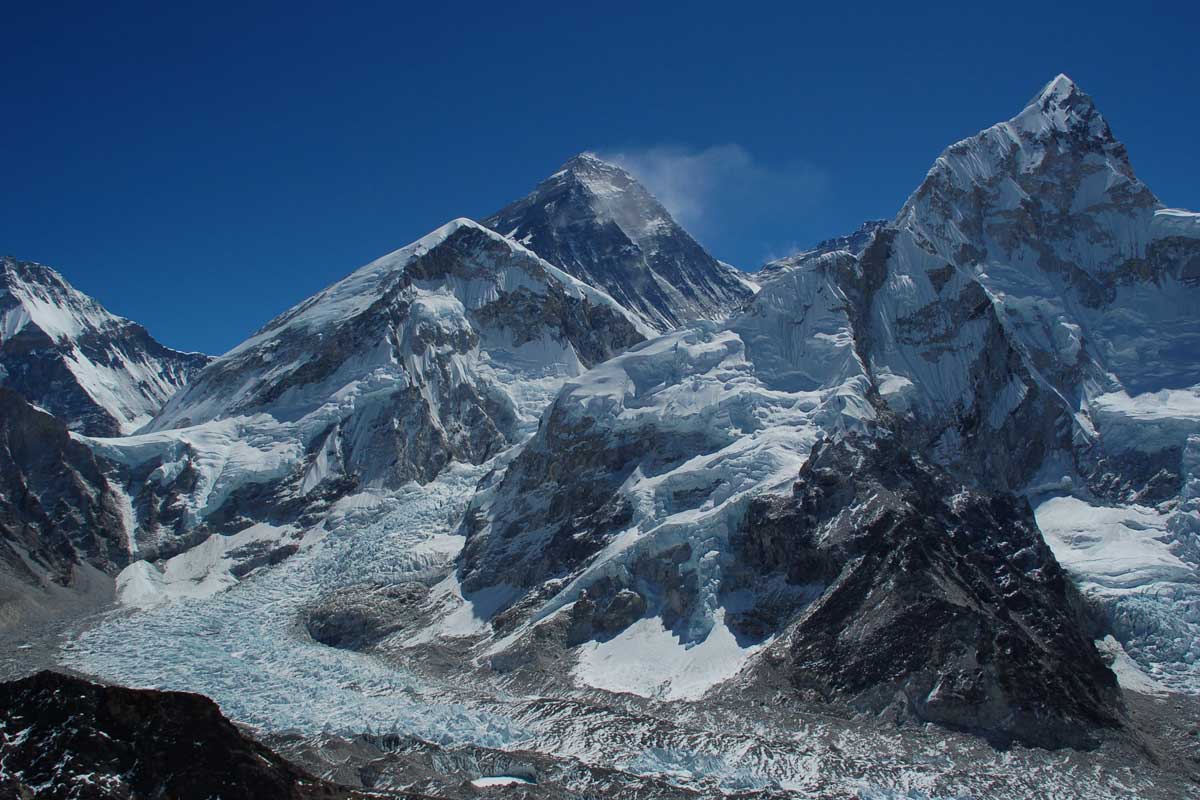
•    Kala Patthar (5,545m): Famous for providing the closest and most dramatic "face-to-face" view of Mt. Everest and the Khumbu Icefall.

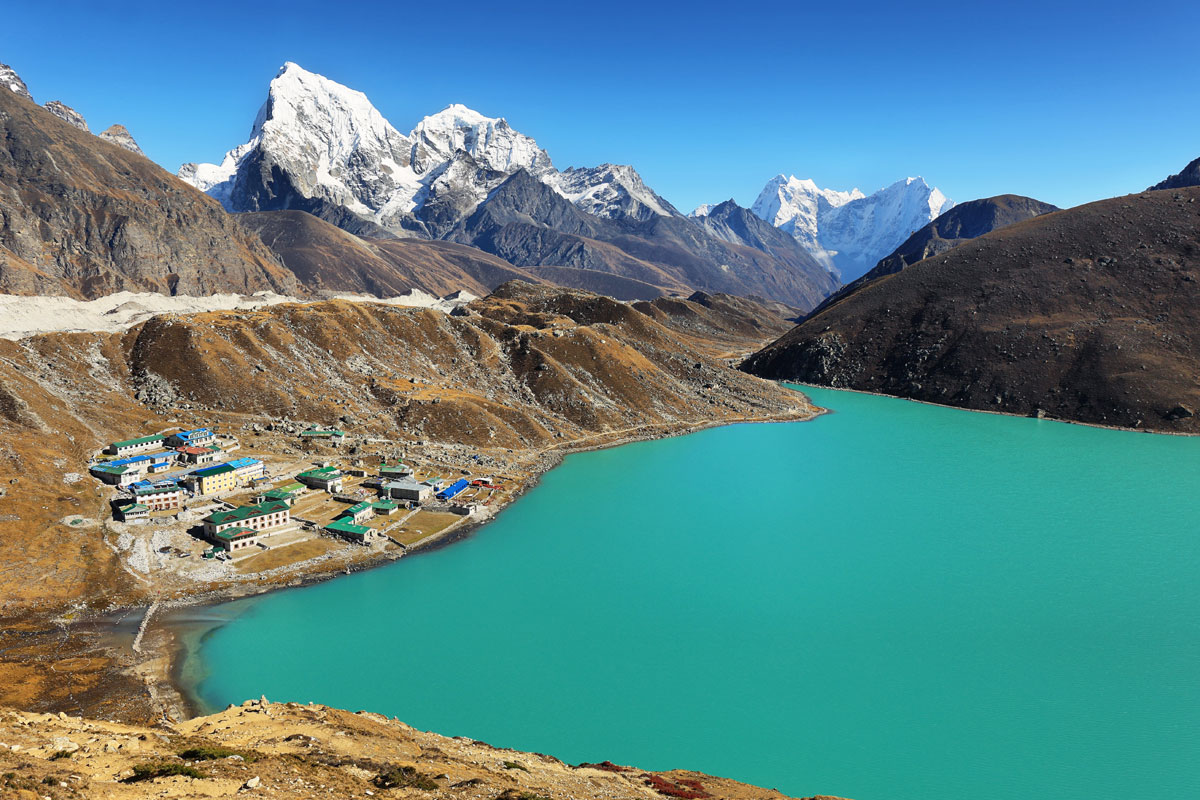
•    Gokyo Ri (5,357m): Renowned for its massive 360-degree panorama, where you can see four 8,000m peaks at once Everest, Lhotse, Makalu, and Cho Oyu, rising above the turquoise Gokyo Lakes.

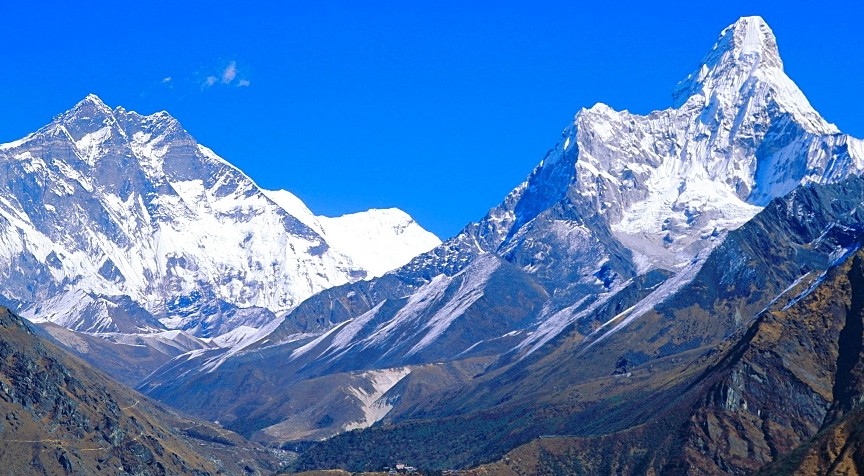
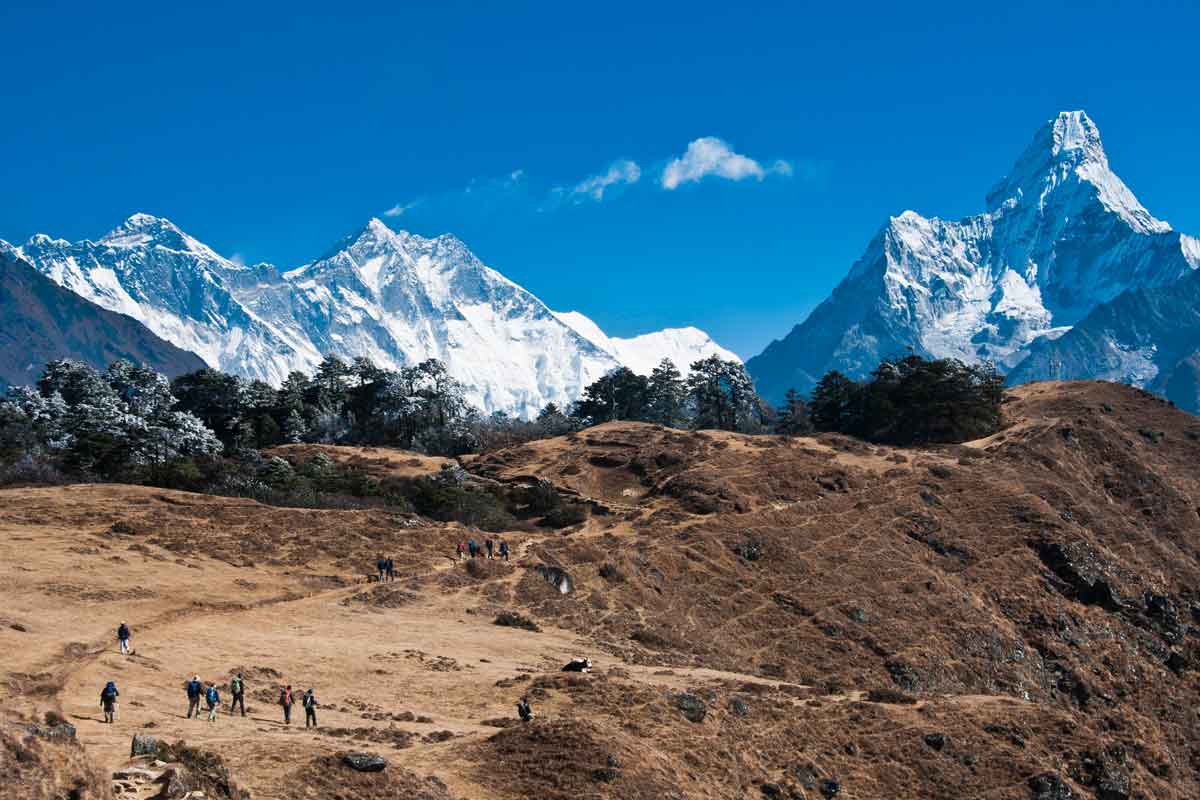
•    Kongma La Pass (5,535m): Offers a rugged, high-altitude perspective of the Nuptse-Lhotse wall and the iconic spire of Ama Dablam.

•    Cho La Pass ((5,420m.) Offers a wide valley of Dzongla and Chu Gyuma. Provides a bird's-eye view of the surrounding glaciers and many Himalayan peaks.


Please Note: Only climbing the Island peak, without high passes trek, You can complete in 18 days.

Sagarmatha National Park: Shortly after leaving Jorsalle, you enter a UNESCO World Heritage Site (est. 1976). This protected wilderness is a sanctuary for rare flora and fauna. The park’s conservation efforts make it very likely that you will encounter Himalayan Tahr and Musk Deer grazing along the trails, set against a backdrop of world-class mountain scenery.

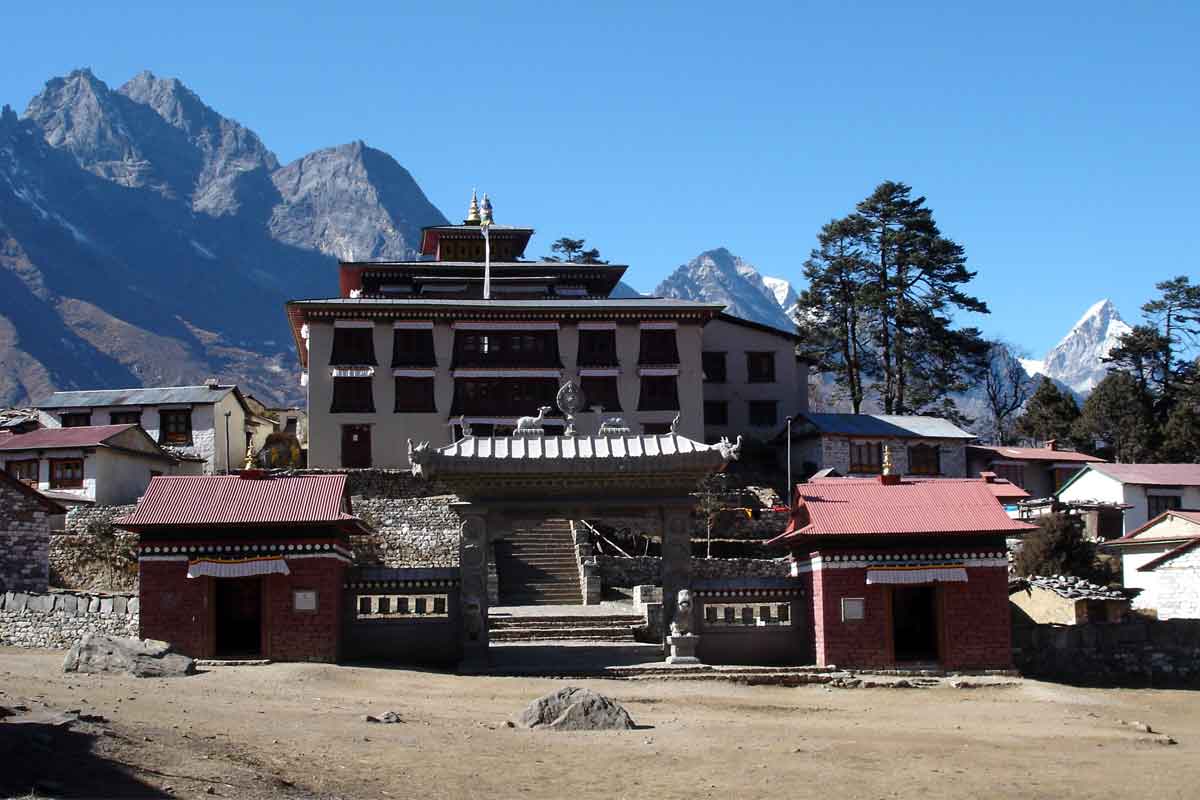
Buddhist (Sherpas) Monastery: If you are interested, during your trek can visit Namche, Tyangboche, and Pangbochde, monasteries in-route. Where you can meet with the Lama and monks, explore about Buddhism and Khumbu's Sherpa culture.

High altitude sickness and safety:

High-altitude sickness occurs when your body can’t get enough oxygen because the lower air pressure at higher elevation above 3,000m. when you ascend too quickly during the trek. At High elevation anyone at any time can be suffering from high-altitude sickness which is common, you don’t have to be nervous but please be attention. 

Altitude symptom: If you feel symptoms of high- altitude (Headache, vomiting, loss your appetite, Dizziness and trouble falling asleep) stop to ascending immediately descend as possible. Eat enough garlic soup, take lots of hot drinks and rest. Next day you will feel better, if not your guide will look for another solution check at H.R.A. (Himalayan Rescue Association) clinic at Pheriche. In serious cases, clinic will recommend a rescue we can arrange an emergency helicopter evacuation.

Emergency Helicopter Evacuation: Your safety is our absolute priority. In the event of serious illness or injury, our guides are trained to act immediately. They will maintain constant communication with our Kathmandu-based agency to coordinate a rapid response.

We can arrange an emergency helicopter evacuation from any point on the trail back to Kathmandu within a few hours (weather permitting). To ensure a smooth and life-saving rescue, we require all our guests to have travel insurance that specifically covers high-altitude helicopter rescue and medical evacuation. Our team will handle all the logistics with your insurance provider and the helicopter operators so that you can focus entirely on recovery.

Travel Insurance & Rescue: Unfortunate illness or injury can happen to anyone, anywhere. In the remote mountain regions where we trek, your safety is paramount. Because ground transport to the nearest clinic can be slow, we rely on rapid aerial response.

•   Helicopter is one of the fastest rescue service but is extremely expensive.

•    Action Required: We strongly advise you to issue a 'comprehensive travel insurance policy' from your home country or in Kathmandu. Your policy must specifically cover emergency helicopter evacuation and medical expenses at high altitudes (up to 6,000m. 

Pro Tip: Please Always carry a digital and printed copy of your insurance certificate and the 24-hour emergency contact number for your provider.

Safety Note - Animal Caravans:  In the Khumbu (Everest) Kalapatthar and Island peak region, you will frequently encounter caravans of Yaks, Jopkyos, and Mules transporting goods. If you hear bells ringing in the distance, start looking for a wide spot in the trail to step aside immediately. It’s much easier to find a safe spot early than to scramble when the caravan is right on top of you.

Always move to the mountainside (the inner wall) of the trail and wait for the animals to pass. Never stand on the cliff-side edge. 

The Best Season and Weather:

Due to the effects of global warming, mountain weather has become increasingly unpredictable. However, the Himalayan seasons generally follow these patterns:

Spring Season (March - May) Spectacular clear views. The stable weather brings excellent visibility. Above 3,000m, beautiful landscape with Himalayan rhododendrons and various wildflowers in full blossom.

Autumn Season (September - November) one of the spectacular, uninterrupted views of the mountains and high Himalaya. Perfect temperatures for trekking, making days enjoyable one of the best times for the trek.

Winter (December – February) & Summer (June – August): These seasons present significant challenges for Trekking peak climbing. In winter, heavy snowfall frequently blocks the high Passes, making the crossing dangerous or impossible. During the summer monsoon, heavy rains result in poor visibility and the presence of leeches on the trails. More importantly, the risk of landslides increases, and rising river levels can wash out trekking paths or block the motor roads leading to the trailhead.

Practical Detail and Trekking Services:

Permits and Fees: For Mt. Everest - Khumbu region trekking permits are generally not required. You will only need Island Peak climbing permit, Sagarmatha National Park, entry permit and a TIMS card (Trekkers' Information Management System). We will handle the arrangement of these for you. Khumbu Passang Lhamu, local government fees will be managed and arranged by your trekking guide on the spot.
Your Trekking Accommodation:  At Island peak, region there are several small hotels lodges and restaurants are available. During your journey, you will stay in charming local hotel or lodges on a bed-and-breakfast basis. While mountain facilities are simpler than those in Kathmandu, they offer cozy atmosphere and the legendary warmth of Himalayan hospitality. Your stay at Base Camp includes tented lodging and full meal service, ensuring you stay rested and nourished before your summit push.

Your Daily meals at Trekking: Each lodge or small restaurant you will get vegetarian or non veg. dishes, different kinds of breakfast set, lunch and dinner. Authentic Nepalese Dal Bhat, Tarkari, chapati, Tibetan breads, momos, Stew, pasta, noodles, pizza, several items of fresh organic vegetables, potatoes, meats, eggs, soups, hot and cold drinks, which you can check at menu. Your guide will assist in arranging delicious lunches and dinners daily.

Climbing / Trekking Guide: To ensure the highest safety standards and a successful summit, you will be led by a highly experienced, government-registered climbing guide. They are experts in high-altitude safety, technical manoeuvres and weather assessment.

Porters: We provide dedicated porters to carry your personal luggage and heavy gear, allowing you to focus your energy on the trek and the climb.

Domestic Flight: To maximize your time in the mountains and avoid several days of strenuous trekking, this itinerary includes domestic flights between Kathmandu and Lukla. This 30 to 35-minute scenic flight brings you directly to the "Gateway to Everest," ensuring you start your trek fresh and on schedule.

Transportation in Kathmandu: To ensure your arrival and departure are as smooth as possible, we provide private vehicle car, van or bus as group size, transfers for all your airport needs.

Your Daily Trekking Routine: 

Life on the trail follows a peaceful, structured rhythm designed to keep you energized and immersed in the landscape.

The Morning Call: Your day begins gently. Early in the morning, your guide will bring a hot cup of tea or coffee directly to your room, followed by a bowl of warm water for washing. After freshening up and packing your duffel bag, you’ll head to the dining hall. A fresh, warm breakfast is served as you take in the morning sun hitting the surrounding peaks.

The Trail & Midday Break: The day is spent at a steady, comfortable pace. Along the way, you’ll enjoy scenic strolls, capture photographs, and explore local culture—visiting monasteries, schools, or villages with your guide.

Lunch between 11:00 AM and 1:00 PM, featuring a freshly prepared hot meal and drinks. Following lunch, you’ll have about an hour to digest and relax before resuming the afternoon leg of the journey.

Afternoon Arrival & Evening Relaxation: Upon reaching the day’s destination, your guide will handle your hotel or lodge check-in. Once you’ve settled into your room, the late afternoon is yours to enjoy. Relax in the heated dining hall with hot drinks, biscuits, and local cheese. You’ll place your dinner order early to ensure a fresh meal at your preferred time.

Evening Briefing: During dinner, your guide will recap the day’s highlights and provide a detailed briefing on the terrain and plan for the following morning.
Required Climbing Gear: For your safety and comfort on the mountain, please ensure you have the following technical equipment. You are responsible for providing your own gear; however, high-quality equipment can be purchased or rented in Kathmandu if needed.

2 non-locking carabiners 1 pcs, 2 D-Shaped locking carabiners 1 pcs, Steel Crampons 1 pair, Alpine climbing harness 1 pcs, mountaineering boots with high altitude liners 1 pair, Ice axe 1 pcs, Ski pools 1 pair, Ascender 1 pcs, climbing helmet 1 pcs, Snow Glass 1 pcs, Snow gloves 1 pair, Expedition style gaiters (ensure fit over your boots) 1 pair.

Trekking equipment check list: Trekking boots, light shoes / trainers, down or fibre pile jacket, fleece or sweater, shirts (x 2), long and short trekking trousers (and /or long skirt for women), windproof jacket & trouser, waterproof poncho, sun hat, woollen cap, gloves, woollen socks (x 3), underwear.

Other essential items: Kitbag and padlock, small rucksack, down sleeping bag (4 seasons +) with inner liner, water bottle (1 litre capacity), head torch, personal first aid, sun and snow glasses/goggles, sun cream (factor 15+) & lip slave, towel & wash kit, whistle, passport, passport-size photographs, plastic bags, money belt.

Optional: Camera (with high-capacity memory cards and extra batteries), trekking poles / walking sticks, binoculars, notebook, pen etc.

Sleeping bag: We strongly suggest bringing down sleeping bag (-20 degree Celsius) with an inner liner. Because hotels / lodges blankets are not always warm and clean enough to meet your personal standards. If you, doesn’t have sleeping bag you can buy or hire at Kathmandu as your size.

Why Choose a Trekking Agency in Kathmandu?

While some trekkers explore the Himalayas independently to save on costs, they often overlook a critical question: "If something goes wrong, what is the solution?" Trekking in Nepal is vastly different from hiking in Europe or Western countries. The terrain is rugged, the altitudes are extreme, and conditions can change in an instant. When you trek with us, your small investment does more than just book a trip-it ensures a seamless, high-quality experience defined by a family atmosphere and total peace of mind.

Safety First: In the wilderness, unexpected challenges, from altitude sickness to unpredictable weather can arise at any moment. Without professional support, these situations can quickly become life-threatening. We provide the essential safety net and emergency logistics required to keep you safe.

The Service Difference: The mountain panorama remains the same for everyone, but the quality of your journey is defined by the service you receive. By booking through a government-registered agency like ours, you gain access to:

•    Expert Guidance: Professional guides who are fluent in the local culture, trail secrets, and shifting weather patterns.

•    Reliable Support: Dedicated porters to handle the heavy lifting, allowing you to walk freely and focus on the scenery.

•    Stress-Free Logistics: We manage every detail, from your date of arrival to departure, so you never have to worry about the "what ifs."

Your journey with us isn’t just a holiday; it’s a commitment to quality, safety, and a happy, stress-free life on the trail.

✅ Final Note:
Who can join Island Peak climbing and trek?

Island peak climbing and trek designed for anyone who is physically fit, healthy, and passionate about exploring the high Himalayas. We welcome men and women between the ages of 16 and 70 to join us with confidence.

This peak climbing and trek are suitable with friends, groups or single with a guide. Being surrounded by such a beautiful organic, natural Himalayan environment is proven you feeling excited, happy, stress-free, and full of sweet, unforgettable memories once in your life. 
Preparation and Support: You are never alone in your preparation. We provide comprehensive information and a full briefing in Kathmandu before you set off. Once on the trail, your guide will provide a clear, day-by-day explanation of the plan to ensure you are always informed and comfortable.

Get in Touch: For more information regarding trekking seasons, exact durations, and a competitive, reasonable cost for your group (large or small), please contact us directly. We pride ourselves on providing a service that is faster, more personal, and more reliable than the rest.

Contact us via:

Email: hellokirken@gmail.com

WhatsApp / Messenger: Kirken Sherpa +43 664 55155 46

Direct Call: +43 664 55155 46

"Thank you for choosing our Island peak climbing / trekking and for being a part of our team. We look forward to trekking with you!"


Peak climbing /Trekking Season September to November.
March to May.
Kinds of Trek Tea House (Lodging) trek.
Max. Elevation 6,160m. Island peak.
Group Size 02 to 12 Persons.
Total cost per person  Euro 2,950.00

Single supplement Euro 380.00 extra cost.
The above-mentioned cost includes all the government taxes.
Group rates is available, can be negotiate.

What’s Included

  4 nights in Kathmandu at 3-Star hotel with bed & breakfast on twin sharing basis. 

 19 nights tea house (Lodging) trek & peak climbing all the meals (breakfast- lunch - dinner) with hot drinks.


 Kathmandu / Lukla / Kathmandu flight.

 Kathmandu airport / hotel / airport transfers by private vehicles.    


   Sagarmatha national park entry fee.

    Island peak climbing permit's fee.

   TIMS and local government fees.


 1 experienced English-speaking trekking + Peak climbing guide with climbing equipment. 

  1 porter between two climbers /  trekkers ( 25 to 30 kg. weight)


   Fix ropes and main ropes.

   Ice axe and other necessary climbing gear.

 Medical, life and rescue insurance for trekking + climbing guide and porters.

Continue cost included

What’s Not Included

❌ Main meals (lunch + dinner) and drinks in Kathmandu.                                                 

❌ Personal climbing equipment.         

❌ Personal expenses alcoholic beverages, drinks, laundry services and hot shower.

❌ Medical and travel insurance for the trekkers. 

❌ Emergency helicopter rescue charges for the trekkers if necessary.

❌ International airfare (flight ticket) and taxes.

❌ Any kinds of visa for Nepal.                                                                                       

❌ Tips for trekking & climbing staffs. 

Daily Itinerary

Warm Welcome: Upon your arrival at the Tribhuvan international airport, our representative will meet you at the airport terminal with a personalized sign, handling your luggage, welcome you with colourful flowers, drive to star hotel as your booking. Upon arrival at your hotel, you will be served a refreshing welcome drink at reception while our team assists with your check-in.

First Evening & Briefing: In the evening, you can enjoy dinner at your hotel or a local restaurant. During this time, our Tour Manager will conduct a comprehensive briefing, covering your trekking itinerary, safety protocols, and any other essential information for your upcoming adventure.

  Breakfast + lunch + dinner with hot drinks.  3-star hotel as your booking at Kathmandu.
Kathmandu is a vibrant hub of culture and heritage, home to some of the world's most significant Buddhist stupas and Hindu temples. Following breakfast, you are free to spend the day exploring the historic sites across Kathmandu, Bhaktapur, and Patan.

Getting Around: For longer distances-such as visits to Boudhanath, Pashupatinath, or Swayambhunath, as well as excursions to the neighbouring cities of Bhaktapur and Patan, hiring a taxi is the most convenient option.

Rickshaws & Walking: Within the Kathmandu city centre including Durbar Square, New Road, and the Thamel tourist market, you can enjoy a traditional rickshaw ride (a three-wheeled bicycle) or simply explore the bustling streets on foot.

Important Notes: Please be aware that all UNESCO World Heritage sites in Kathmandu, Bhaktapur, and Patan require an entry fee for visitors.

Shopping & Souvenirs: Thamel, the city's primary tourist hub, is filled with shops selling high-quality trekking equipment and unique souvenirs. Keep in mind that the Nepalese market culture is quite different from Western standards don't forget to friendly haggle for a discount!

Dining: For lunch and dinner, you will find an array of excellent restaurants offering diverse international and local menus to suit every palate.

Need a hand?  If you require a professional city guide or any further information to help plan your day, please do not hesitate to contact us.
 

Important Flight Note: To manage air traffic and parking congestion during the peak trekking seasons, the Civil Aviation Authority often redirects all Lukla flights shift to Manthali Airport in Ramechhap.

If direct flights from Kathmandu are unavailable, After lunch, we will drive you from Kathmandu to Manthali via private vehicle (approximately a 5 to 6-hour scenic drive. You will spend the night at a local hotel in Manthali (Bed & Breakfast included).

The Flight: The next morning, you will take a short, 20-minute flight from Manthali to Lukla airport.

 3-star hotel with bed and breakfast.

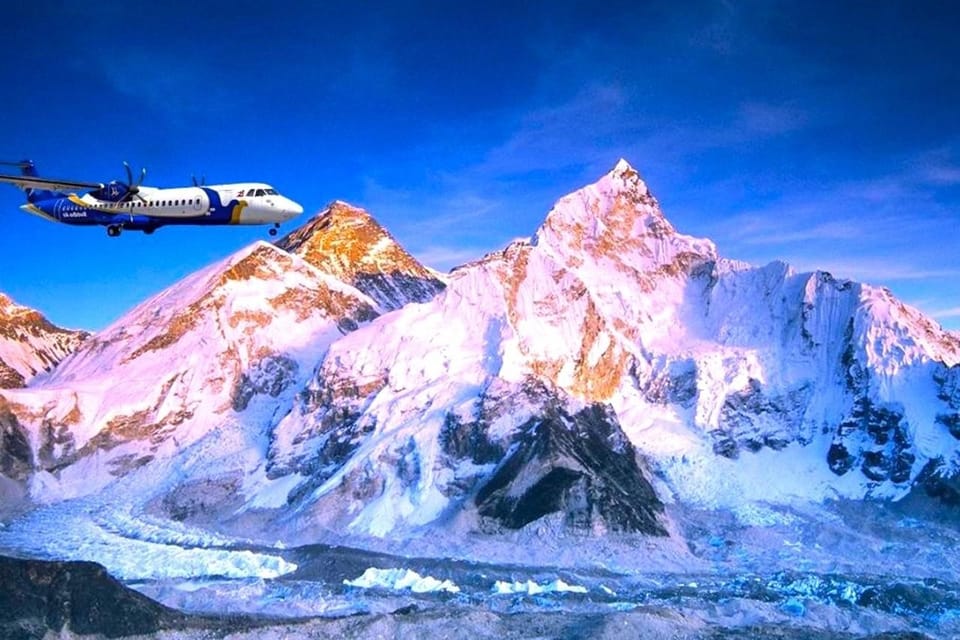
The Flight: After an early breakfast, your guide will escort you to the airport for 30 to 35-minute flight to Lukla (2,840m). Keep your camera ready! From the plane, you’ll enjoy breath-taking views of the Jugal Himalayan range, Gauri Shanker, Dudh Kunda, and Kwangde and beautiful mountains villages.

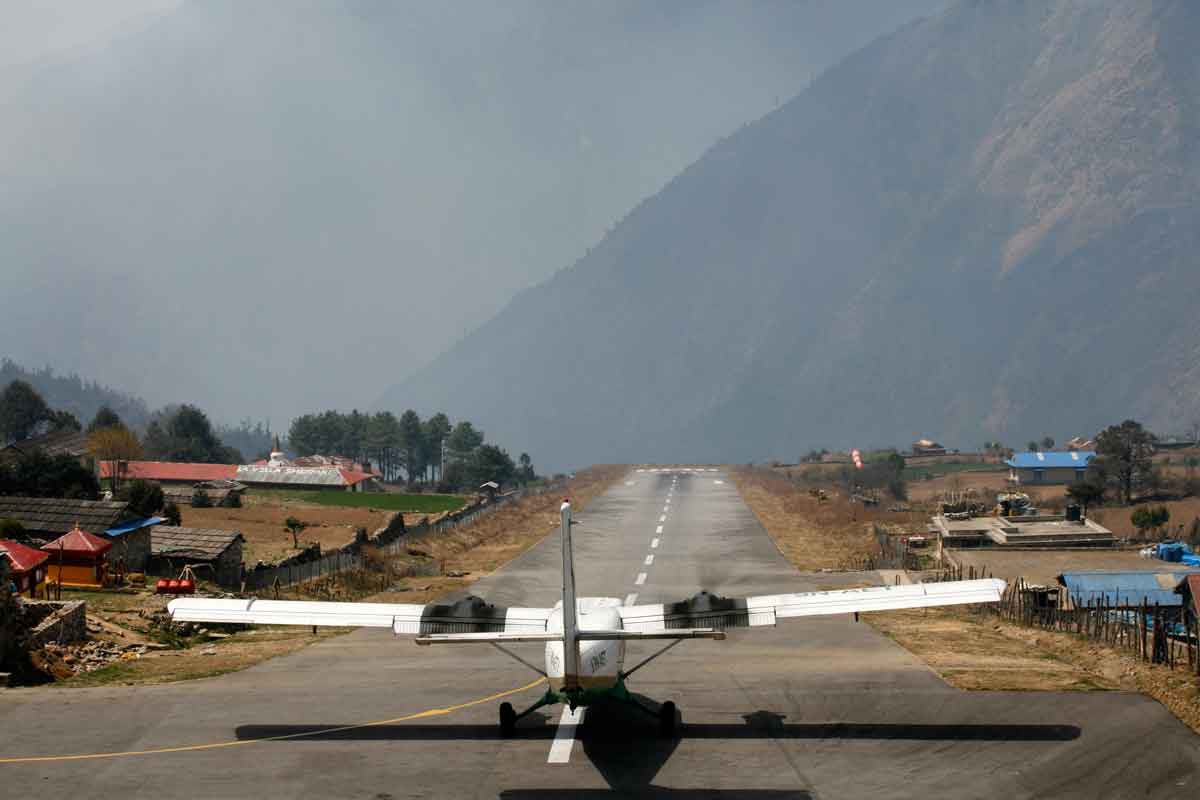
Beginning the Trek: Upon landing at the world-famous Tenzing-Hillary Airport, you will enjoy lunch and meet our team of porters who will assist with your luggage.

The Path to Phakding: If we arrive on schedule, we will begin an easy 3-hour trek to Phakding village. This stretch is a gentle introduction to the region, winding through local landscapes.

Flexibility First: In the event of flight delays due to weather, we will stay overnight in a comfortable hotel in Lukla and begin our trek the following morning.

 Breakfast + lunch + dinner with hot drinks.  Lodging at Phakding. Approx. 3 hours.

The Journey Upward: Following breakfast in Phakding, we begin a scenic trek through the villages of Benkar and Jorsalle, eventually reaching the Sagarmatha National Park check post at Monjo village. Register Sagarmatha National Park, entry permits at the post.

Trek continue, the trail leads us to Larja Dobhan, a stunning point where two glacial river, the Dudh Koshi (from the Everest region) and the Bhote Koshi (from the Thame region meet. After crossing the high suspension bridge, we begin the steady, famous ascent toward Namche Bazaar.

The First Glimpse: We will stop for lunch at Top Danda. If the weather is clear, this is where you will be rewarded with your first magnificent view top of Mt. Everest.

There are several charming tea houses along the route, between Phakding to Namche Bazaar, where you can stop for a hot or cold drink and a short rest.

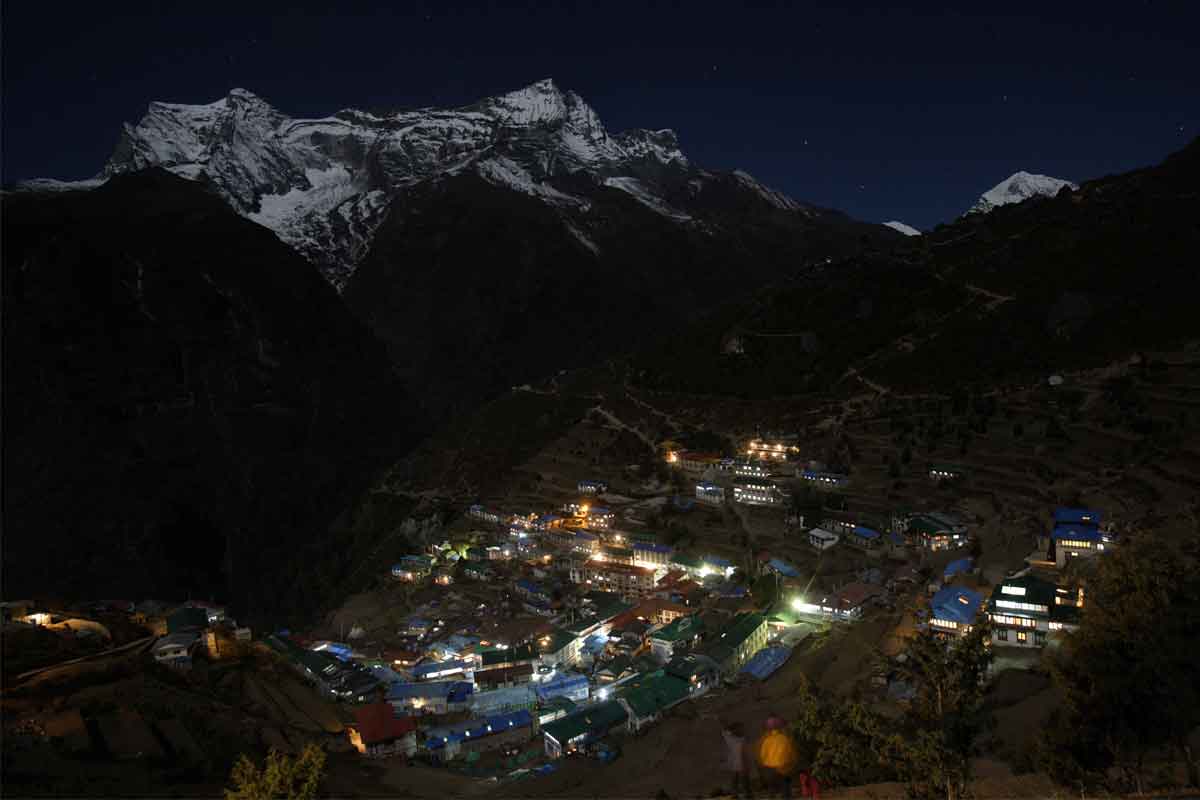
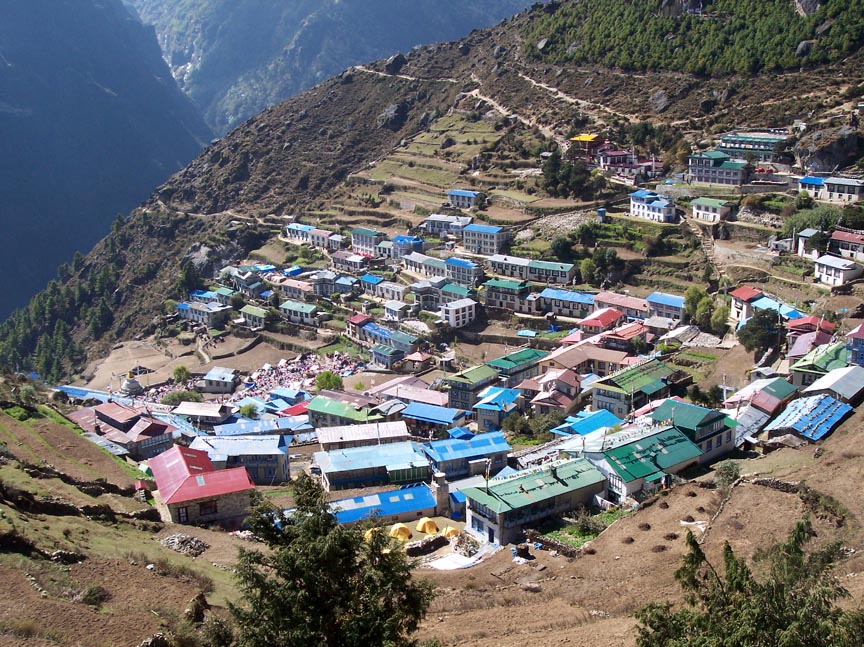
Welcome to Namche Bazaar (3,440m): Namche is the vibrant "capital" of the Khumbu region. Your guide will select a high-quality hotel / lodge for your two-night stay. This bustling mountain town offers many modern comforts, including:

Trekking Shops, Reliable Wi-Fi services and ATM, Cafes, bakeries, and local markets.

Guide's Note: The climb to Namche is a significant gain in altitude. Remember to "Bistari, Bistari" (slowly, slowly) and drink plenty of water as we ascend.

 Breakfast + lunch + dinner with hot drinks.  Lodging at Namche Bazaar. Approx. 5 to 6 hours.


Now that you have reached 3,440m, a rest day is essential for your body to adjust to the thinning air. This is not just a day off, but a day to prepare for the higher altitudes ahead.

Morning Exploration: After breakfast, we will take a gentle walk around Namche Bazaar. You can visit, The Sherpa Village & Monastery: Experience the local culture and spiritual heart of the region.

National Park Museum: Learn about the history of Everest expeditions and the unique flora and fauna of the Himalayas.

If you are feeling healthy and energized, we will trek up to the famous Everest View Hotel (3,880m) in Shyangboche.

World-Class Views: ''Hotel Everest view'' This Japanese-run hotel holds the record for the highest elevation hotel in the world.

Acclimatization: By hiking to 3,880m (440m higher than Namche) and then returning to Namche to sleep, you are following the best medical practice for high-altitude safety "Climb High, Sleep Low" 

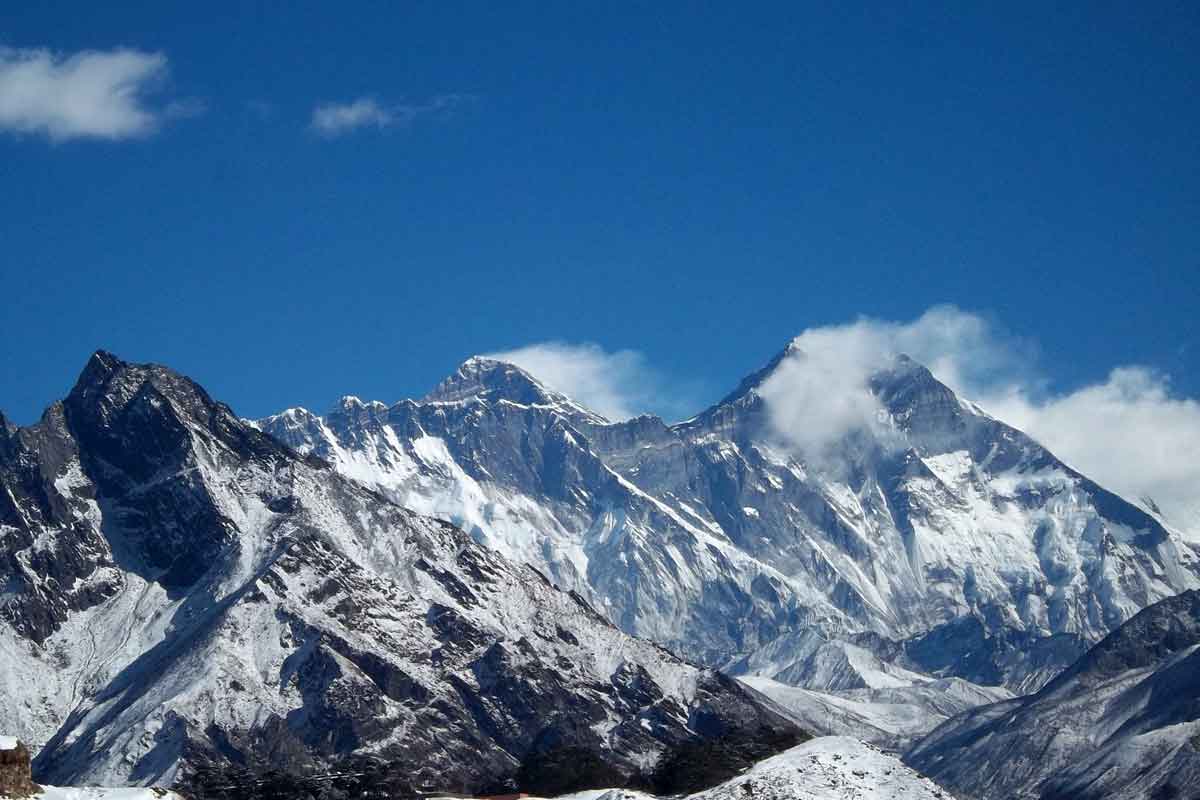
Himalayan Panorama: From the terrace of the Everest View Hotel or National Park Museum, you will be rewarded with a spectacular 360-degree panorama:

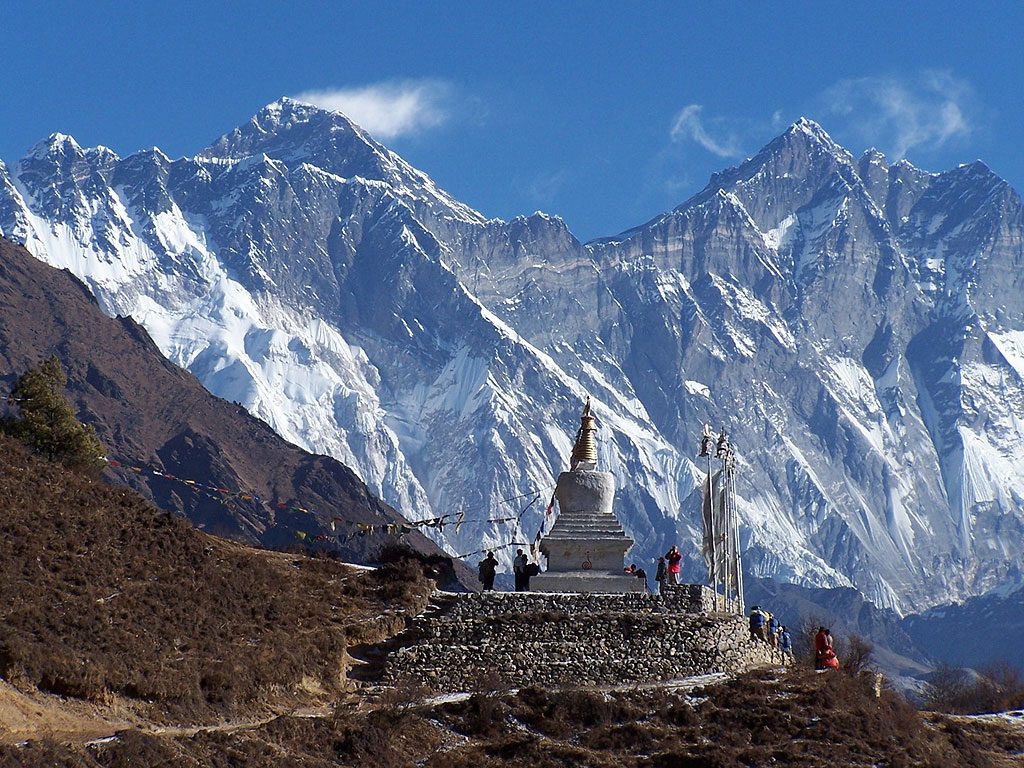
Mt. Everest 8,848,86 m. Lhotse 8,516 m. Nuptse 7,861 m. Changtse 7,543m. Baruntse 7,152.  Ama Dablam 6,812 m. Thamserku 6,608 m. Khangtega 6,782m. Tawuche 6,367m. Khumbi Yul-Lha 5,761m. Kwangde peak 6,011m. and several Iconic Himalayan peaks.

 Breakfast + lunch + dinner with hot drinks.  Same Lodge at Namche Bazaar.   Approx. 3 to 4 hours.

The Scenic Route: Following breakfast at your hotel in Namche, we begin our journey with a relatively easy trail that offers sweeping panoramic views of the Everest massive. We will stop for lunch at Sanasa a beautiful place with Thamserku panorama. After a short rest to soak in the views, we continue with a gentle descent to Phungi Tenga, situated by the river.

After crossing the suspension bridge over the Dudh Koshi, we begin a steady, gradual ascent through lush rhododendron forests toward Tyangboche monastery.

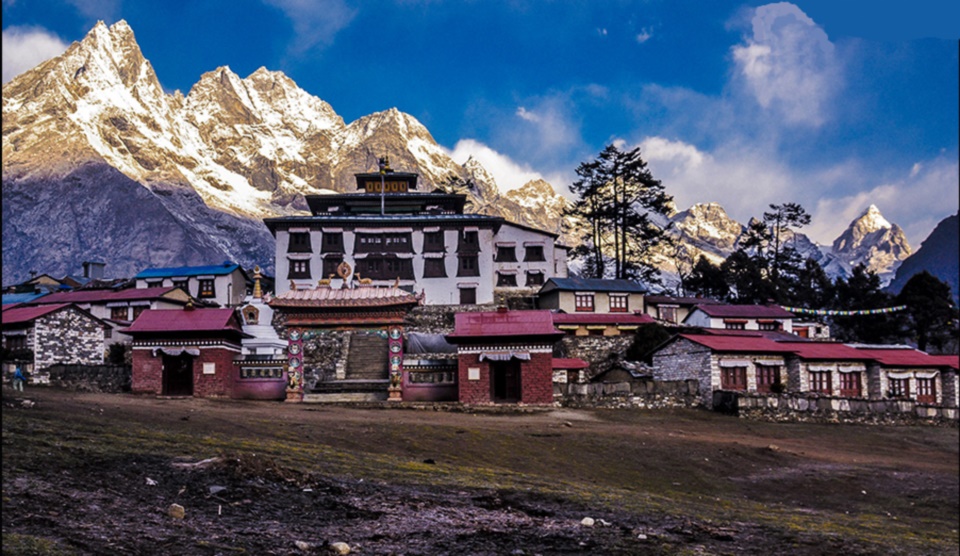
Tyangboche Monastery (3,867m): Tyangboche is home to the most famous Buddhist monastery in the Everest Khumbu region. Perched on a high ridge, it offers a legendary 360-degree panorama of the surrounding peaks, including Everest, Lhotse, and a particularly stunning view of Ama Dablam.

At Tyangboche, there few hotels and lodges. Your guide will select a comfortable hotel or lodge with the best available views for your stay. If timing permits, you may have the opportunity to observe the monks during their evening prayers inside the monastery a truly peaceful and unforgettable experience.

 Breakfast + lunch + dinner with hot drinks.  Lodging at Tyangboche. Approx. 5 to 6 hours.


The journey through ancient trails: After breakfast in Tyangboche, we begin our day with a gentle descent through a beautiful forest toward the Imja Khola river. Along the way, we pass the Deboche (Diuche) Ani Nunnery, a peaceful residence for Buddhist nuns.

Pangboche Village: We stop here for lunch. This village is home to the oldest monastery in the Khumbu region. Before lunch, you can visit the monastery to see the famous scalp and hand bone of a Yeti, which have been preserved by the local monks for generations.

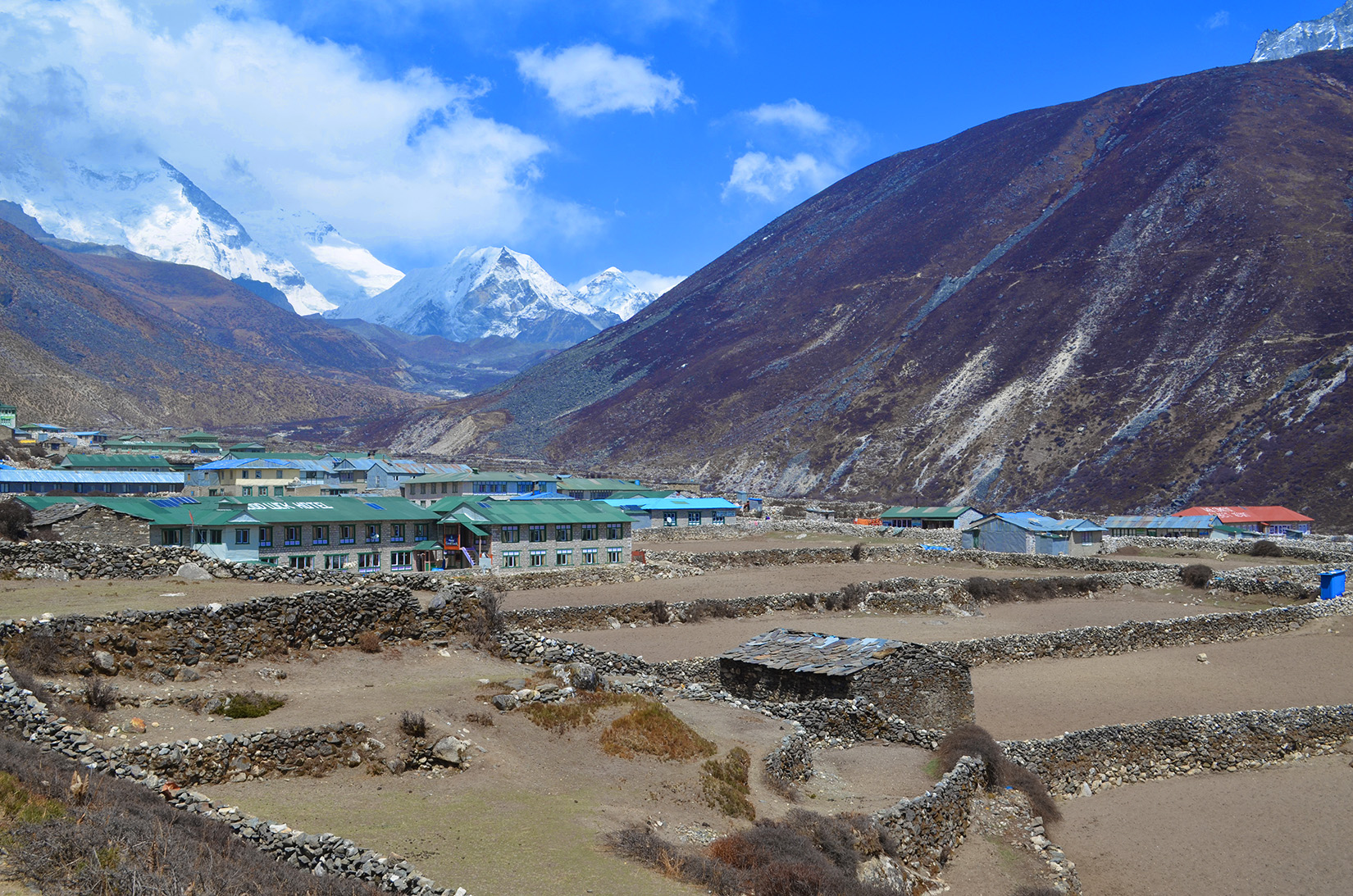
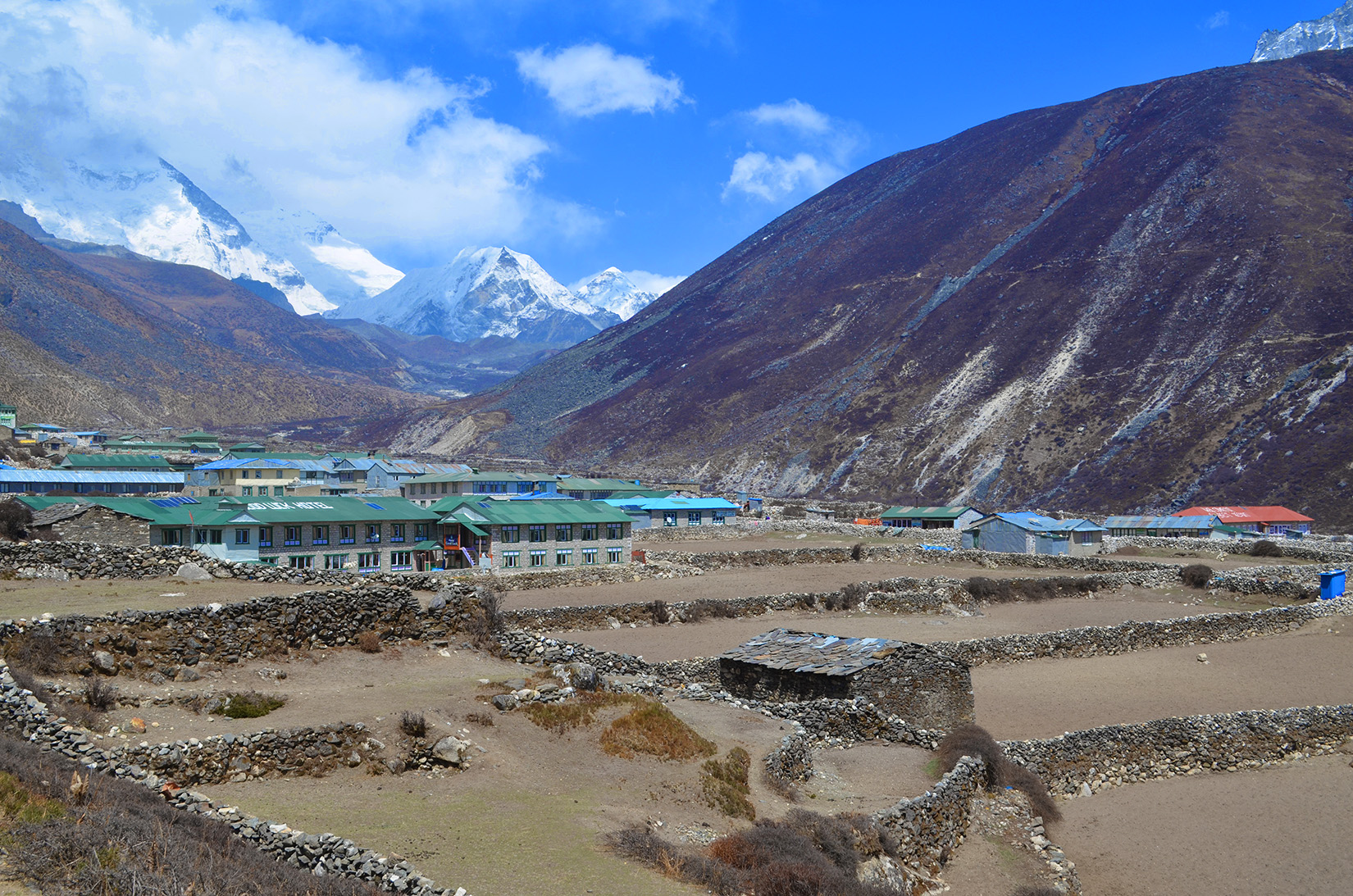
Dingboche village: After lunch, the trees begin to disappear as we enter the alpine zone. We trek onward to Dingboche (4,410m), a village known as the "Summer Settlement" for local farmers from Pangboche village. At Dingboche there are several hotels and lodges for trekker's accommodation and meals. Your guide will select a high-quality hotel or lodge for your night stay. 

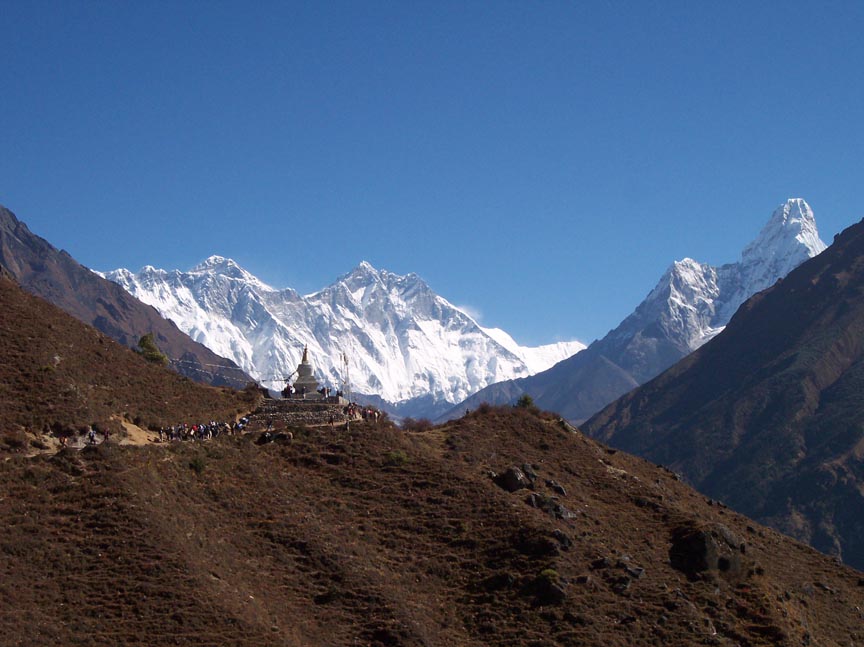
From Dingboche, you can see 'The Lhotse South Face'  A massive, towering wall of rock and ice that dominates the northern skyline. Ama Dablam, from this angle, the mountain takes on a completely different, even more dramatic shape.

 Breakfast + lunch + dinner with hot drinks.  Lodging at Dingboche. Approx. 6 to 7 hours.

Before attempting Island Peak, proper acclimatization is essential. To prepare your body for high altitude, we follow the "climb high, sleep low" principle. After assessing your health with your team and guide, you can choose one of the following two options for your acclimatization hike:

Option 1: Kongma La Pass (5,535m)
The Hike: A 5 to 6-hour steady climb from Dingboche and descend..

The Reward: Spectacular, unique views of Makalu and the surrounding Khumbu Himalayan peaks from a rarely seen angle.

Option 2: Just relax take hot shower, explore the village or climb high as you can.

After breakfast, ensure you have plenty of water and a packed lunch. Explore either Kongma La or Chhukung Ri, after the panoramic view back to Dingboche to spend the night at the same lodge.

  Breakfast + lunch + dinner with hot drinks.  Same Lodge at Dingboche.  Approx. 5 to 6 hours.

Into the Imja Tse Valley (Chhukung) The Gradual Ascent: After breakfast in Dingboche, we begin a short but vital leg of the journey toward Chhukung (4,730m). We trek eastward, deep into the Imja Tse Valley. While the trail offers a gradual incline, you will likely feel the effects of the thinning air. We keep a slow, steady pace to ensure your body continues to acclimatize successfully.

As you move closer to the head of the valley, the Lhotse South Face becomes even more massive and imposing, dominating the horizon.

Afternoon in Chhukung: We aim to reach Chhukung by lunchtime, giving you plenty of time to settle in and enjoy the high-altitude surroundings. After lunch, you can relax and soak in the panoramic views of the glaciers and surrounding peaks.

Acclimatization Hike: To stay active and help your lungs adjust, we will take a short afternoon exploration hike toward the nearby glacier before returning to Chhukung for dinner.

 Breakfast + lunch + dinner with hot drinks.  Lodging at Chhukung.  Walking hours approx. 3 to 4 hours.

Approach to Base Camp: After breakfast in Chhukung, we head toward our final destination before the summit: Island Peak Base Camp (5,200m). Following the left fork of the Imja Khola, the trail takes us through rugged, glacial terrain. We aim to arrive at Base Camp in time for a warm lunch.

At Island peak Base Camp, you will move from lodges into fixed tent accommodations, where our staff will provide your meals. The afternoon is dedicated to your safety and preparation:

Technical Briefing: Your climbing guide will provide detailed instructions on the route and safety protocols. Gear Demonstration: We will conduct a practical "dry run." You will practice using your Ascender (Jumar), switching carabiners on fixed ropes, and ensuring your crampons are perfectly fitted to your boots.

After an early dinner, you will retire to your tent to sleep. Before you sleep, ensure the following are ready for the morning:

Headlamp: Test the batteries and keep it inside your sleeping bag to keep them warm.

Layers: Lay out your summit clothes in the order you will put them on.

Water: Ensure your water bottles are filled (and insulated if possible).

 Breakfast + lunch + dinner with hot drinks.  Tented lodging.Walking hours approx. 3 to 4 hours.

The Goal (6,160m): Today is the day you have worked so hard for. The Summit of Island Peak (Imja Tse). The Early Start Success on Island Peak begins in the dark. At 3:00 AM or 4:00 AM, your guide will wake you for a "mountaineer's breakfast." Sip a hot coffee, secure your headlamp, and prepare your gear.

Essential Fuel: Ensure you have at least 2 liters of boiled water and high-energy snacks (bars or chocolate) tucked inside your jacket to prevent them from freezing.

Following your guide's lead, you will move steadily upward. You will trek through rocky terrain until you reach the "Crampon Point" at the edge of the glacier. Here, your guide will help you secure your harness and crampons.

The Ridge & Fixed Ropes: You will traverse the glacier and move onto the steep South Ridge. Using your ascender (Jumar) on the fixed ropes, you will navigate the final headwall leading to the summit.

The Summit (6,160m): Once you stand on the summit, you are rewarded with one of the most famous 360-degree panoramas in the world. You will see the massive south face of Lhotse (8,516m) towering just in front of you, along with Makalu, Baruntse, Ama Dablam, and Thamserku. If the weather is calm, we will enjoy a summit snack and take photographs to celebrate your achievement.

The Descent Safety First:  Most accidents happen on the way down. After the summit, your body will be tired, and the afternoon sun can make the snow and ice slippery. Move slowly and maintain your concentration during the rappel and the trek back to Base Camp.

Recovery: Upon reaching Base Camp, you will enjoy hot soup and drinks before we continue the trek back to the comfort of the lodge in Chhukung.

Option: If the weather is too windy or dangerous, we will stay at Base Camp and attempt the summit the following day.

  Breakfast + lunch + dinner with hot drinks.  Lodging. Approx. 8 to 10 hours.

Reserve day: You came for adventure and the chance to stand at summit of Island Peak; helping you achieve that dream is our primary goal. Today is a dedicated contingency day to ensure the best possible outcome for your expedition.

•    If the summit was missed yesterday: You will make a final attempt today and then trek back to Chhukung.

•    If the summit was successful: Enjoy a well-earned day of rest and relaxation in Chhukung or Dingboche.

•    Flexible Options: Alternatively, you may consult with your team and guide to adjust your plans based on your energy levels and the current conditions.

 Breakfast + lunch + dinner with hot drinks.  Base camp or Chhukung. Not sure.

After the excitement of Island Peak, we head toward the main Everest Base Camp trail. Depending on your energy and the weather, you can choose one of two paths to reach Lobuche (4,930m):

Option 1: The Standard Scenic Route (Easier)
This is a beautiful, lower-elevation trek that allows your body to recover while still enjoying world-class views. The trekking route descent to Dingboche for a morning coffee break, followed by a steady trek to Thukla (Dughla) for lunch.

After lunch, a short climb trek to Lobuche. Duration: Approximately 7 to 8 hours.

Option 2: The Kongma La Pass (Adventure Route)
For those seeking a high-altitude challenge, this route crosses the highest of the "Three Passes." An early start from Chhukung leads to the top of Kongma La Pass (5,535m). From here, the views of the Khumbu glacier and surrounding peaks are unparalleled.

The Crossing: After a pack lunch at the pass, we descend and navigate across the massive Khumbu Glacier to reach Lobuche.This route is only possible in good weather. If it is snowing or icy, we will take the standard route for your safety. Duration: Approximately 9 to 10 hours.

Welcome to Lobuche: Lobuche is a key stop on the way to Everest. Despite its high altitude, the lodges here offer good services and comfortable beds. Your guide will select the best available accommodation to ensure you get a good night's rest.

 Breakfast + lunch + dinner with hot drinks.  Lodging at Labuche. Approx. 7 to 8 hours.


The Journey Above 5,000m: Many trekkers overnight stay at Gorakshap for reach at Kala Patthat view point and acclimatization. You are well acclimatizing and strong enough, not necessarily  overnight stay at Gorakshap.

After breakfast in Labuche, we begin our trek toward Gorak Shep (5,164m). This is one of the most unique stretches of the journey, as you are now walking in the thin, dry air of the high Himalayas.

The trail winds along the edge of the massive Khumbu Glacier. You will be walking over rocky moraine and glacial debris. While the distance isn't long, the high altitude makes every step feel significant.

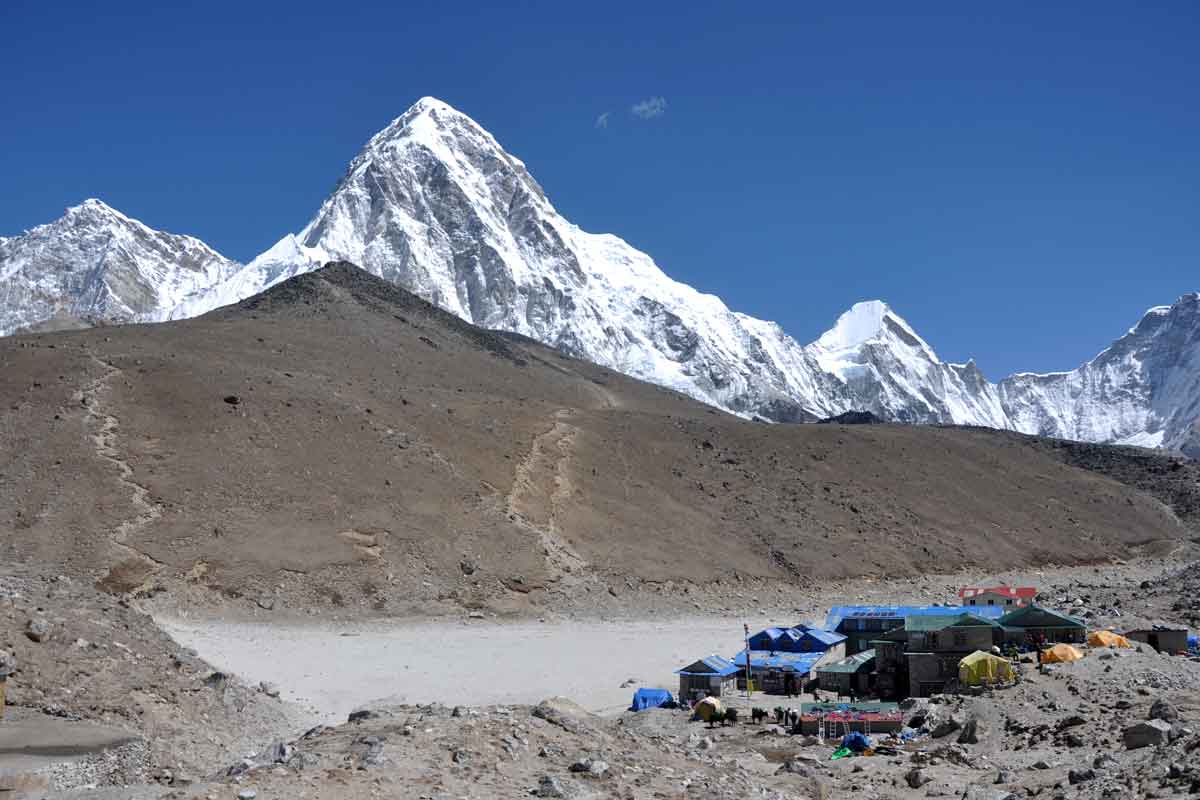
The panorama, as you walk, you are flanked by the towering walls of Nuptse and the perfect pyramid of Pumo Ri. At this altitude, "slow and steady" is the only way to go. We will take our time, allowing your body to adjust to the 5,000m+ environment.

Arrival at Gorak Shep: We aim to reach Gorak Shep in time for lunch. This small settlement is the final stopping point before Everest Base camp. After a warm lunch and plenty of fluids, at Gorakshap restaurant, we will trek continue ascend to Kala Patthar alt. 5,545m.

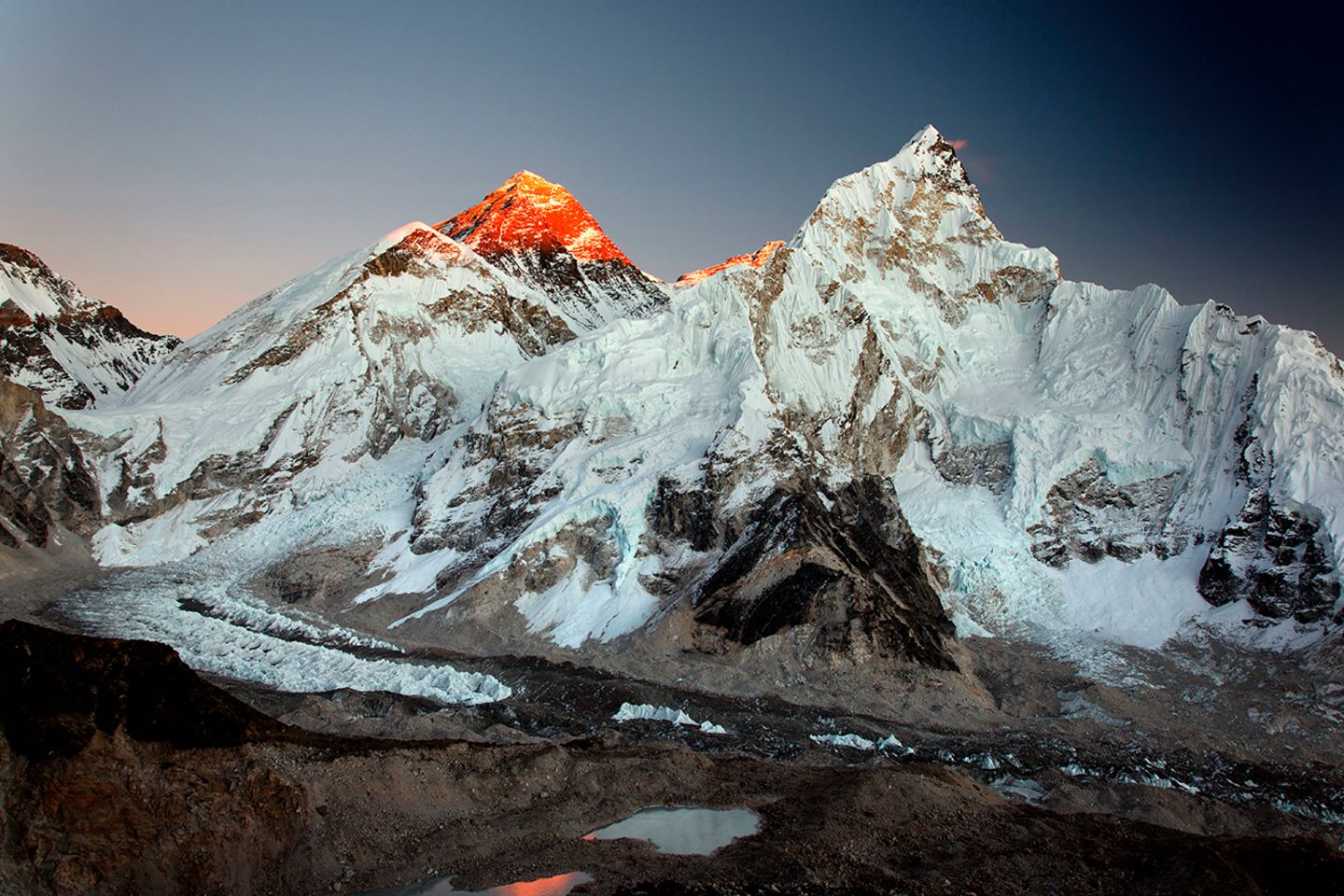
Panorama: Kala Patthar is only the view point to see Mt. Everest and Khumbu Icefall 'Face to Face' and other Himalayan peaks which you saw already.

After explore the panorama descend to Gorakshap for hot soup and drinks. Trek continue back to Labuche for overnight accommodation.

 Breakfast + lunch + dinner with hot drinks.  Lodging at Labuche.Walking hours approx. 6 to 8 hours.


After breakfast at Labuche trek to Dzongla for Cho La pass and Gokyo valley. Today we will take pack lunch, between Labuche to Dzongla, there are not any Tea House.

Dzongla: One of the quite place with spectacular panorama of Pheriche valley and giant Himalayan peaks. At Dzongla less trekkers than Everest Base Camp region. There are 4 to 5 guest houses with cozy room and delicious meals. Your guide will look a good lodge for your accommodation.

  Breakfast + lunch + dinner with hot drinks.  Lodging at Dzongla.  Approx. 5 to 6 hours.

The first pass Cho La (5,420m): Today is a demanding but rewarding 8 to 9-hour journey as you cross your first high pass. After an early breakfast, depart with your packed lunch and plenty of fluids. The trail leads you past the stunning Lake before beginning a gradual ascent toward the Cho La pass.

Technical Note: The section below the pass often involves ice and hard-packed snow. Depending on the conditions, your guide may set a fixed rope and advise you to use crampons. Please follow your guide's instructions closely for a safe crossing.

The Pass & Descent: At the top of Cho La Pass (5,420m), there is a solar charger station for your mobile, camara and power bank any one can charge free of cost. Take you pack lunch, enjoy the panoramic views, take photos and video before beginning your descent into the Chu Gyuma Valley. You will head toward Thagnak, where you’ll stop for a restorative break of hot soup and drinks.

Late Afternoon: After resting for about half an hour, the final leg trek  pass through Ngozumba Glacier to Gokyo lake for night accommodation. Ngozumba Glacier, the longest glacier in the Khumbu Himalayas. At Gokyo, there are several hotels and lodges with restaurant which made easier for this trek. 

Your guide will select a quality  lodge for your two-night stay at Gokyo. 

  Breakfast + lunch + dinner with hot drinks.  Lodging at Gokyo lake.Walking hours approx. 8 to 10 hours.

Summiting Gokyo Ri (5,360m): Today features a steady climb to one of the most iconic vantage points in the Himalayas. The effort is rewarded with a view that many trekkers consider superior even to Kala Patthar.

The Morning Climb: After an early breakfast, begin the gradual but steep ascent of Gokyo Ri. As you reach the summit, you will find the perfect spot to enjoy your packed lunch accompanied by hot tea or juice, soaking in the thin air and massive scale of the surrounding peaks.

Panorama: From the summit, you are treated to a staggering "eight-thousand-meter" skyline. The 360-degree view includes:

Above 8,000m. Mt. Everest (8,848m), Lhotse, Makalu, and Cho Oyu.The Icons Himalayan views: Tawuche, Ama Dablam, Nuptse, Thamserku, Gyachung Kang, Kusum Khangkaru and many more.

Below you, the deep turquoise waters of Gokyo Lake and the massive debris-covered Ngozumba Glacier stretch out in a stunning display of glacial power.

Return to Rest: After spending time exploring the summit and capturing photos, you will descend back to the Gokyo lake. You’ll spend another night at the same lodge, allowing for a relaxed afternoon to recover from the climb.

 Breakfast + lunch + dinner with hot drinks.  Same lodge at Gokyo lake. Approx. 5 to 6 hours.

After breakfast at Gokyo Lake lodge, check out your room descend to Macharma. The trekking route is much easier than climbing. Luch stop at Phanga tea house.

Macharma: Take short rest, trek continu descend to Macharma. Former time it was a Yak pasture for Khumjung - Khunde village's people. Recent days there are several lodges and restaurant for trekkers. From this place you can see beautiful view of Macharma peak.

 Breakfast + lunch + dinner with hot drinks.  Lodging at Macharma. Approx. 5 to 6 hours.

Descend: Following the regular breakfast at Macharma, check our your room, trek to Dolea for coffee stop. From Dolea, you can see small trees and bushes. 

Lunch at: Trek continue to Fortse Tanga, ascend to Mong Danda for lunch. Mong is one of the best places for beautiful panorama of Ama Dablam and Tyangboche region. After lunch and short rest, trek contiue to Khumjung village.

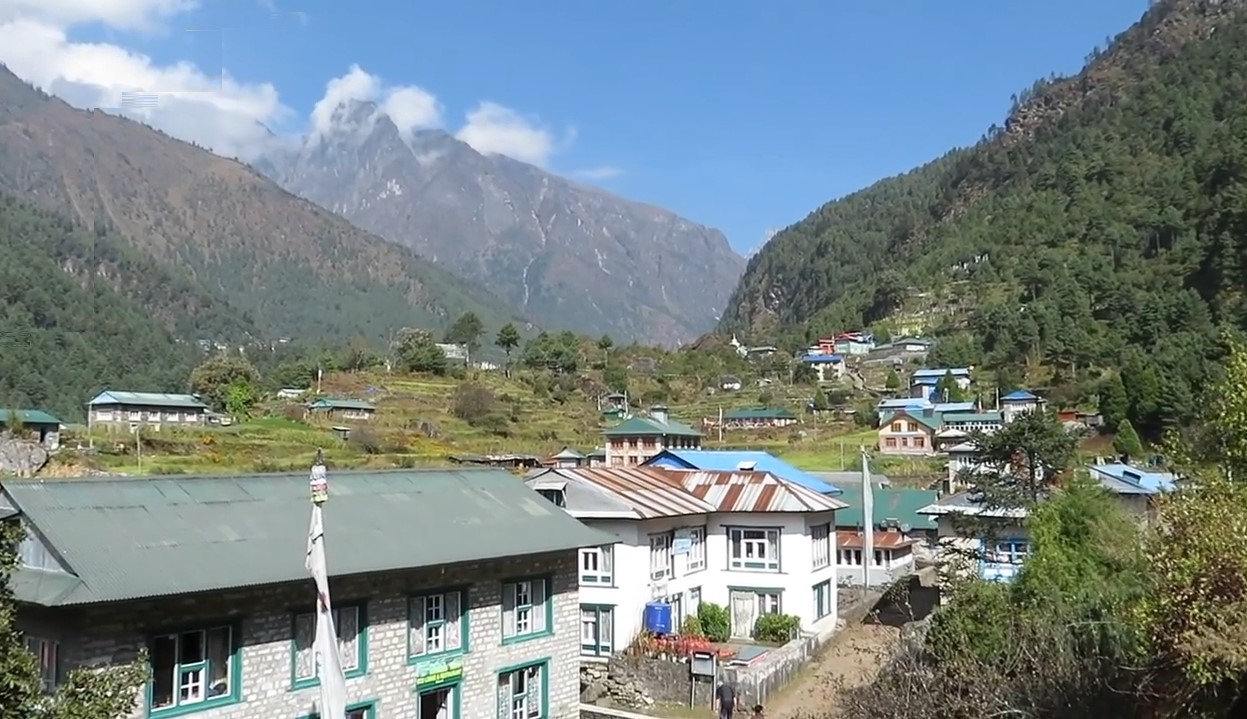
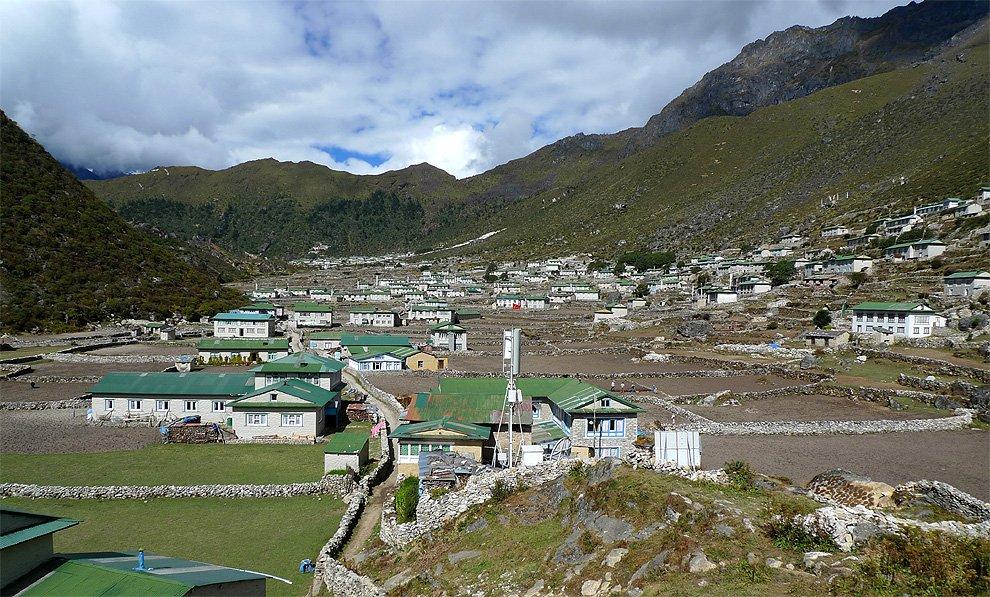
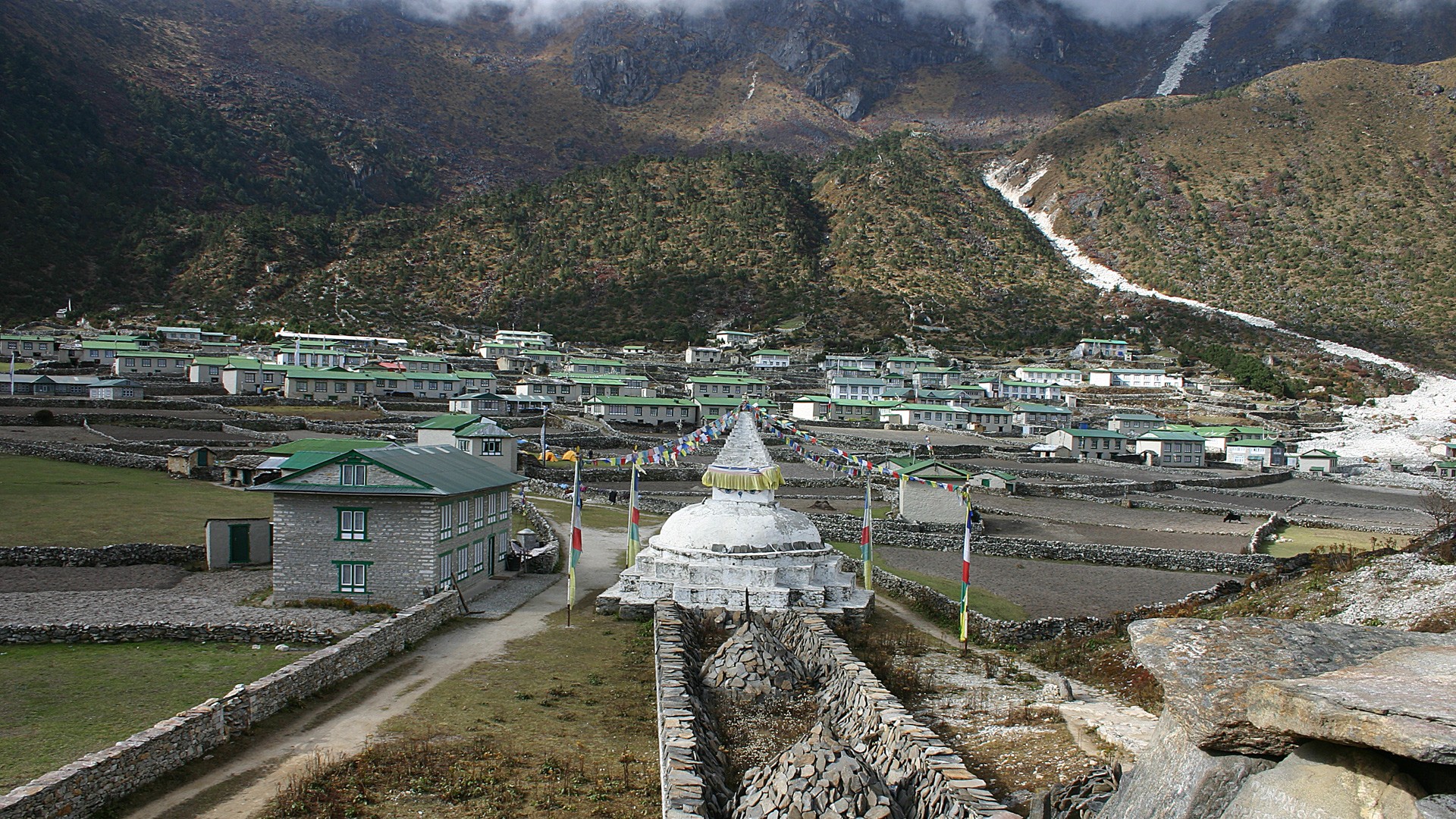
Welcome Khumjung: Khumjung, and Khunde is one of the most beautiful villages of world-famous Sherpa families. There are several houses with green roof. From this village almost 90% Sherpa are living different parts of globe and Kathmandu for better life.

Accommodation: At Khumjung there are several lodges with high service and cozy room, your guide will find a good lodge for your overnight staying.

  Breakfast + lunch + dinner with hot drinks.  Lodging at Khumjung village. Approx. 5 to 6 hours.

Lunch at: After breakfast at your lodge trek pass through descend to Namche Bazaar for lunch. At Namche you will mee the trekking route which you came before from Lukla.

The Steep Descent: After lunch, we begin the long, steep descent from Namche Bazaar to Larja Dobhan. We cross the high suspension bridges once more, looking back at the confluence of the rivers at Larja Dobhan.

Exiting the National Park: We pass through the village of Jorsalle and officially check out of the Sagarmatha National Park before reaching the quiet village of Monjo (2,835m). Monjo is a much quieter place to spend the night compared to Namche. The lodges here are cozy and surrounded by greenery, providing a perfect atmosphere for a restful evening after a long day of downhill trekking.

  Breakfast + lunch + dinner with hot drinks.  Lodging at Monjo village. Approx. 5 to 6 hours.

The Journey Complete: After breakfast in Monjo, we begin our final day of trekking. We retrace our steps through the lush valley, passing through Benkar and Phakding, where the landscape is now familiar and the air is warm.

Lunch at Ghat: We will stop for a final trail lunch in the village of Ghat. After lunch, there is one last gentle uphill climb to reach Lukla. Walking through the "Passang Lhamu Gate" marks the official completion of your trekking journey!

A Night accommodation: Upon arrival in Lukla, we check into a standard hotel. After weeks in the mountains, you can enjoy a hot shower and a celebratory dinner.

Farewell to the Team: This evening is the traditional time to say goodbye to your porters and guide. If you are satisfied with the service and the incredible effort of your team, it is customary to offer tips as a gesture of thanks for their hard work and dedication in helping you reach your goals.

You have successfully completed the Lobuche east Peak climb and two high passes crossed at the Everest region a truly world-class achievement!

 Breakfast + lunch + dinner with hot drinks.  Hotel at Lukla. Approx. 5 to 6 hours.

The flight to Kathmandu: After an early breakfast in Lukla, we head to the Tenzing-Hillary Airport for your flight back. As you lift off, enjoy one last bird’s-eye view of the Himalayan giants you just conquered.

Direct Flight: If operating directly to Kathmandu, the flight takes approximately 30 to 35 minutes.

Flight via Ramechhap: During peak trekking seasons, your 20 minutes flight will land at Manthali Airport (Ramechhap). From there, our private vehicle will be waiting to drive you back to Kathmandu (approximately a 5-hour scenic drive).

Back to Comfort: Upon arrival in Kathmandu, our representative will transfer you to your 3-star hotel. Enjoy a refreshing welcome drink at the reception as you check in.

Relaxation: The rest of the day is yours. Whether you want to enjoy a spa, hot shower, get a foot massage, or simply relax in a café in Thamel, this is your time to unwind and celebrate your success. 

Meals: Breakfast & Lunch. Stay at: 3-star hotel.

 Breakfast with hot drinks.  3-star hotel at Kathmandu.

Today is a flexible day for you to enjoy the charm of Kathmandu at your own pace. After the physical challenge of Islandpeak climbing and trekking, today is dedicated to your well-being.Today is a flexible day for you to enjoy the charm of Kathmandu at your own pace. After the completion of your trek, all about relaxing and soaking up the local atmosphere. After breakfast, the city is yours to explore.

Getting Around: For longer distances-such as visits to Boudhanath, Pashupatinath, or Swayambhunath, as well as excursions to the neighbouring cities of Bhaktapur and Patan, hiring a taxi is the most convenient option.

Rickshaws & Walking: Within the Kathmandu city centre including Durbar Square, New Road, and the Thamel tourist market, you can enjoy a traditional rickshaw ride (a three-wheeled bicycle) or simply explore the bustling streets on foot.

Important Notes: Please be aware that all UNESCO World Heritage sites in Kathmandu, Bhaktapur, and Patan require an entry fee for visitors.

Shopping & Souvenirs: Thamel, the city's primary tourist hub, is filled with shops selling high-quality trekking equipment and unique souvenirs. Keep in mind that the Nepalese market culture is quite different from Western standards don't forget to friendly haggle for a discount!

Dining: For lunch and dinner, you will find an array of excellent restaurants offering diverse international and local menus to suit every palate.

Need a hand?  If you require a professional city guide or any further information to help plan your day, please do not hesitate to contact us.

Farewell Dinner: Evening our representative will take you for a farewell Nepali typical dinner with a culture program. After dinner back to hotel.
 3-star hotel with bed and breakfast.


Stress-Free Departure: At the end of your journey, we will coordinate your hotel pickup to ensure you arrive at the airport with plenty of time for your flight. Complete the trip.

Meals: Breakfast + lunch + dinner with hot drinks. Stay at: Hotel or lodge.  Walking hours approx. 5 to 6 hours.

Continue for detail itinerary
Designed & developed by: Ashok shah