Dear all trekkers,
Namaste! A warm welcome to trekkers from every corner of the globe. We are delighted to invite you to explore the breath-taking Mt. Everest base camp / Kala Patthar trek. Which is a true high-altitude adventure for those who love Himalaya, untouched nature, and the serene mountain environment.
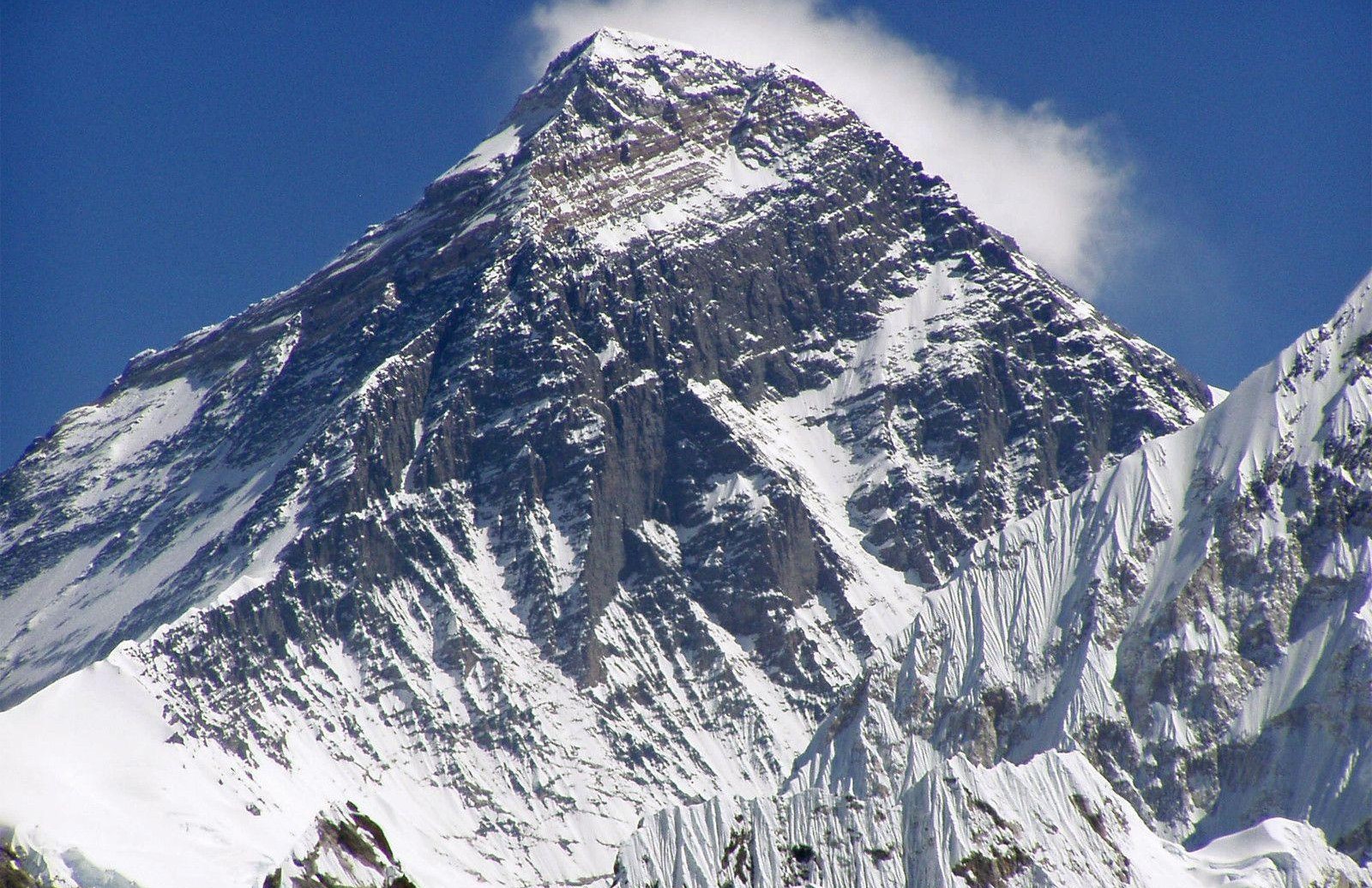
About this trek: Mt. Everest (alt. 8,848.86m.) is the world highest Himalayan peak, located at east Nepal, Khumbu region. Each year Thousands of trekkers are trekking here to see the world highest peak.
The Khumbu region is unique because it balances extreme high-altitude wilderness with a very well-established lodging /Teahouse infrastructure. This lodging (Tea House Trekking) style is makes the EBC route accessible to thousands of trekkers.
You don't need to carry tents or weeks' worth of food, allowing you to focus on your personal gear and physical endurance.
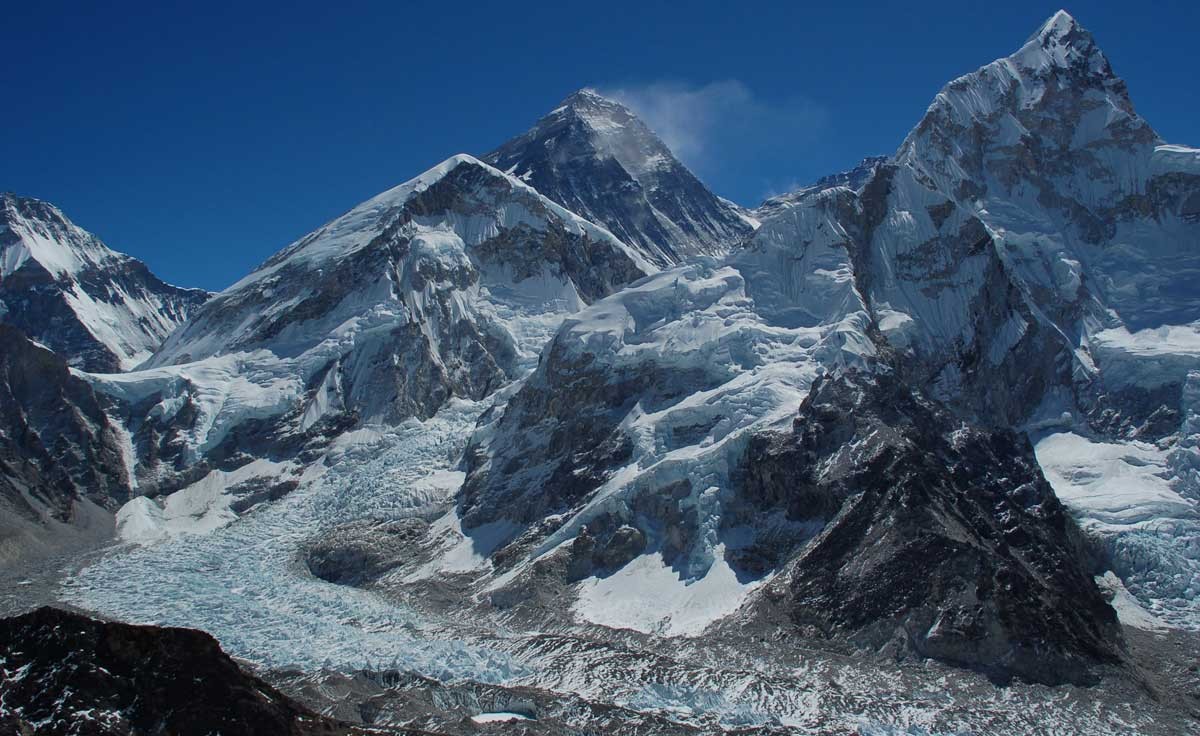
 Everest Base Camp: You can not see the summit of Mt. Everest; you can see only the Khumbu icefall from Base Camp. Khumbu icefall is most dangerous stages of the Everest climb.
Base Camp is actually located on the Khumbu Glacier,at the high of 5,364 meters, standing on a mix of ice, rock debris Because the glacier is constantly (though slowly) moving each year.
If you trek during the Spring season (late March to May), Base Camp transforms into a bright yellow city. Thousands of tents are pitched here for climbers, guides, and doctors. During the Autumn season, the camp is much quieter and often empty of climbers, providing a more serene and "untouched" mountain environment.
Kala Patthar: Kala Patthar is the true "photographic" climax of Everest base camp trek. The name Kala Patthar translates to "Black Rock" in Nepali and Hindi. Located just above the EBC elevation of 5,545meters. From Kala Patthar, you can see a "bird's eye view" of the entire glacial valley.
From the top of Kala Patthar, you can see face to face the South Face of Everest, South Col and the famous Hillary Step area near the summit. Kala patthar is a perfect place for 360-degree panorama.
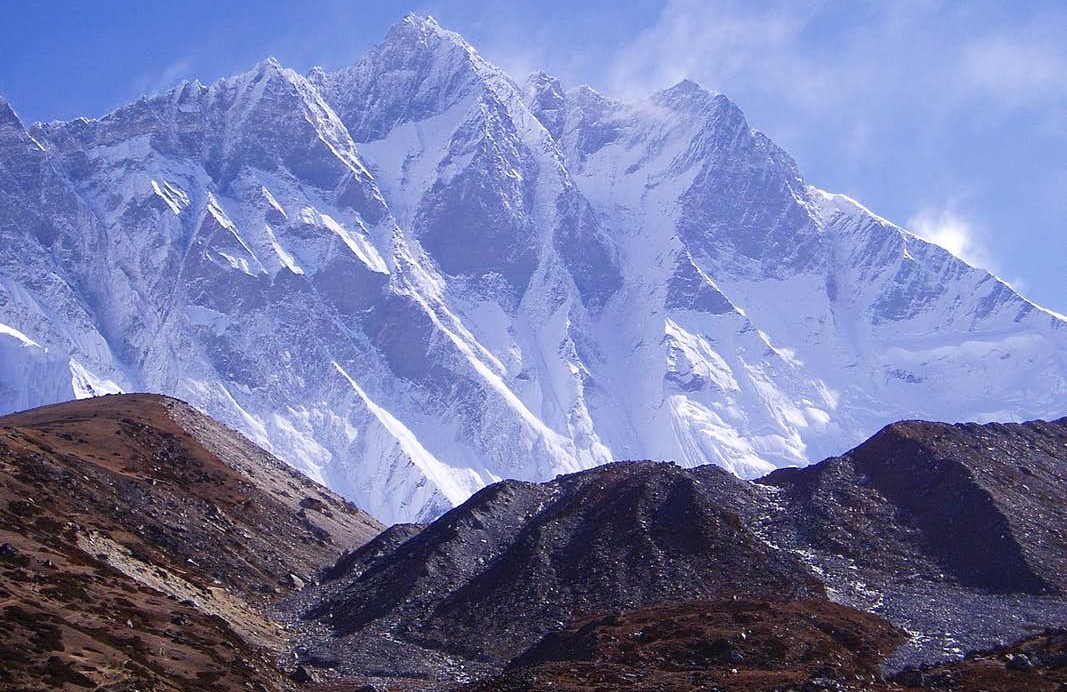
When you reached at the top of Kala patthar, you won't just be looking at the Himalaya you will feel as though you are standing among them. You are also surrounded by other giants: Pumo Ri, Lhotse, Nuptse, and the beautiful Ama Dablam in the distance.
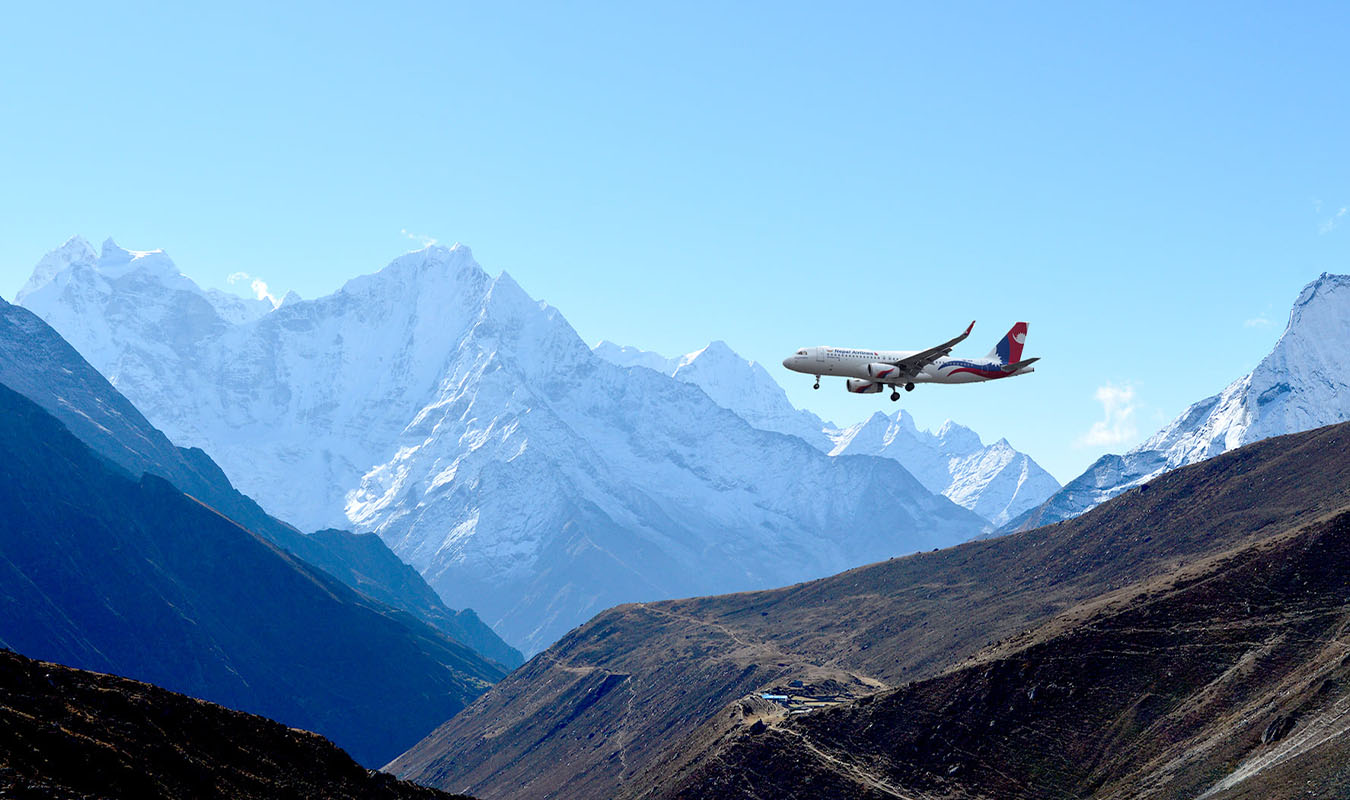
Highlights journey: The journey begins with a legendary flight to Tenzing-Hillary Airport in Lukla (2,840m.) Often called the "Gateway to Everest," this flight offers your first spectacular views of the Himalayan peaks and sets the stage for the trek ahead.
From Lukla, you actually descend initially toward Phakding village. You follow the Dudh Koshi River, crossing several high suspension bridges with prayer-flag-draped including the famous Hillary Suspension Bridge at Larcha Dhoban, that soar over deep Dud koshi river gorges.
In - route Just past Monjo village, you enter the Sagarmatha National Park (established in 1976) declared a UNESCO World Heritage Site in 1979. UNESCO recognized the region for its unique blend of natural beauty and Sherpa culture, as well as its ecological importance. The National Park protects rare wildlife. If you look closely during your trek, you can see the Himalayan Tahr or the elusive Musk Deer grazing on the cliffs.
 Namche Bazaar (3,440m): Namche is the vibrant "capital" of the Khumbu region. It is a beautiful Sherpa village. For centuries, it was a meeting point for Tibetan traders crossing the Nangpa La pass and lowland merchants. Today, that trade mostly changed in trekking shops, lodges, restaurants and local bazaar. At Namche Bazaar, there is trekking Shops, Reliable Wi-Fi services, ATM, Cafes, bakeries, and local markets.
The trail leads you to the magnificent Tyangboche Monastery. Surrounded by several Himalayan peaks. Tyangboche monastery is the spiritual centre of the Khumbu region and a perfect place for 360-degree panorama.
If you trek in the Spring, the forests around Tyangboche explode with the bright red and pink colours of the Himalayan Rhododendron. Trek continue passes through Pangboche, Dingboche, Lobuche, Khumbu glacier, Gorakshap to ascent top of Kala patthar.
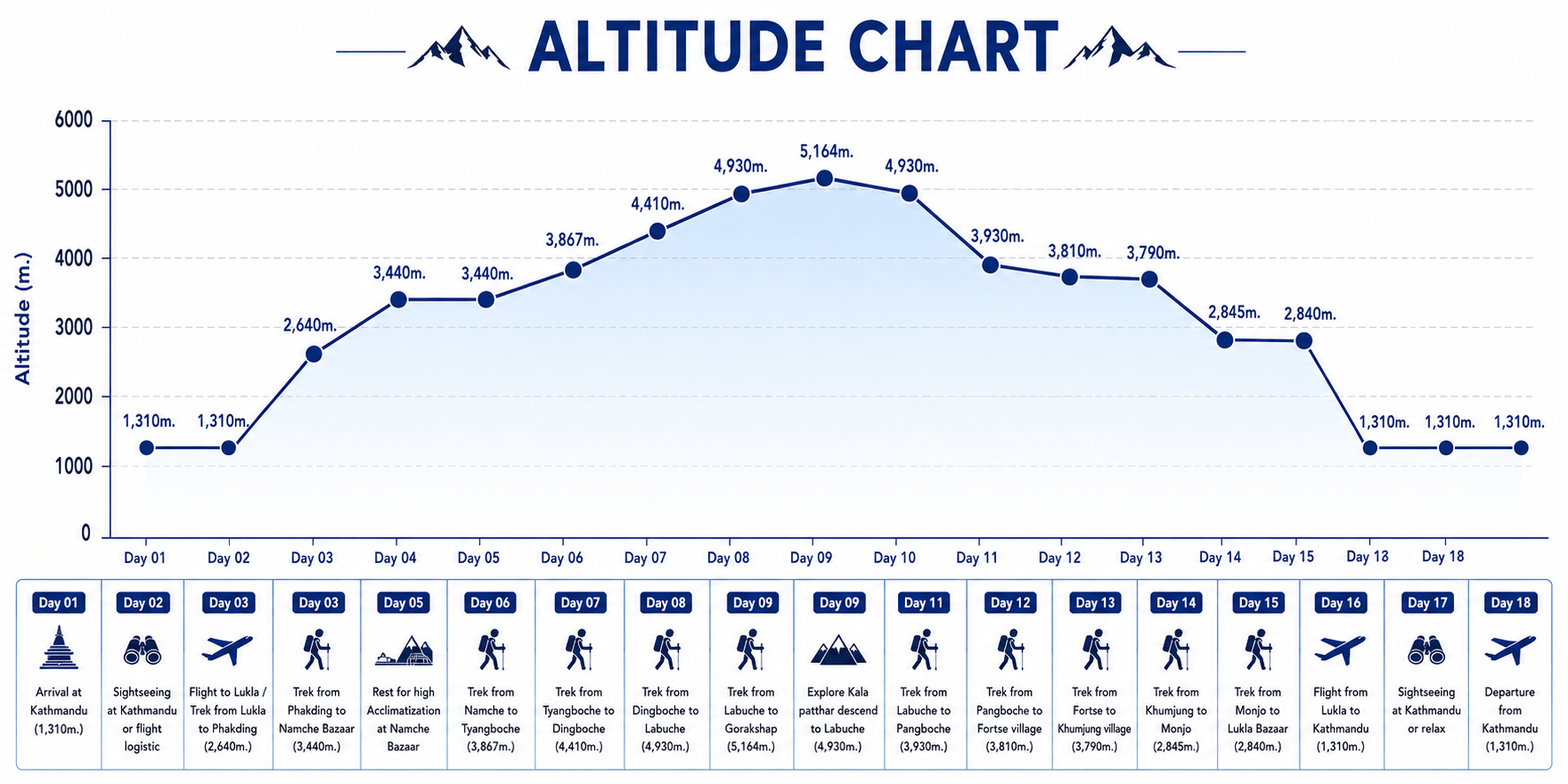
During your 18-day trip, you will spend two nights in Kathmandu. On the third morning, you will fly to Lukla either directly or via Ramechhap (Manthali Airport) where your 11-days trek will begin.
The trek passes through several small Sherpas villages and crosses suspension bridges over the Dudh Koshi River to Namche Bazaar. You will stay two nights in Namche Bazaar to acclimatize and explore the Everest View Hotel in Syangboche. The trek continues to Tyangboche Monastery, to Kala pattar reaching an elevation of 5,545 meters the highest point of your journey.
Explore Kala patter you will return along the same route via Fortse and Khumjung Sherpa village, back to Lukla airport, as detailed in the itinerary.
From Lukla flight back to Kathmandu via Ramechap (Manthali airport) or direct to Kathmandu, for another two nights before taking your flight home on 18th day.
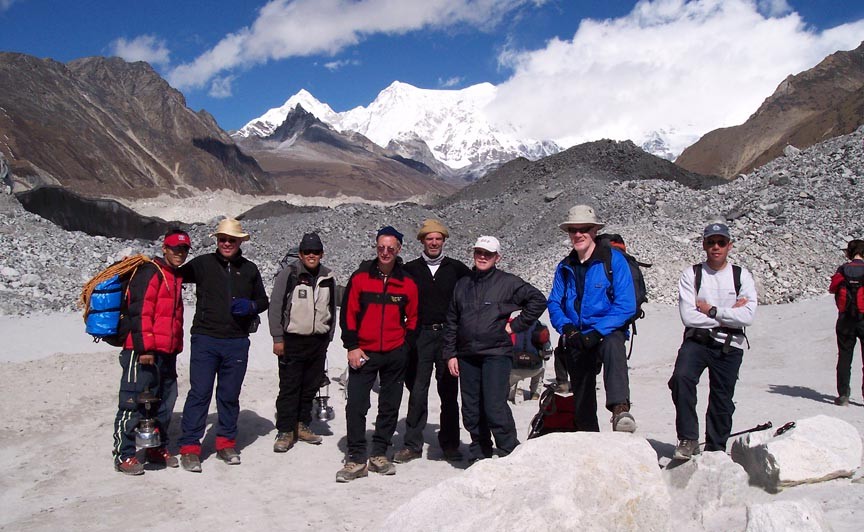 Note: See below for an overview of the 18-day, Mt. Everest base camp / Kala patthar journey. For complete details on Kathmandu hotels, trekking routes, elevation, walking times, meals, and accommodations, refer to the "Day-by-Day Itinerary" at the bottom of this page.
Safety Note - Animal caravans: In the Khumbu (Everest), you will frequently encounter caravans of Yaks, Jopkyos, and Mules transporting goods. If you hear bells ringing in the distance, start looking for a wide spot in the trail to step aside immediately.
It’s much easier to find a safe spot early than to scramble when the caravan is right on top of you. Always move to the mountainside (the inner wall) of the trail and wait for the animals to pass. Never stand on the cliff-side edge.
Note: For high-altitude sickness, safety, and rescue information, visit our link at: high altitude sickness - safety and rescue
"In the Mt. Everest Khumbu region, there is an HRA (Himalayan Rescue Association) clinic at Pheriche where experienced doctors provide general check-ups."
Permits and other: For Everest region, not required a trekking permit, you need Sagarmatha National Park entry permit and a TIMS card (Trekkers' Information Management System). We will handle the arrangement of these for you. Local government Khumbu Passang Lhamu Municipality entry fees will be managed and arranged by your trekking guide on the spot.
To process your TIMS card required in advance, please send us by email:
• A recent passport-size photograph.
• Your passport, photo copy (valid for a minimum of six months).
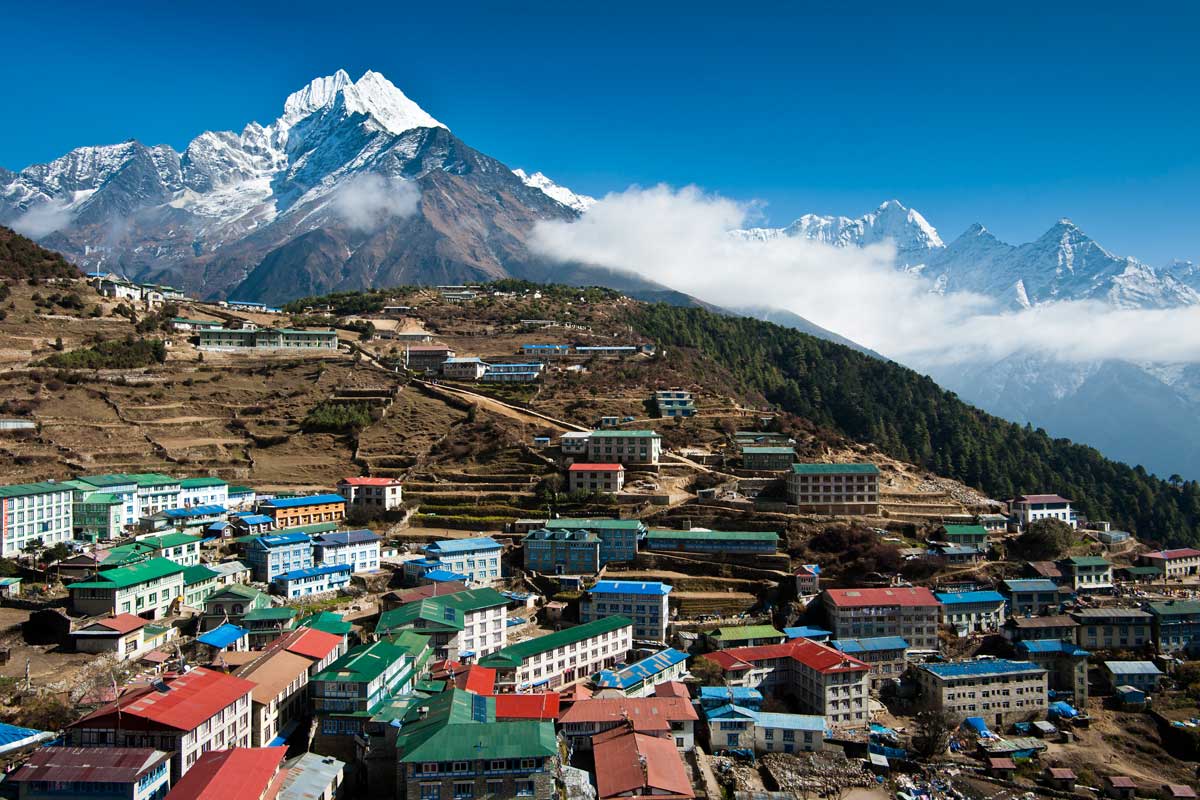 Trekking accommodation: Khumbu region there are several small hotels lodges and restaurants are available. During your journey, you will stay in charming local hotel or lodges on a bed-and-breakfast basis. While mountain facilities are simpler than those in Kathmandu, they offer cozy atmosphere and the legendary warmth of Himalayan hospitality.
Heating system: There is no heating in the bedrooms (Maybe in near future). The only warm place in the entire lodge will be the communal dining hall, where a central pot-bellied stove (usually fuelled by dried yak dung or wood) is lit in the evenings.
Battery Charging: In the Mt. Everest base camp - Kala patthar region, most lodges have electricity, allowing you to charge your mobile phone, camera, and power bank.
Pre-booking: During peak seasons, at Khumbu region many lodges operate on first-come, first-served basis, good rooms fill up quickly. Therefore, we book rooms in advance for our clients in time.
Daily meals at trek: Each lodge or small restaurant you will get vegetarian or non veg. dishes, different kinds of breakfast set, lunch and dinner. Authentic Nepalese Dal Bhat, Tarkari, chapati, Tibetan breads, momos, Stew, pasta, noodles, pizza, several items of fresh organic vegetables, potatoes, meats, eggs, soups, hot and cold drinks, which you can check at menu. Your guide will assist in arranging delicious lunches and dinners daily.
Domestic flight: To maximize your time in the mountains and avoid several days of strenuous trekking, this itinerary includes domestic flights between Kathmandu / Lukla / Kathmandu. This 30 to 35-minute scenic flight direct Lukla to the "Gateway to Everest," ensuring you start your trek fresh and on schedule.
Flight via Ramechhap: During peak trekking seasons, your 20 minutes flight will operate from Manthali Airport (Ramechhap). Between Kathmandu / Manthali airport (approximately a 5-hour scenic drive) by our private vehicle.
Ground transportation: We ensure your journey is smooth and comfortable by providing reliable private ground transportation. Depending on your group size, we arrange private cars, jeeps, or vans for airport pickups / drops, hotel transfers, and travel to trailheads.
In case of flights from Ramechhap (Manthali Airport), we will provide private vehicle service based on your group size between Kathmandu / Ramechap / Kathmandu.
 Trekking guide: We provide an experienced guide who knows the region well and can secure the best restaurants, lodges, and guest houses, ensuring your safety and service. Your trekking guide will always check the menu and advise on the freshest and most readily available options before you place your order.
Porters: A porter is necessary for this trek, your trekking guide will arrange from Lukla bazaar. One porter can carry between 25 to 30 kg of luggage. Between two trekkers one porter will be perfect. If you are physically fit to carry your own personal gear, you don't need porter.
Note: For trekking seasons and weather information, visit our link at: Trekking seasons and weather
Life on the trail follows a peaceful, structured rhythm designed to keep you energized and immersed in the landscape.
The morning weak-up call: Your day begins gently. Early in the morning, your guide will bring a hot cup of tea or coffee directly to your room, followed by a bowl of warm water for washing. After freshening up and packing your duffel bag, you’ll head to the dining hall. A fresh, warm breakfast is served as you take in the morning sun hitting the surrounding peaks.
The trail & midday break: The day is spent at a steady, comfortable pace. Along the way, you’ll enjoy scenic strolls, capture photographs, and explore local culture - visiting monasteries, schools, or villages with your guide.
Lunch between 11:00 AM and 1:00 PM, featuring a freshly prepared hot meal and drinks. Following lunch, you’ll have about an hour to digest and relax before resuming the afternoon leg of the journey.
Afternoon arrival & evening relaxation: Upon reaching the day’s destination, your guide will handle your hotel or lodge check-in. Once you’ve settled into your room, the late afternoon is yours to enjoy. Relax in the heated dining hall with hot drinks, biscuits, and local cheese. You’ll place your dinner order early to ensure a fresh meal at your preferred time.
Evening briefing: During dinner, your guide will recap the day’s highlights and provide a detailed briefing on the terrain and plan for the following morning.
 For this trek, we suggest take along with you: Trekking boots, light shoes / trainers, socks (x 3) caps, warm or fibre pile jacket, windproof jacket & trouser, fleece or sweater, shirts (x 2), long and short trekking trousers (and /or long skirt for women), waterproof poncho or umbrella, sun hat, sun glass, snow goggles, underwear etc.
Other essential items: Kitbag and padlock, small rucksack, warm sleeping bag with liner, water bottle (1 litre capacity), head torch, personal first aid, sun cream (factor 15+) towel & wash kit, whistle, passport, passport-size photographs, plastic bags, money belt.
Optional: Camera (with high-capacity memory cards and extra batteries), trekking poles / walking sticks, binoculars, notebook, pen etc.
Sleeping bag: We strongly suggest bringing your own warm sleeping bag with an inner liner. Because hotels / lodges blankets are not always warm and clean enough to meet your personal standards.
If you, doesn’t have sleeping bag you can buy or hire at Kathmandu as your size.
We are a team of experienced Sherpas who have been leading Himalayan treks and expeditions for many years. Trekkers from all over the globe trust us and return year after year for another trek or expedition.
In Kathmandu, there are many trekking agencies: some charge high prices without delivering quality service, while others offer low rates but lack experience and support. Regardless of the cost, the mountain views remain the same. But the quality of service that makes all the difference.
We offer reasonable prices and ‘top-tier’ service across every aspect of your journey without compromise. That is why our clients keep coming back to trek with us again and again.
When you trek with our team, your investment does more than just book a trip-it ensures a seamless, high-quality experience defined by a warm, family-like atmosphere and total peace of mind.
 While some trekkers explore the Himalayas independently to save money, they often overlook a critical question: "If something goes wrong, what is the plan?"
Trekking in Nepal is vastly different from hiking in Western countries. The landscapes are rugged, conditions are extreme, and weather can change in an instant.
In wilderness, unexpected challenges - from different sickness to sudden weather change can arise at any moment. Without professional support, these situations can quickly become dangerous. We provide the essential safety net and emergency logistics required to keep you safe.
Stress-Free Logistics: We manage every detail, from your arrival to your departure, so you never have to worry about the "what ifs." Your journey with us isn’t just a holiday; it’s a commitment to quality, safety, and an unforgettable experience on the trail.
Tips for guide and porters: Tipping is a customary way to appreciate your team's hard work and dedication in helping you reach your goal. You may tip as much as you wish. However, if you are not satisfied with their service, tipping is not necessary.
The Everest Base Camp / Kala patthar trek, designed for anyone who is physically fit, healthy, and passionate about exploring the high Himalayas. We welcome men and women between the ages of 16 to 75 can join us with confidence.
This trek is suitable with friends, groups or single with a guide, families, seniors, and photography. Being surrounded by such a beautiful organic, natural Himalayan environment is proven you feeling excited, happy, stress-free, and full of sweet, unforgettable memories once in your life.
 Preparation and Support: You are never alone in your preparation. We provide comprehensive information and a full briefing in Kathmandu before you set off. Once on the trail, your guide will provide a clear, day-by-day explanation of the plan to ensure you are always informed and comfortable.
Get in touch: The trekking regions mentioned here are just the beginning. For more information regarding trekking seasons, exact durations, and a competitive, reasonable cost for your group (large or small), please contact us directly.
We pride ourselves on providing a service that is faster, more personal, and more reliable than the rest. We will reply to your email within 24 hours.
Contact us via:
Email: hellokirken@gmail.com
WhatsApp / Messenger: Kirken Sherpa +43 664 55155 46
Direct Call: +43 664 55155 46 / +977 970 5843 789
"Thank you for choosing Everest base camp / Kala patthar trek and for being a part of our team. We look forward to trekking with you!"
4-nights in Kathmandu 3-star hotel twin sharing basis with (bed & breakfast)
13- nights in hotels or lodges during the trek in twin sharing or common-room.
Main meals (breakfast-lunch-dinner) with hot drinks during the trekking period.
Main meals and accommodation for guide and porters.
❌ Main meals (lunch and dinner) hot or cold drinks at Kathmandu.
❌ All personal expenses for alcoholic beverages, cold drinks, laundry and hot shower.
❌ Medical and travel insurance for the trekkers.
❌ International airfare and custom.
❌ Emergency helicopter rescue charges if necessary.
❌ Any kinds of Visa for Nepal.
❌ Tips for guide and porters.
Warm Welcome: Upon your arrival at the Tribhuvan international airport, Our representative will meet you at the airport terminal with a personalized sign, handling your luggage, welcome you with colourful flowers, drive to star hotel as your booking. Upon arrival at your hotel, you will be served a refreshing welcome drink at reception while our team assists with your check-in.
First Evening & Briefing: In the evening, you can enjoy dinner at your hotel or a local restaurant. During this time, our Tour Manager will conduct a comprehensive briefing, covering your trekking itinerary, safety protocols, and any other essential information for your upcoming adventure.
 3-star Hotel as your booking at Kathmandu.


Himalayan Experience Trek welcomes you to Nepal, the land of Himalaya, where we can offer a variety of experiences to make your holidays a truly memorable one in Nepal, India and Tibet, especially adventure trip, remote mountains region of Nepal.
 Breakfast + lunch + dinner with hot drinks.
  approx. 3 hours.