img

16 days Langtang - Gosaikunda:

Price: EUR 1990

16 days Langtang - Gosaikunda:

Dear all trekkers,
Namaste! A warm welcome to trekkers from all over the world. We invite you to trekking at Langtang, Gosaikunda region. Which is a true paradise for those who love high-altitude adventure, untouched nature, and the serene mountain environment.

About Langtang valley: The Langtang Valley Trek is often called the "hidden gem" of Nepal. It’s the closest Himalayan trekking region to Kathmandu, making it incredibly accessible, yet it remains significantly less crowded and less expensive than the Everest or Annapurna circuits.

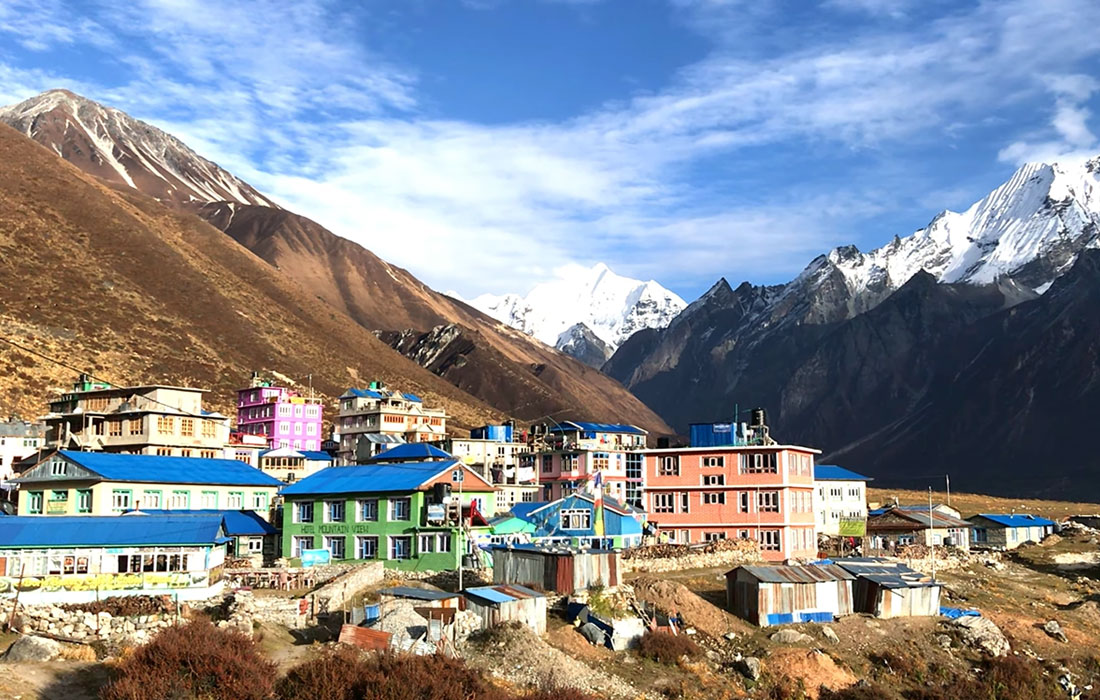
Since the 2015 earthquake, the valley has seen a remarkable recovery. In 2026, it stands as a symbol of resilience, with newly built, earthquake-resistant teahouses and well-maintained trails that offer a mix of high-altitude drama and deep Tamang culture.

Cultural Immersion: Direct interaction with the Tamang and Bhotia communities, whose traditions are closely tied to Tibetan Buddhism.

Kyanjin Gompa: A spiritual hub at 3,870m with an 800-year-old monastery and a famous yak cheese factory.
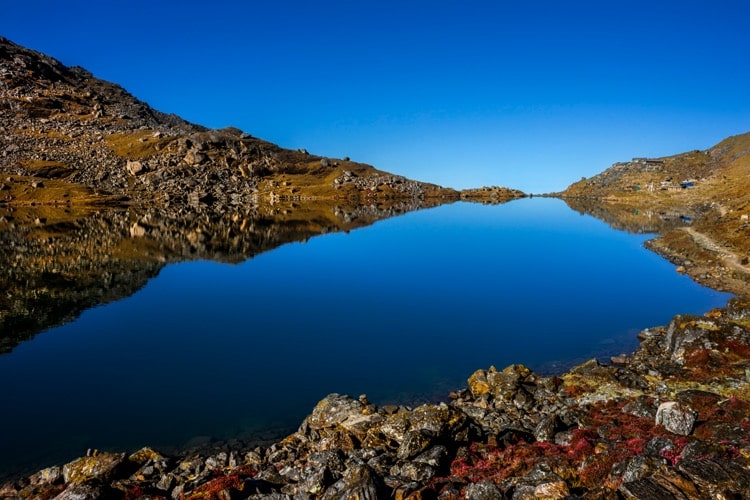
About Gosaikunda: Gosaikunda is one of Nepal's most sacred pilgrimage sites. According to Hindu mythology, Lord Shiva created the lake by striking his Trishul (trident) into the mountain to draw water to cool his throat after swallowing poison.

There are actually over a dozen lakes in the area, but Gosaikunda is the main attraction. Every August (during the Janai Purnima festival), thousands of pilgrims trek here to take a holy dip in the icy waters.

Wildlife: Located within Langtang National Park, you might spot red pandas, Himalayan Thar, Musk Deer or the colourful Danphe bird.

Highlights the journeys: This trek begins from Syabrubesi, at the end of the motor road. The trail follows the Langtang Khola (River) upstream all the way to Kyanjin Gompa. Along the route, there are several well-established teahouses and lodges available for overnight stays.

From Kyanjin Gompa, you can hike to the summit of Kyanjin Ri (4,773m.) for spectacular panoramic views of the surrounding peaks. You will then retrace your steps back down the valley until you reach Pahiro (near Bamboo). From there, take the left-hand trail climbing toward Thulo Syabru village to begin the Gosaikunda section of the trek.

Gosaikunda is one of the premier sites in Nepal for both natural beauty and mountain vistas. After exploring the sacred lakes, the trek continues over the Surya kunda Pass, descend through Dupi Chaur, Thadepati, Mangengoth, and Kutumsang. Finally, you will reach Chisapani before descending to Sundarijal, where you will catch a vehicle for the drive back to Kathmandu.

Please Note: "For a detailed look at the trail, including distances and elevations, please refer to the ''Day-by-Day Itinerary'' located at the bottom of this page."

Safety Note - Animal Caravans: In the Langtang region, you will frequently encounter caravans of Yaks, Jopkyos, and Mules transporting goods. If you hear bells ringing in the distance, start looking for a wide spot in the trail to step aside immediately. It’s much easier to find a safe spot early than to scramble when the caravan is right on top of you. Always move to the mountainside (the inner wall) of the trail and wait for the animals to pass. Never stand on the cliff-side edge. 

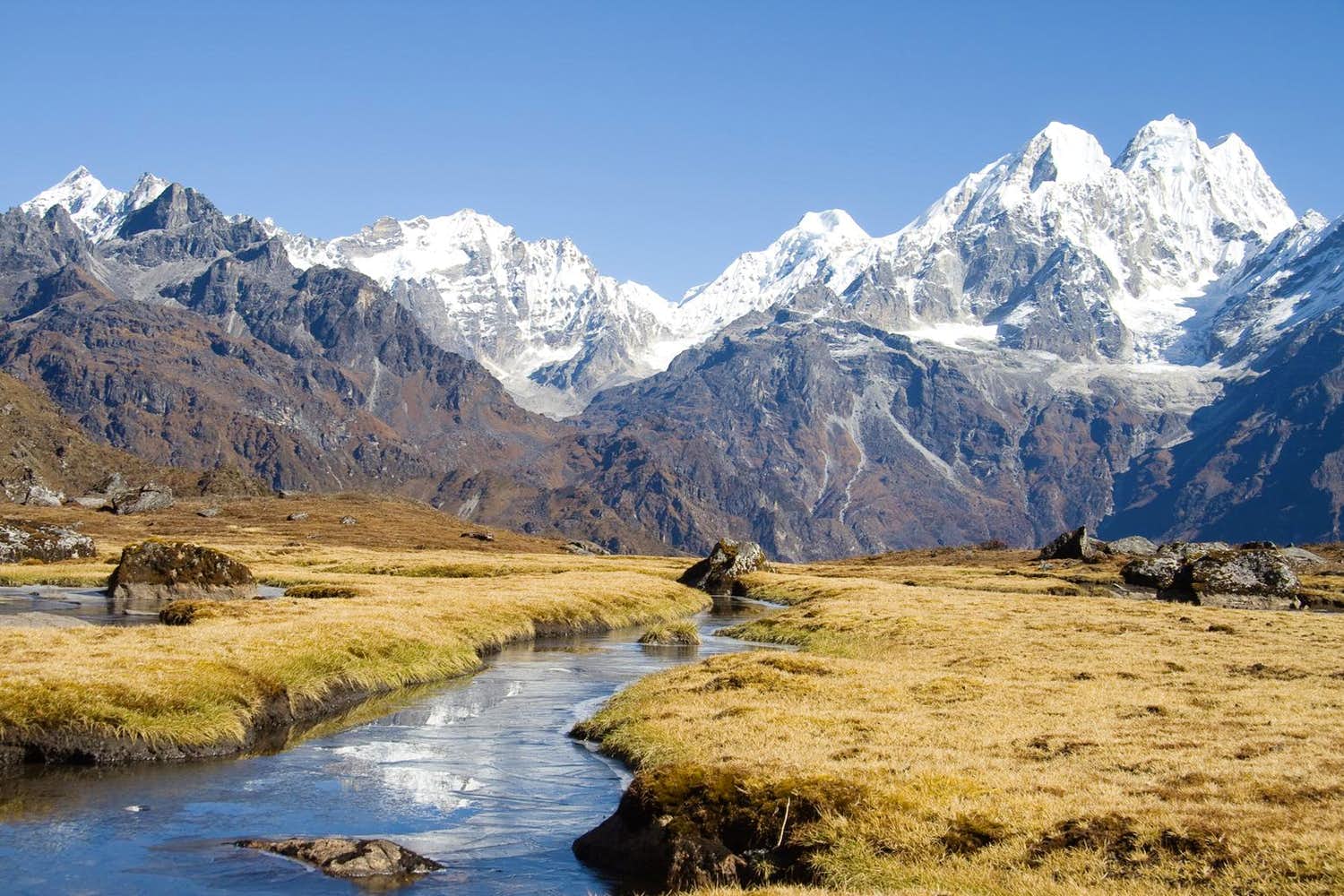
Panorama: The Himalayan views are consistently breath-taking once you reach higher elevations. After passing through Ghora Tabela, the forest thins out, and the expansive mountain scenery begins to open up.

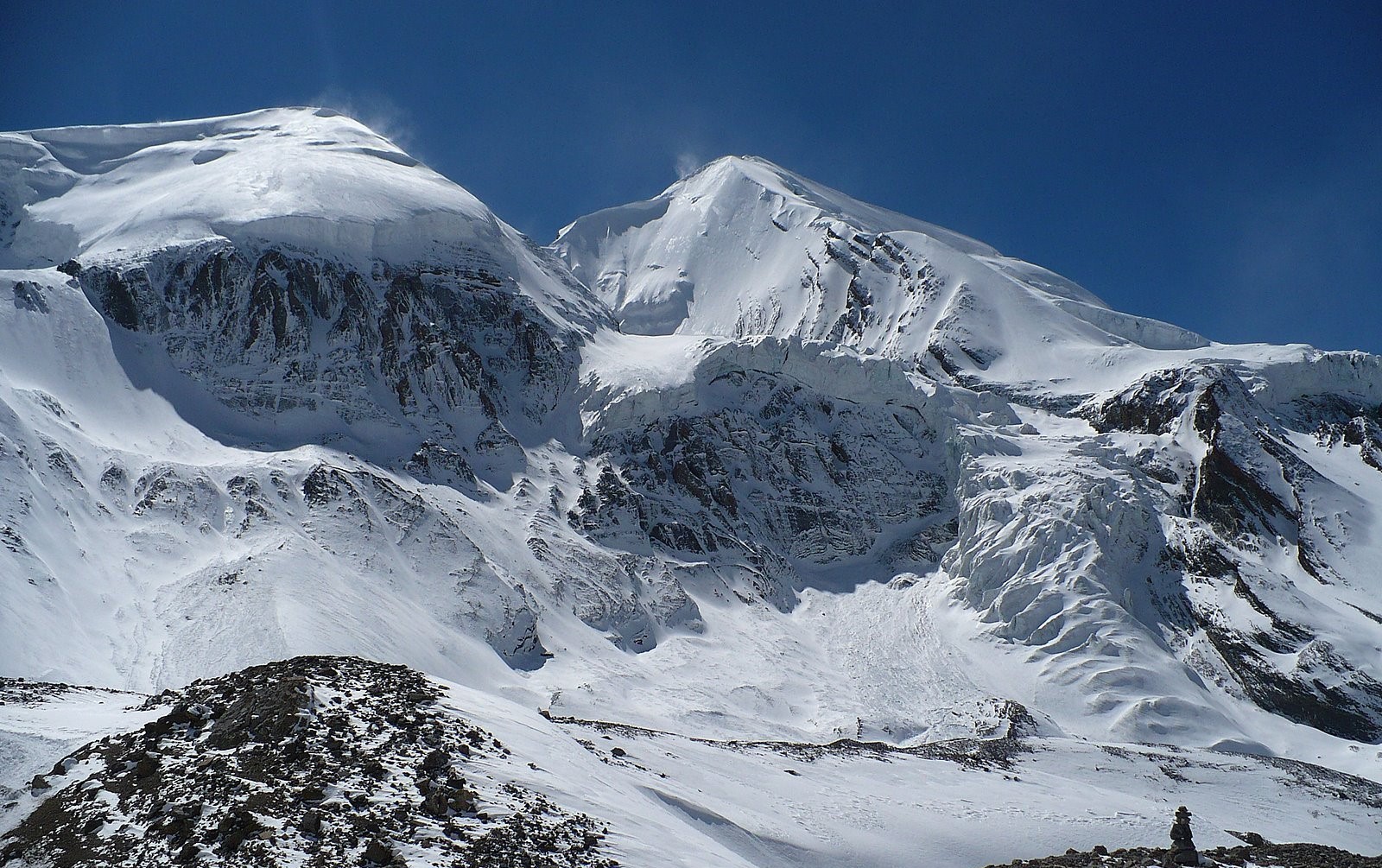
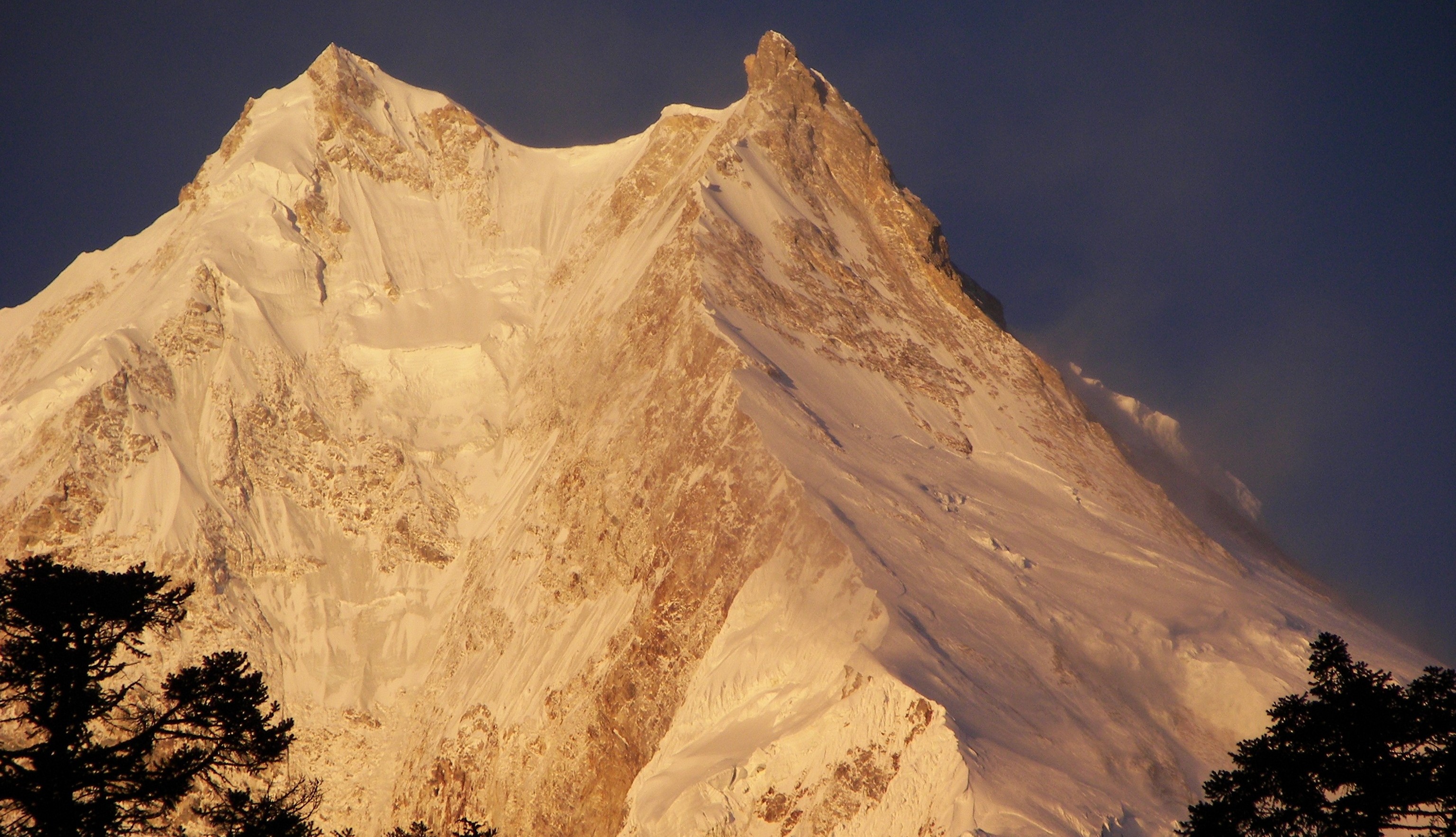
From Langtang Village, you will be treated to a giant, front-row view of Langtang Lirung (7,227m) towering directly before you. Throughout the trek, you will also encounter several other majestic Himalayan peaks under 8,000m, providing a constant and dramatic backdrop to your journey.

High altitude sickness and Safety:

High-altitude sickness occurs when your body can’t get enough oxygen because the lower air pressure at higher elevation above 3,000m. when you ascend too quickly during the trek. At High elevation anyone at any time can be suffering from high-altitude sickness which is common, you don’t have to be nervous but please be attention. 

Altitude Symptoms: If you feel symptoms of high- altitude (Headache, vomiting, loss your appetite, Dizziness and trouble falling asleep) stop to ascending immediately descend as possible. Eat enough garlic soup, take lots of hot drinks and rest. Next day you will feel better, if not your guide will look for another solution.

Emergency Helicopter Evacuation: Your safety is our absolute priority. In the event of serious illness or injury, our guides are trained to act immediately. They will maintain constant communication with our Kathmandu-based agency to coordinate a rapid response.

We can arrange an emergency helicopter evacuation from any point on the trail back to Kathmandu within a few hours (weather permitting). To ensure a smooth and life-saving rescue, we require all our guests to have travel insurance that specifically covers high-altitude helicopter rescue and medical evacuation. Our team will handle all the logistics with your insurance provider and the helicopter operators so that you can focus entirely on recovery.

Travel Insurance: Unfortunate illness or injury can happen to anyone, anywhere. In the remote mountain regions where we trek, your safety is paramount. Because ground transport to the nearest clinic can be slow, we rely on rapid aerial response.

•    Action Required: We strongly advise you to issue a 'comprehensive travel insurance policy' from your home country or in Kathmandu. Your policy must specifically cover emergency helicopter evacuation and medical expenses at high altitudes (up to 6,000m.)

Pro Tip: Please Always carry a digital and printed copy of your insurance certificate and the 24-hour emergency contact number for your provider.

📅Best Trekking season and weather:

Spring (March – May): Trekking at Mt. Everest Khumbu region, one of the best times is spring for the spectacular clear views. The stable weather brings excellent visibility. In this season rare flowers like rhododendrons and other various wildflowers are found in full blossom in their brightest colours.

Autumn (September-November): For this region Autumn has one of the spectacular, uninterrupted views of the mountains and high Himalayas. Perfect temperatures make trekking days even more enjoyable.

Winter (December – February) & Summer (June – August): These seasons present significant challenges for 'Langtang and Gosaikunda' trek. In winter, heavy snowfall frequently blocks the high Passes, making the crossing dangerous or impossible. During the summer monsoon, heavy rains result in poor visibility and the presence of leeches on the trails. More importantly, the risk of landslides increases, and rising river levels can wash out trekking paths or block the motor roads leading to the trailhead.


🍽️ Practical Detail and Trekking Services:

Trekking Permits and Fees: For Langtang / Gosaikunda region, not required a trekking permit, you need Langtang National Park entry permit and a TIMS card (Trekkers' Information Management System). We will handle the arrangement of these for you. Local government Municipality entry fees will be managed and arranged by your trekking guide on the spot.

Your Trekking Accommodation:  At Langtang and Gosaikunda regions, there are several small hotels lodges and restaurants are available. During your journey, you will stay in charming local hotel or lodges on a bed-and-breakfast basis. While mountain facilities are simpler than those in Kathmandu, they offer cozy atmosphere and the legendary warmth of Himalayan hospitality.

Your Daily meals at Trekking: Each lodge or small restaurant you will get vegetarian or non veg. dishes, different kinds of breakfast set, lunch and dinner. Authentic Nepalese Dal Bhat, Tarkari, chapati, Tibetan breads, momos, Stew, pasta, noodles, pizza, several items of fresh organic vegetables, potatoes, meats, eggs, soups, hot and cold drinks, which you can check at menu. Your guide will assist in arranging delicious lunches and dinners daily.

Transport in Kathmandu: To ensure your arrival and departure are as smooth as possible, we provide private vehicle car, van or bus as group size, transfers for all your airport needs.

Trekking Guide: We provide an experienced guide who knows the region well and can secure the best restaurants, lodges, and guest houses, ensuring your safety and service. Your trekking guide will always check the menu and advise on the freshest and most readily available options before you place your order.

Porters: A porter is necessary for this trek; your trekking guide will arrange from Syabrubesi bazaar. One porter can carry between 25 to 30 kg of luggage. Between two trekkers one porter will be perfect. If you are physically fit to carry your own personal gear, you don't need porter.

Your Daily Trekking Routine: 

Life on the trail follows a peaceful, structured rhythm designed to keep you energized and immersed in the landscape.

The Morning Call: Your day begins gently. Early in the morning, your guide will bring a hot cup of tea or coffee directly to your room, followed by a bowl of warm water for washing. After freshening up and packing your duffel bag, you’ll head to the dining hall. A fresh, warm breakfast is served as you take in the morning sun hitting the surrounding peaks.

The Trail & Midday Break: The day is spent at a steady, comfortable pace. Along the way, you’ll enjoy scenic strolls, capture photographs, and explore local culture - visiting monasteries, schools, or villages with your guide.

Lunch between 11:00 AM and 1:00 PM, featuring a freshly prepared hot meal and drinks. Following lunch, you’ll have about an hour to digest and relax before resuming the afternoon leg of the journey.
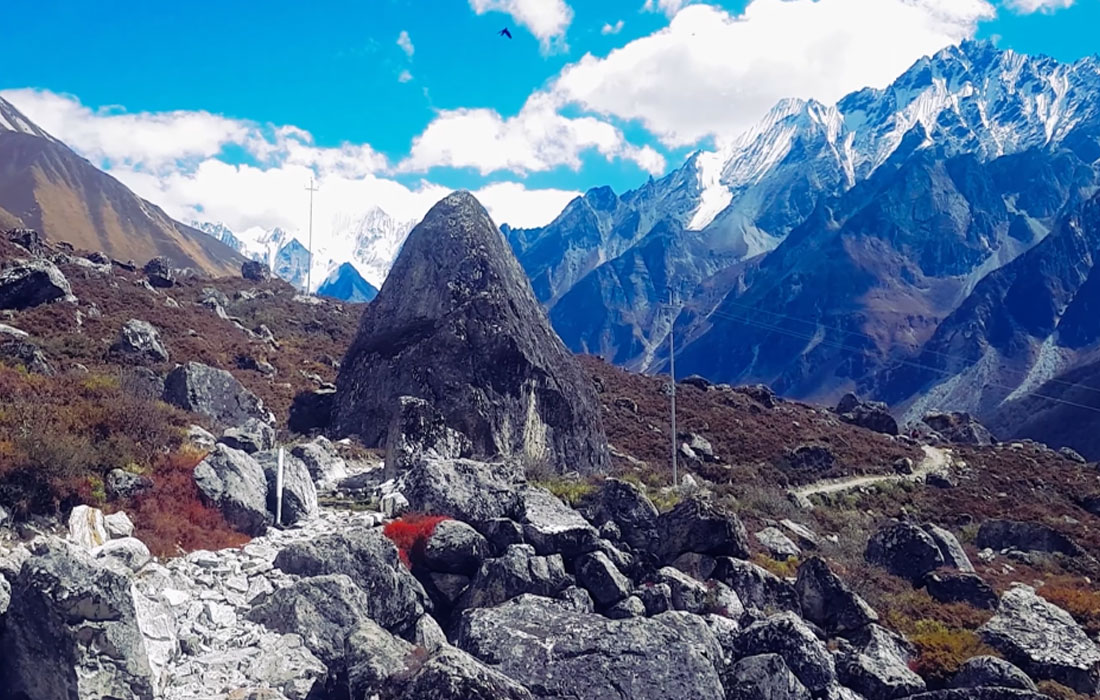
Afternoon Arrival & Evening Relaxation: Upon reaching the day’s destination, your guide will handle your hotel or lodge check-in. Once you’ve settled into your room, the late afternoon is yours to enjoy. Relax in the heated dining hall with hot drinks, biscuits, and local cheese. You’ll place your dinner order early to ensure a fresh meal at your preferred time.

Evening Briefing: During dinner, your guide will recap the day’s highlights and provide a detailed briefing on the terrain and plan for the following morning.

Trekking equipment checklist: For this high elevation Langtand - Gosaikunda trek, we suggest you take along with you: Trekking boots, light shoes / trainers, woollen socks (x 3) woollen caps, warm hand gloves, warm or fibre pile jacket, down jacket, windproof jacket & trouser, fleece or sweater, shirts (x 2), long and short trekking trousers (and /or long skirt for women), waterproof poncho or umbrella, sun hat, sun glass, snow goggles, underwear etc.

Other essential items: Kitbag and padlock, small rucksack, warm sleeping bag (4 seasons +)  with liner, water bottle (1 litre capacity), head torch, personal first aid, sun cream (factor 15+) towel & wash kit, whistle, passport, passport-size photographs, plastic bags, money belt.

Optional: Camera (with high-capacity memory cards and extra batteries), trekking poles / walking sticks, binoculars, notebook, pen etc.

Sleeping bag: We strongly suggest bringing your own warm sleeping bag (4 seasons +) with an inner liner. Because hotels / lodges blankets are not always warm and clean enough to meet your personal standards. If you, doesn’t have sleeping bag you can buy or hire at Kathmandu as your size.
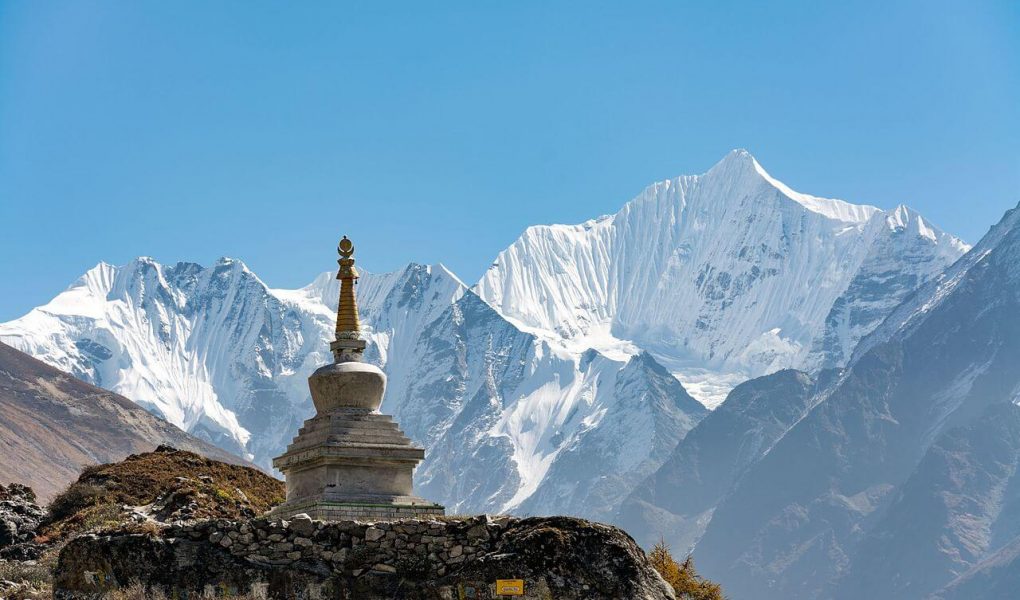
Why Choose a Trekking Agency in Kathmandu?

While some trekkers explore the Himalayas independently to save on costs, they often overlook a critical question: "If something goes wrong, what is the solution?" Trekking in Nepal is vastly different from hiking in Europe or Western countries. The terrain is rugged, the altitudes are extreme, and conditions can change in an instant. When you trek with us, your small investment does more than just book a trip-it ensures a seamless, high-quality experience defined by a family atmosphere and total peace of mind.

Safety First: In the wilderness, unexpected challenges, from altitude sickness to unpredictable weather can arise at any moment. Without professional support, these situations can quickly become life-threatening. We provide the essential safety net and emergency logistics required to keep you safe.

The Service Difference: The mountain panorama remains the same for everyone, but the quality of your journey is defined by the service you receive. By booking through a government-registered agency like ours, you gain access to:

•    Expert Guidance: Professional guides who are fluent in the local culture, trail secrets, and shifting weather patterns.

•    Reliable Support: Dedicated porters to handle the heavy lifting, allowing you to walk freely and focus on the scenery.

•    Stress-Free Logistics: We manage every detail, from your date of arrival to departure, so you never have to worry about the "what ifs."

Your journey with us isn’t just a holiday; it’s a commitment to quality, safety, and a happy, stress-free life on the trail.

✅ Trekking for Everyone!   
Who can join Langtang / Gosaikunda trek?

The Langtang / Gosaikunda trek, designed for anyone who is physically fit, healthy, and passionate about exploring the high Himalayas. We welcome men and women between the ages of 16 and 70 to join us with confidence.

This is suitable with friends, groups or single with a guide. Being surrounded by such a beautiful organic, natural Himalayan environment is proven you feeling excited, happy, stress-free, and full of sweet, unforgettable memories once in your life. 

Preparation and Support: You are never alone in your preparation. We provide comprehensive information and a full briefing in Kathmandu before you set off. Once on the trail, your guide will provide a clear, day-by-day explanation of the plan to ensure you are always informed and comfortable.

Get in Touch: For more information regarding trekking seasons, exact durations, and a competitive, reasonable cost for your group (large or small), please contact us directly. We pride ourselves on providing a service that is faster, more personal, and more reliable than the rest.

Contact us via:

Email: hellokirken@gmail.com

WhatsApp / Messenger: Kirken Sherpa +43 664 55155 46

Direct Call: +43 664 55155 46


 "Thank you for choosing Langtang / Gosaikunda trek and for being a part of our team. We look forward to trekking with you!"
Trekking season September to May.
Kinds of trek Lodging trek.
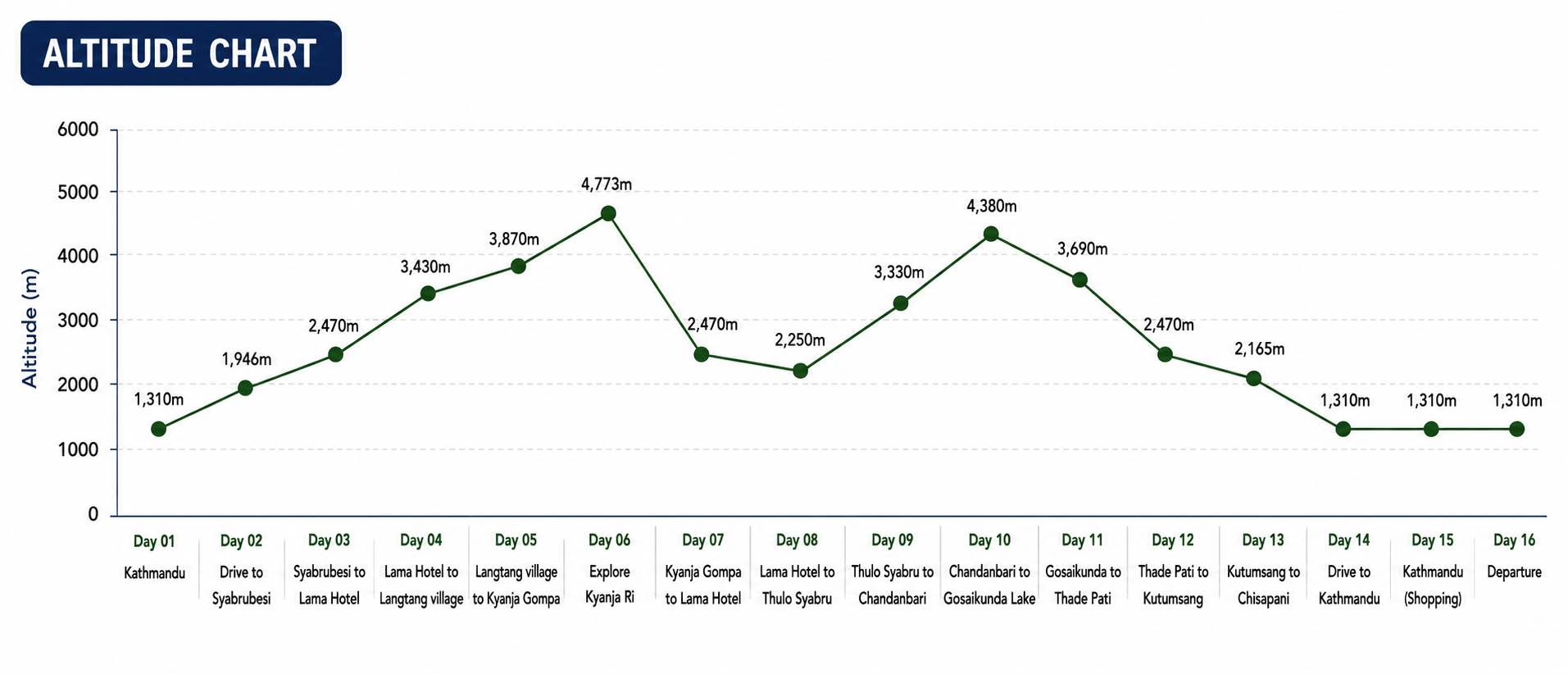
Max. elevation Kyanji Ri alt. 4,773m. 
Group size 02 to 12 persons.
Total cost per person Euro 1,990.00


Single supplement per person Euro 300.00 extra.
The above-mentioned cost includes all the government taxes. 
Group rates is available, can be negotiate.

What’s Included

 4 nights  Kathmandu at 3-Star hotel with bed & breakfast on twin sharing basis.   

11 nights lodging with meals (breakfast- lunch - dinner) and hot drinks at Langtang, Gosaikunda and Helambu region.

 Kathmandu to Syabrubesi transport by privet vehicle before trek.

 Sundarijal to Kathmandu transport by privet vehicle after trek.

  Langtang and Shivapuri national park enteance fees.

  TIMS and local government fees.


  1 experienced English-speaking trekking guide.

   1 Porter  between two trekkers.

 Medical, life and rescue insurance for trekking guide and porters.

Continue cost included

What’s Not Included

❌ Main meals (lunch + dinner) and drinks in Kathmandu.

❌ Personal expenses alcoholic beverages, drinks, laundry services and hot shower.

❌ Medical and travel insurance for the trekkers. 

❌ Emergency helicopter rescue charges for the trekkers if necessary.

❌ International airfare (flight ticket) and taxes.

❌ Tips for trekking staffs.

Daily Itinerary

Warm Welcome: Upon your arrival at the Tribhuvan international airport, Our representative will meet you at the airport terminal with a personalized sign, handling your luggage, welcome you with colourful flowers, drive to star hotel as your booking. Upon arrival at your hotel, you will be served a refreshing welcome drink at reception while our team assists with your check-in.

First Evening & Briefing: In the evening, you can enjoy dinner at your hotel or a local restaurant. During this time, our Tour Manager will conduct a comprehensive briefing, covering your trekking itinerary, safety protocols, and any other essential information for your upcoming adventure.

 3-star hotel as your booking at Kathmandu.

Driving from Kathmandu to Syabrubesi is the standard "welcome to the mountains" experience for anyone trekking in the Langtang Valley, Gosainkunda, or Tamang Heritage Trail.

It is a journey of contrasts: you leave the chaotic city, climb over the rim of the Kathmandu Valley, and then navigate the winding, often bumpy roads of the Trishuli River valley.

Morning Drive:Your trekking guide will meet you at your hotel. After final breakfast at your Hotel, drive by a privet vehicle with your guide and porters to Syabru besi. There are three different road drive from Kathmandu to Syabrubesi.

The mountains roads blocked sometime by landslide or othe problems, we will check the road condition and drive from the clear road.

Syabrubesi: Syabrubesi is the "gateway" to the Langtang region.trekking, Paldor peak climbing  and main road to Nepal / Tibert Kerung border. A small bazaar located at the bank of Trisuli Rive It’s a great place to grab a final and double-check your gear before hitting the trail the next morning to Langtang valley.

Accommodation: There are several Hotels and lodges for accommodation and meals. Your guide will slect a comfortable and clean one for your overnight stay.

Driveing: about 5 to 6 hours up to traffic.

Breakfast + lunch + dinner with hot drinks.  Lodging at Syabrubesi Bazaar.

Leaving Syabrubesi for Lama Hotel is a beautiful, immersive introduction to the Langtang National Park. You move from the dry, dusty riverside town into a lush, vibrant rainforest.It is your first day trek, be slowly take your time.

Morning Trek: After breakfast at your Hotel, the trek will start. You have to cross the bridge above Trisuli River, follow the Langtang River. The trail is mostly uphill, but at a low enough altitude that your lungs won't feel it too much yet.

The Landslide Areas (Pairo): You mentioned the 2015 earthquake damage; there is a significant landslide area called Pairo about 1.5 to 2 hours in. The trail here is well-established now, but it is steep and can be dusty. Always listen to your guide’s instructions here, keep a steady pace and don't linger in the "falling rock" zones.

DayTrek Bamboo (1,970m): A common rest stop for lunch.The forest here is dense with (unsurprisingly) bamboo and oak. Keep your eyes peeled for Langur monkeys and sometime Red Panda.Trek continue Rimche to Lama Hotel.

Lodging at Lama Hotel: Afternoon you will reach at Lama Hotel. It is a cluster of about 6–8 simple trekking lodges built into a small clearing in the forest. Rooms are usually twin-sharing with simple wooden beds. Electricity is often limited to the dining room (solar or micro-hydro). Charging your phone might cost a few hundred rupees.

The forest between Syabrubesi and Lama Hotel is thick and humid. If you rush, you will sweat excessively, which leads to dehydration and salt loss.You are climbing about 1,000 meters today. While the altitude isn't "dangerous" yet, your heart and lungs need time to find their rhythm.

Breakfast + lunch + dinner with hot drinks.  Lodging at Lama hotel.Approx. 5 to 6 hours.

This second day of trekking is where the valley truly reveals its soul. You’ll notice a massive shift in the landscape today as you leave the dense forest behind and enter the high-altitude alpine zone.

Day Trek: After breakfast at Lama Hotel, an easy trek pass through beautiful forest you will reach at Ghoda Tabela (which literally means "Horse Stable") is a beautiful, wide opening in the valley. This is usually the first place where the "Great White Wall" of Langtang Lirung (7,227m) becomes visible.

Lunch and Day Trek: Lunch stop at Ghada Tabela with the spectacular view of Langtang Lirung. After short rest trek continue to Langtang village. Now You are above 3,000 meters. From this point on, the air begins to thin. Use this lunch break to drink plenty of fluid and let your body adjust in good condition.

Langtang village: As you noted, the old Langtang Village was completely destroyed in 2015. Walking through this section is a powerful experience. Before reaching the new village, you will cross a massive field of grey rocks and boulders. This is where the original village once stood. Many trekkers pause here at the memorial wall to pay their respects.

The "New Langtang Village" has been built slightly further up the valley in a safer location. In the afternoons, a strong, cold wind often blows down from the glaciers. Have your windproof jacket or a "buff" ready in your daypack.You are now at 3,430m. As soon as the sun goes behind the mountains (around 3:30 PM or 4:00 PM), the temperature will drop instantly.

The Lodges: You’ll be pleasantly surprised. Because they are all new (built since 2016-2017), the lodges here are often more comfortable than those at Lama Hotel. Many have better insulation, larger windows for the views, and even some rooms with attached bathrooms.

Your guide will slect a comfortable and clean lodge with fresh & delicious Meals, for your overnight stay.

Breakfast + lunch + dinner with hot drinks.  Lodging at Langtang village. Approx. 5 to 6 hours.

Reaching Kyanjin Gompa is the crowning moment of the trek! You are now at approximately 3,870m, standing in a stunning glacial amphitheater surrounded by massive peaks like Langtang Lirung, Ganjala Peak, and Khang Chempo.

Your plan to rest until lunch in Langtang is a very wise move. That slow approach is exactly what allows your body to build the red blood cells needed for the higher air.

Day Trek: You can sleep longer and take breakfast as you like. We will take lunch at Langtang. After lunch an easy but high elevation trek to Kyanja Gompa. The distance is not far but it takes time to reach there.

The trail is much more open and "Himalayan" now. You’ll walk past massive Mani walls (stone walls carved with prayers) remember to always walk to the left of them as a sign of respect (Om Mani Padme Hung) You will also see many yak pastures and small stone huts used by herders.

Lodging at Kyanja Gompa: Afternoon you will reach at Kyanja Gompa. Recent days Kyanja Gompa is completey changed, there are several morden new buildings for trekkers accommodation with good facilities.You can often find attached bathrooms, solar hot showers, and even Wi-Fi (though it can be slow). Your guide will slect a new comfortable lodge for your two nicht stay at Kyanja.

Munu:The menus are quite diverse. Look for Yak Steak but it is fake, because it is not allow to killed a yak at this buddhist region.They bring Buffalo meat from Syabrubesi, but you can eat if fresh.

The Famous Bakery: There is a legendary bakery in town. After a few days of trekking, a fresh brownie or apple crumble at nearly 4,000m feels like a miracle!

The cheese factory: Kyanjin Gompa is home to a famous cheese factory established with Swiss assistance in the 1950s. You can visit the factory, see how they make the cheese, and buy a fresh.

 Breakfast + lunch + dinner with hot drinks.  Lodging at Kyanja Gompa.Approx. 3 to 4 hours.

After breakfast take enough liquid and pack lunch, ascent to Kyanja Ri, with your guide and team. Spending a day at Kyanjin Ri is the absolute peak experience of the Langtang trek. Since you’ve been hiking "bistari, bistari" (slowly), your body should be ready for this final push to 4,773m.

The Two Summits of Kyanjin Ri: The hike is actually divided into two stages. Many trekkers don't realize there is a "Lower" and an "Upper" peak:

Lower Kyanjin Ri (~4,300m): This is the jagged, rocky outcrop you see directly behind the village. It takes about 1.5 to 2 hours to reach and offers a great view, but it’s only the beginning!

Upper Kyanjin Ri (4,773m): From the lower peak, the trail continues along a dramatic ridge for another 45–60 minutes. This is the True Summit. If you have the energy, keep going, the view from the very top is significantly more "360-degree" and immersive.

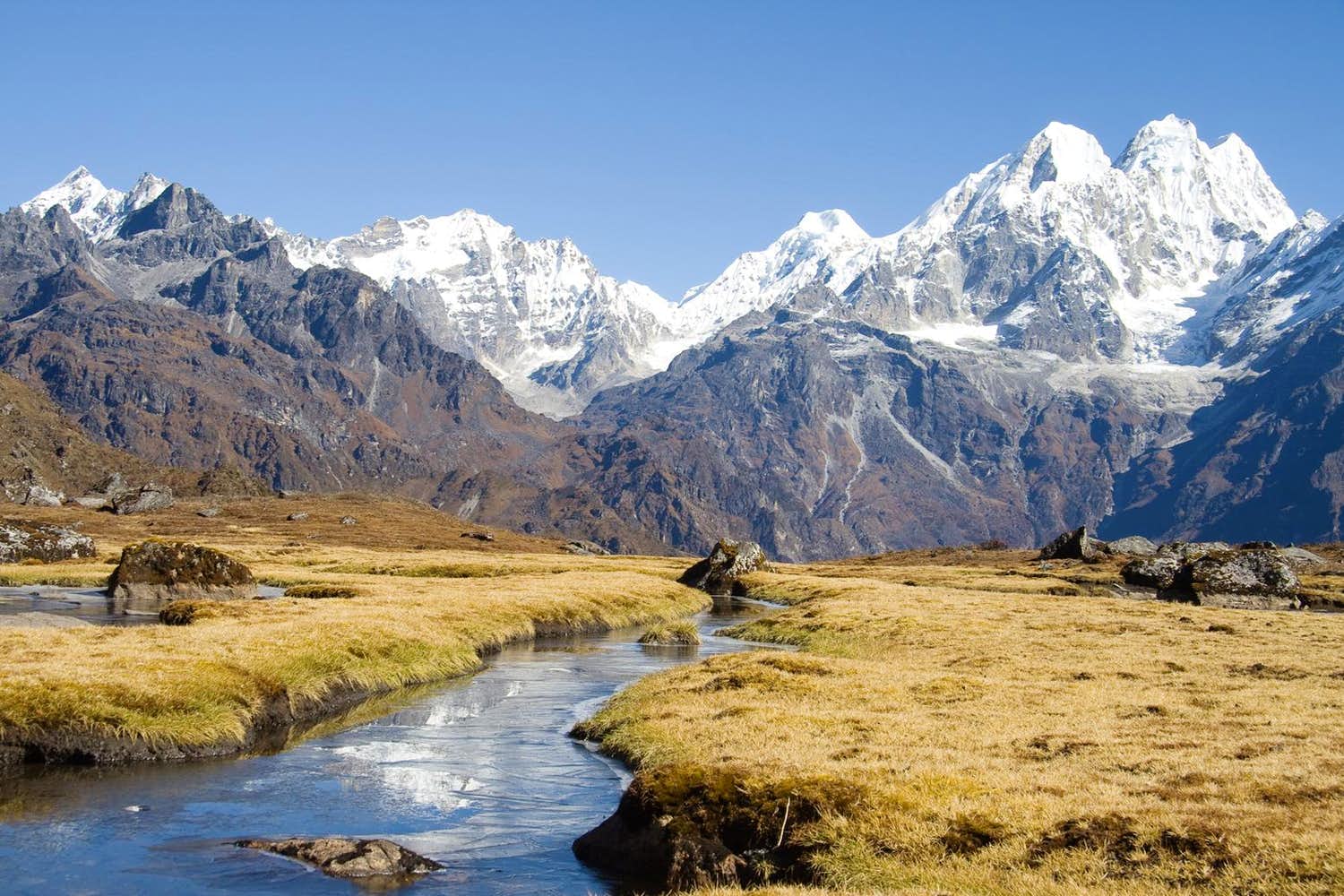
From the top, you aren't just looking at the mountains; you are surrounded by them. You can see sepctacular panorama of Langtang Lirung, Khang Chempo, Urkima, Ganjala pass  and Langsisa valley way to Tilman pass.

Breakfast + lunch + dinner with hot drinks.  Lodging at Kyanja Gompa same place.Approx. 4 to 6 hours.

Descending from Kyanjin Gompa back to Lama Hotel is a long but rewarding day. Since you are walking downhill almost the entire time, you will find it much easier to breathe, and your pace will naturally be faster than the ascent.

Day Trek: After breakfast once more look the beautiful panorama and start to descend to Langtang village. It takes about 2 hours to walk back to the village. This is a great time to take "parting" photos of the Mani walls and the Great Barrier ridge.

You will again cross the massive debris field near Langtang. The morning light often makes the scale of the 2015 earthquake damage look even more dramatic.

Lunch at Ghoda Tabela: This remains the best midpoint for lunch. As you leave Ghoda Tabela, you officially enter the National Park forest again. After lunch, the trail drops down. You will notice it getting significantly warmer and more humid as you drop below 3,000m. You’ll likely find yourself stripping off layers (down jacket to fleece, then fleece to t-shirt).

Lodging at Lama Hotel: Afternoon you will reach at Lama Hotel. If you like you can stay at same lodge before you spent night, if don't you can change the lodge for overnight stay.

 Breakfast + lunch + dinner with hot drinks.  Lodging at Lama hotel.Walking hours approx. 6 to 7 hours.

Moving from the Langtang Valley trail toward Thulo Syabru is a strategic turn. You are leaving the main river path and heading toward the ridges that lead to the sacred Gosaikunda Lakes.

Morning Trek This is a fast, downhill stretch through the dense "jungle" you climbed.The air will feel warmer and much more oxygen-rich. We stop for lunch at Bamboo.

Day Trek: After lunch take short rest, trek continue to Pairo (Landslide). A relatively level walk along the river bank. Take "left-hand side" By turning left, you begin a steep, zigzagging ascent to Thulo Syabru village..

Lodging at Thulo Syabru: Thulo Syabru is perched on a ridge. It is long, vertical village.There is several lodges for accommodation and meals.

Accommodation: There are several lodges for  overnight stay and meals all running by family. On a clear you can the view of Ganesh Himal. 

 Breakfast + lunch + dinner with hot drinks.  Lodging at Thulo Syabru village.   Approx. 5 to 6 hours.

This part of the trek is a real transition. You are climbing away from the river valleys and villages into the high, silent forests that eventually lead to the alpine lakes.

Morning Trek and Lunch: The day starts with an immediate, steep ascent. You’ll be climbing a long ridge known for its switchbacks. It can be a "knee-tester," but the reward is the expanding view of Ganesh Himal and Langtang Lirung behind you. 

Day Trek: About halfway through the climb, you reach a ridge top often called Dursagang, This is the perfect spot for your lunch. 

Afternoon: After lunch, take a short break, trek continue to Chandanbari for overnight stay.If the weather allow, you will see beautiful Himalaya, Trisuli valley and village.

Chandanbari (Sing Gomba): It is a peaceful hamlet. You’ll notice the shift to a more spiritual sound birds and the smell of pine.There are few lodges for overnight stay and meals.

Breakfast + lunch + dinner with hot drinks.  Lodging at Chandanbari. Walking hours approx. 5 to 6 hours.

Today’s trek to the sacred Gosaikunda Lake (4,380m) you transition from the village-filled ridges to the deep, silent pine and rhododendron forests of the high hills. This is one of the most physically demanding days of your trek.

The Ascent: The trail is a steady, steep climb. You will move from the "tree line" into the "alpine zone," where the trees disappear and the landscape becomes rocky and dramatic

Day Trek and Lunch: About 1.5 hours from Sing Gompa you will reach at Teahouse which called Cholangpati. Here you can take tea break and rest. Trek continue to Lauri Binayak (3,910m) for lunch. From here you can see the sepctacular views of Langtang Lirung and Ganesh Himal. 

Afternoon Trek: After lunch take a short break, the trail levels out slightly as it skirts around a ridge. You’ll pass a small stone shrine to Buddha before the lakes come into view. Afternoon you will reach at Gosaikunda.

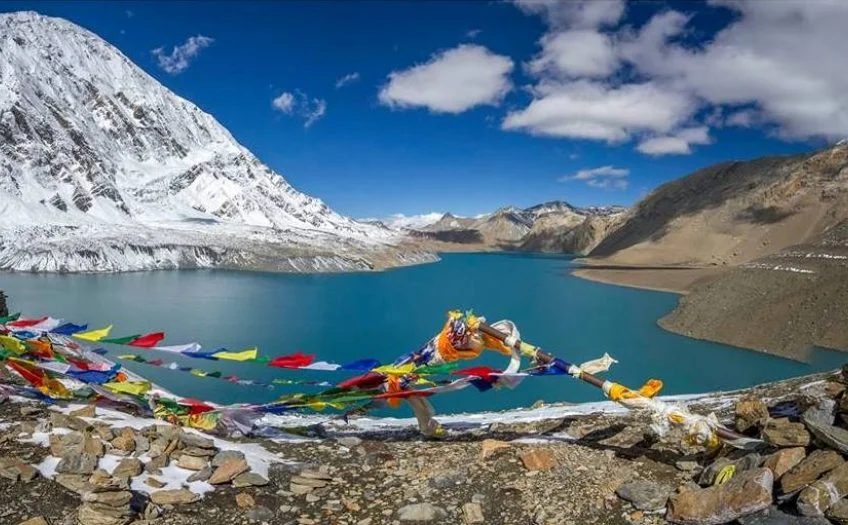
Gosaikunda: The largest and most sacred. According to Hindu relegion, Lord Shiva struck the mountain with his trident to create this lake to quench his thirst after swallowing poison to save the world. 

Lodging: At Gosaikunda, there are about 4–5 lodges located right on the shore of the lake. Because of the extreme altitude and remote location, these lodges are very basic.You can get warm meals like Sherpa Stew, Dal Bhat, and pasta.

  Breakfast + lunch + dinner with hot drinks.  Lodging at Gosaikunda.Approx. 5 to 6 hours.

Crossing the high pass from Gosaikunda to Thade Pati is a major milestone. You are leaving the Rasuwa district and entering the Helambu region, which is home to the unique Hyolmo culture.

Morning Trek: After breakfast such a beautiful place, you will ascent to Surya Pass (because it passes near the sacred Surya Kunda lake), it is most officially known on maps as the Lauribina La (4,610m). From the Surya pass, looking back, you see the Langtang and Ganesh Himal. Looking forward (east), you see the jagged peaks of Jugal Himal and, on a very clear day.

Descent: From the pass, the trail drops down at Phedi.You need a ski pol for your knee. At phedi there is a small stupa for the memory of the Japanese people, who lost their life at Thai Air crash at Goptebir.

Lunch at Phedi: Phedi literally means "bottom of the hill." It’s a small, rugged clearing with a couple of basic tea houses. It’s the perfect place to rest your legs. After lunch trek continue to Thade Pati for overnight stay.

Thade Pati: After lunch, the trail doesn't just go down; it follows a "Himalayan flat" pattern (up and down) across several small ridges. You will begin to re-enter the forest zone, passing through beautiful stunted rhododendron and juniper bushes.This settlement sits on a high, windy ridge. It is essentially a junction where the trail splits toward Melamchi Gaon or Kutumsang.

Lodging: There are few small lodges for overnight stay and meals, which is not comfortable but no choice for one night.

 Breakfast + lunch + dinner with hot drinks.  Lodging at Thade Pati.Walking hours approx. 5 to 7 hours.


Descending into Kutumsang (2,470m) is a beautiful way to enter the heart of the Helambu region. You are now leaving the high-altitude rocky passes and returning to the "green world" of the middle hills.

Day Trek: The trek follows the Yurin Danda ridge. It’s a series of gentle ups and downs through lush forests, which is much easier to walk.

Lunch at Magen Goth (3,390m): This is a beautiful stop in a large alpine meadow (a "Goth" is a cattle pasture). It’s an incredibly peaceful place to eat while looking back at the peaks you just came from. If you are here in the Spring (March–April), you are in for a treat.The Rhododendron Forests, Nepal’s national flower (Lali Gurans) thrives at this altitude. You will walk through tunnels of red, pink, and even white blossoms.

Kutumsang: Afternoon you will reach at Kutumsang village, which is a classic hilltop village. It feels very authentic because it isn't just a "trekker town" it's a real farming community at Helambu region.

Lodging: Few lodges have upgraded to include solar-powered charging and better Wi-Fi. The meals is often excellent. Because Kutumsang is at a lower altitude, they have a wide variety of fresh vegetables, and the Dal Bhat here is usually very hearty.

 Breakfast + lunch + dinner with hot drinks.  Lodging at Kutumsang.   Approx. 5 to 6 hours.

Today’s trek from Kutumsang to Chisapani is a pleasant journey through the lower hills of the Helambu region. You will leave the higher peaks behind and walk through charming villages, terraced fields, and dense forests.

Morning Trek: About 2 hours trek from Kutumsang you will reach at Gul Bhanjyang (2,130m.)  you’ll reach this beautiful, traditional Tamang and Sherpa village. It’s a great place for a morning tea break.

Lunch at Chipling (2,170m): After a steep climb from Gul Bhanjyang, you’ll reach Chipling. This is the standard lunch stop. The village offers great views of the surrounding valleys and the peaks you’ve already visited.

Afternoon Trek: After lunch at Chipling, steep descent to the motor road, again climb to Chisapani (which literally means "Cold Water") is a popular weekend destination for locals from Kathmandu because of its spectacular panoramic views.

Lodging: Since this is a busy transit point, there are many lodges. They are generally a bit more modern than the ones in Kutumsang, though still simple.

The View: This is your final "Grand Panorama." From the ridge at Chisapani, you can see a massive sweep of the Himalayas, including Annapurna, Manaslu, Ganesh Himal, Langtang, Jugal Himal, Gauri Shanker and Dud Kunda.

Farewell to the Team:This evening is the traditional time to say goodbye to your porters and guide. If you are satisfied with the service and the incredible effort of your team, it is customary to offer tips as a gesture of thanks for their hard work and dedication in helping you reach your goals.

You have successfully completed the 'Langtang-Gosaikunda Trek' a truly world-class achievement!     'Complete the Trek'

 Breakfast + lunch + dinner with hot drinks.  Lodging at Chisapani.Approx. 5 to 6 hours.

The drive from Chisapani to Kathmandu marks the final transition from the quiet Himalayan ridges back to the vibrant energy of the capital city.

The driveing: Distance between Chisapani to Kathmandu is Approximately 29.4 km (18 miles) but it takes time, because of road condition and traffic.You will primarily follow Chisapani Road, descending from the ridge into the northeastern outskirts of Kathmandu city.

For lunch you will reach at Kathmandu. Your guide will take you at 3-star Hotel as your booking, welcom drinks at reception, check-in room take your time after re-freshment you can go for lunch.

Breakfast  with hot drinks.  3-star hotel at Kathmandu.


 After the physical challenge of Langtang-Gosaikunda trek, today is dedicated to your well-being.Today is a flexible day for you to enjoy the charm of Kathmandu at your own pace. After the completion of your trek, all about relaxing and soaking up the local atmosphere. After breakfast, the city is yours to explore.

Getting Around: For longer distances-such as visits to Boudhanath, Pashupatinath, or Swayambhunath, as well as excursions to the neighbouring cities of Bhaktapur and Patan, hiring a taxi is the most convenient option.

Rickshaws & Walking: Within the Kathmandu city centre including Durbar Square, New Road, and the Thamel tourist market, you can enjoy a traditional rickshaw ride (a three-wheeled bicycle) or simply explore the bustling streets on foot.

Important Notes: Please be aware that all UNESCO World Heritage sites in Kathmandu, Bhaktapur, and Patan require an entry fee for visitors.

Shopping & Souvenirs: Thamel, the city's primary tourist hub, is filled with shops selling high-quality trekking equipment and unique souvenirs. Keep in mind that the Nepalese market culture is quite different from Western standards don't forget to friendly haggle for a discount!

Dining: For lunch and dinner, you will find an array of excellent restaurants offering diverse international and local menus to suit every palate.

Need a hand?  If you require a professional city guide or any further information to help plan your day, please do not hesitate to contact us.
 Evening A Final Farewell: To celebrate your incredible achievement, our representative will host a Special Farewell Dinner. Typical Nepali Cuisine: Enjoy an authentic multi-course Nepali meal.
Cultural Program: Experience the beauty of Nepal’s diversity through a live performance featuring traditional music and ethnic dances from different regions of the country.

  3-star hotel with bed and breakfast at Kathmandu.

Stress-Free Departure: At the end of your journey, we will coordinate your hotel pickup to ensure you arrive at the airport with plenty of time for your flight.     Complete the trip. 

Breakfast with hot or cold drinks. 

Continue for detail itinerary
Designed & developed by: Ashok shah